Distichlis spicata
Salt grass, Salt Grass
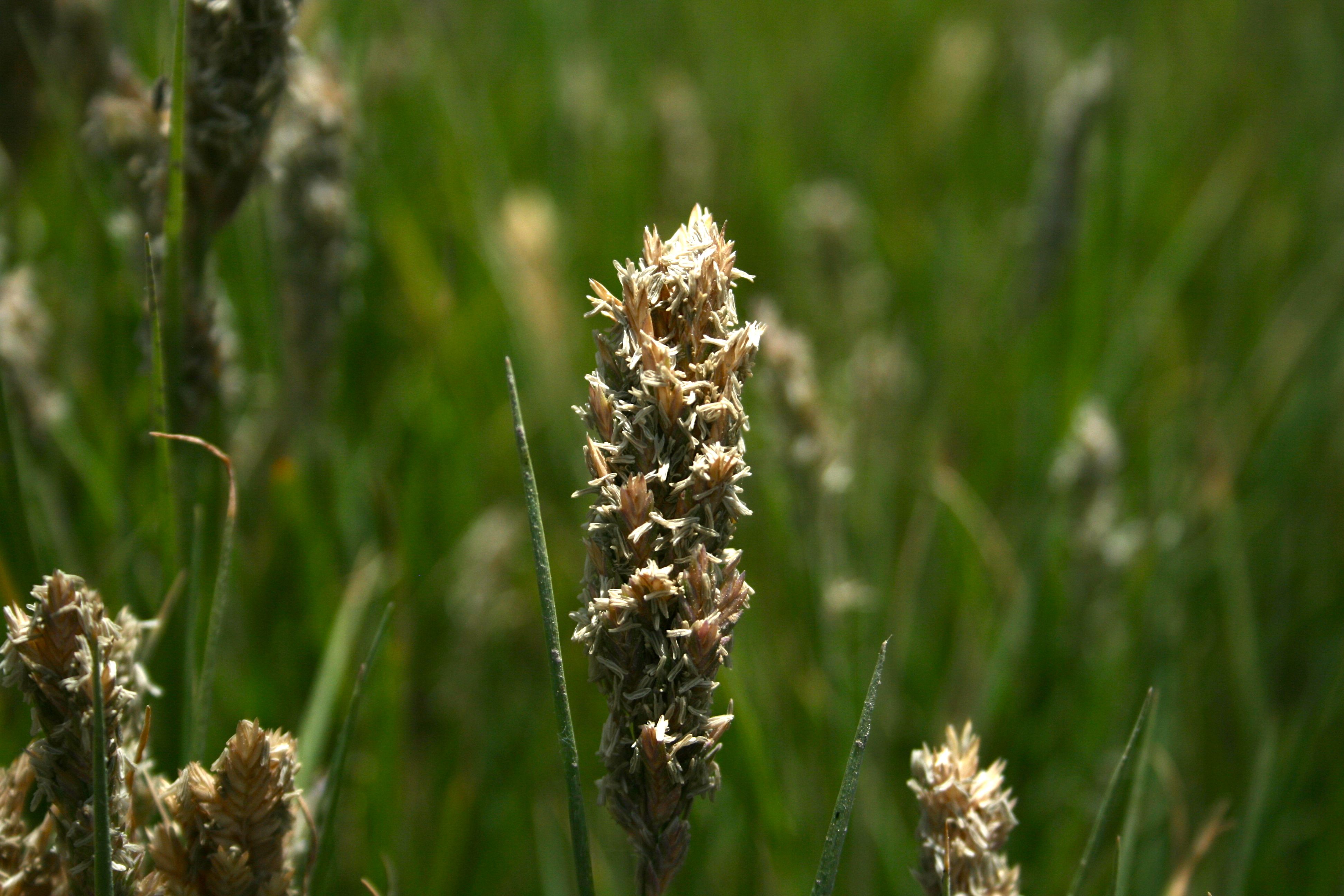
Photo by Chez Brungraber
Family: Poaceae · Type: Grass · Native
Distichlis spicata (Salt grass) is a native California grass in the Poaceae family, recognized by . Key distinguishing features: erect habit, prominent panicle-like inflorescences, longer flat leaves.
Salt grass is a native perennial found in coastal, central, and inland California bioregions including the North Coast, Klamath Ranges, Central Valley, Central Western, and Great Basin areas in salt marshes, coastal dunes, and alkaline habitats at elevations below 1,550 meters. Flowering from April to September, this plant produces straw-colored to purple flowers in dense, narrowly cylindric panicles 2 to 8 centimeters long. Growing with stout, scaly yellow rhizomes and erect stems 10 to 50 centimeters tall, it forms extensive ground-covering colonies. Its leaves are stiff and flat, typically 2 to 10 centimeters long, spreading in dense, compact clusters. The plant's distinctive underground rhizome system allows it to thrive in challenging, saline environments.
Identification and appearance
Key characters: 1 sympatric species. Key distinguishing features: erect habit, prominent panicle-like inflorescences, longer flat leaves
Habitat and range
Habitat: Salt marshes, coastal dunes, moist, alkaline areas
Elevation: < 1550 m
California counties: Kern, Riverside, San Bernardino, San Diego, San Luis Obispo, Contra Costa, Imperial, Inyo, Los Angeles, Orange, Santa Barbara, Fresno, Lassen, Mono, Monterey, Sonoma, Ventura, Colusa, Yolo, Humboldt, Kings, Modoc, Nevada, Butte, El Dorado, Lake, Merced, Napa, Placer, Plumas, San Francisco, San Joaquin, Shasta, Siskiyou, Solano, Stanislaus, Sutter, Alameda, Marin, Mendocino, San Mateo, Santa Clara, Santa Cruz, Tulare, Glenn, Trinity, Tuolumne, Madera, Sierra, Del Norte, Sacramento, Alpine, San Benito
Outside California: southern Canada, United States, Mexico, South America
Bloom period
Distichlis spicata blooms Apr-Sep.
How to tell it apart
vs Spartina: Distichlis is short (< 5 dm) with stiff, strongly 2-ranked leaves and dioecious, flattened many-flowered spikelets; Spartina (cordgrass) is tall with one-sided, spike-like inflorescence branches.; vs Monanthochloe: Distichlis has flat 2-ranked blades and a contracted panicle of several-flowered spikelets; Monanthochloe (shoregrass) has short clustered fleshy leaves and reduced few-flowered spikelets.; vs Puccinellia: Distichlis spreads by stout scaly yellow rhizomes and is dioecious with leathery flattened spikelets; Puccinellia is a tufted, non-dioecious alkali grass with soft open panicles.; vs Leymus: Distichlis is low with stiff, sharply 2-ranked leaves on saltflats; Leymus (wildrye) is tall and cane-like with a true spike inflorescence.; vs Cynodon: Distichlis has a contracted panicle of flattened spikelets over scaly rhizomes; Cynodon (Bermuda grass) sends up finger-like clusters of spreading slender spikes.
Frequently asked questions
Is Distichlis spicata native to California?
Yes. Distichlis spicata is native to California (recorded as native).
When does Distichlis spicata bloom?
Distichlis spicata blooms Apr-Sep.
Where in California does Distichlis spicata grow?
Distichlis spicata occurs in Kern, Riverside, San Bernardino, San Diego, San Luis Obispo, Contra Costa, Imperial, Inyo and other counties, at elevations of < 1550 m.
What plant family does Distichlis spicata belong to?
Distichlis spicata is in the Poaceae family, genus Distichlis.
What habitat does Distichlis spicata grow in?
Distichlis spicata grows in Salt marshes, coastal dunes, moist, alkaline areas.
Related species
Other California species in the same genus, family, or bioregion.
Sources: Jepson eFlora · Index of California Plant Names · CalPhotos
Last updated 2026-10-07
Data from The California Species Project — 14,000+ California species with verified data from CNPS, CDFW, USFWS, Cal-IPC, and more.