Doellingeria engelmannii
Engelmann's aster
no rights reserved · CC0
Family: Asteraceae · Type: Subshrub · Native
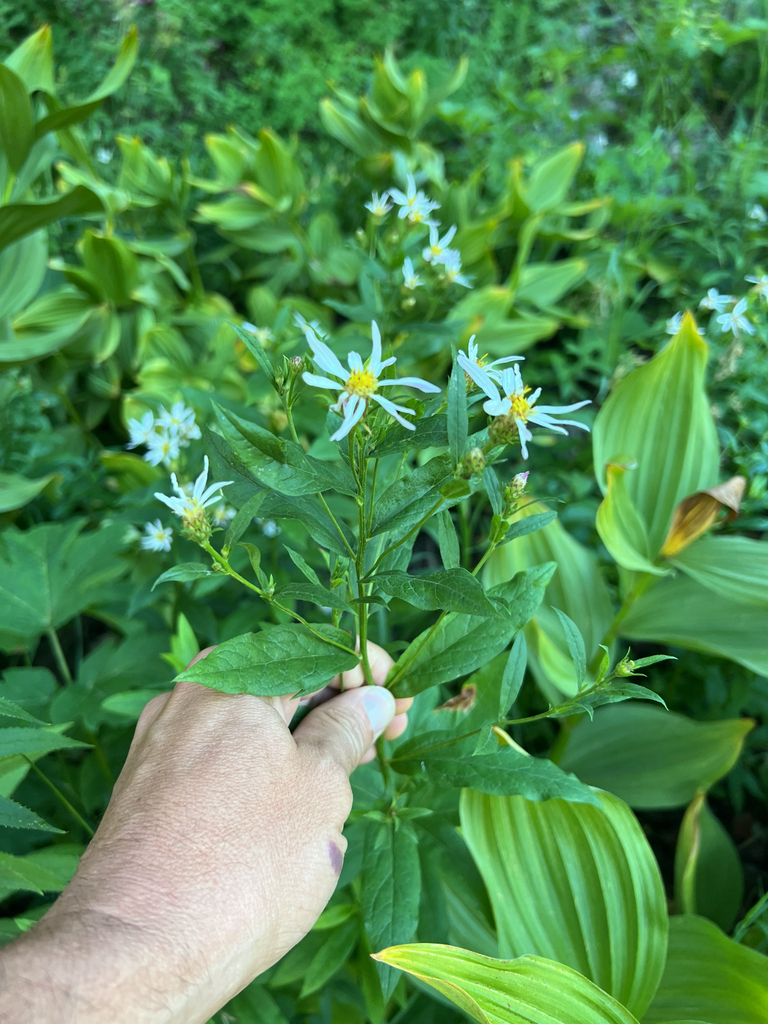
Doellingeria engelmannii (Engelmann's aster) is a native California subshrub in the Asteraceae family, recognized by distinctive large white rays vs smaller violet/purple rays in congeners.
Engelmann's aster is a California native perennial found in the Klamath Ranges and northern Coast Ranges in meadows and open woodland at elevations of 1,800 to 2,000 meters. Flowering from July to September, this plant produces white ray flowers that may turn pale pink, arranged in distinctive cyme-like clusters with heads containing generally 8 or 13 rays. Growing with stems 50 to 150 centimeters tall that are slightly glandular or hairy, it develops an open, branching structure. Its leaves are 4 to 10 centimeters long, elliptic to ovate, with green surfaces that are nearly smooth and somewhat pointed tips. The flower heads feature uniquely colored phyllaries with pale bodies, green midveins, and purple-margined tips, creating an intricate and delicate botanical display.
Identification and appearance
Key characters: 4 sympatric species; distinctive large white rays vs smaller violet/purple rays in congeners
Habitat and range
Habitat: Uncommon. Meadows, open woodland
Elevation: 1800-2000 m
Outside California: to western Canada, Colorado, Nevada
Bloom period
Doellingeria engelmannii blooms Jul-Sep.
Frequently asked questions
Is Doellingeria engelmannii native to California?
Yes. Doellingeria engelmannii is native to California (recorded as native).
When does Doellingeria engelmannii bloom?
Doellingeria engelmannii blooms Jul-Sep.
What plant family does Doellingeria engelmannii belong to?
Doellingeria engelmannii is in the Asteraceae family, genus Doellingeria.
What habitat does Doellingeria engelmannii grow in?
Doellingeria engelmannii grows in Uncommon. Meadows, open woodland.
Related species
Other California species in the same genus, family, or bioregion.
Sources: Jepson eFlora · CalPhotos
Last updated 2026-10-07
Data from The California Species Project — 14,000+ California species with verified data from CNPS, CDFW, USFWS, Cal-IPC, and more.