Draba reptans
Carolina draba
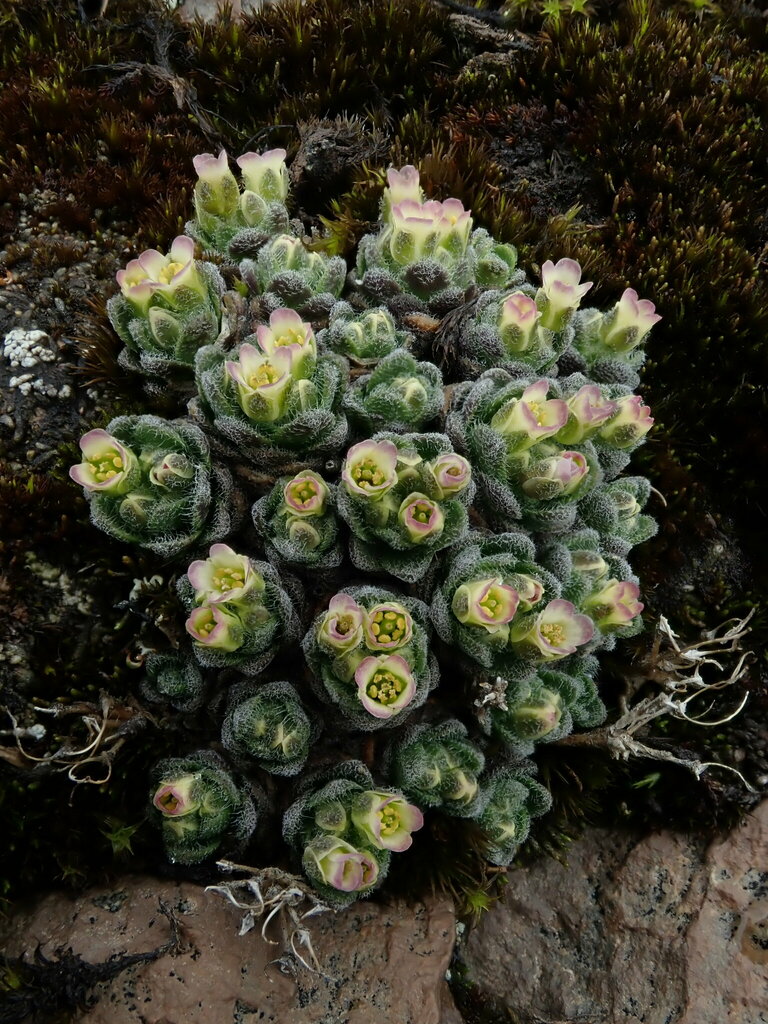
(c) Nolan Exe, some rights reserved (CC BY), uploaded by Nolan Exe · licence
Family: Brassicaceae · Type: Herb · Not Native
Draba reptans (Carolina draba) is a non-native California herb in the Brassicaceae family, recognized by umbel-like infructescence and long glabrous fruits.
Carolina draba is a naturalized annual found in northern Sierra Nevada Mountains near Emigrant Gap and northern Desert Mountains in the western Panamint Range at elevations of 1,500 to 3,000 meters. Flowering from February to August, this plant produces small white flowers on umbel-like clusters with 5 to 12 blooms. Growing with delicate unbranched stems 3 to 12 centimeters tall, it features distinctive two- and four-rayed hairs on its lower stem. Its basal leaves are oblanceolate to obovate, 5 to 23 millimeters long, with stalked hairs on the underside and simple hairs on the upper surface. The slender fruits are linear to narrowly oblong, 7 to 16 millimeters long and glabrous.
Identification and appearance
Key characters: 16 sympatric species; key features are umbel-like infructescence and long glabrous fruits
Habitat and range
Habitat: Very uncommon. Open or disturbed areas
Elevation: 1500-3000 m
Outside California: south-central Canada, United States
Bloom period
Draba reptans blooms Feb-Aug.
How to tell it apart
vs Physaria: Draba has flattened pods; Physaria has inflated balloon-like pods.; vs Lepidium: Draba has flattened pods with 10+ seeds; Lepidium has flat round pods with 2 seeds per chamber.; vs Boechera: Draba pods short and broad; Boechera pods long and narrow like pencils.
Frequently asked questions
Is Draba reptans native to California?
No. Draba reptans is not native to California (recorded as not native).
When does Draba reptans bloom?
Draba reptans blooms Feb-Aug.
What plant family does Draba reptans belong to?
Draba reptans is in the Brassicaceae family, genus Draba.
What habitat does Draba reptans grow in?
Draba reptans grows in Very uncommon. Open or disturbed areas.
Related species
Other California species in the same genus, family, or bioregion.
Sources: Jepson eFlora · CalPhotos
Last updated 2026-10-07
Data from The California Species Project — 14,000+ California species with verified data from CNPS, CDFW, USFWS, Cal-IPC, and more.