Enemion occidentale
Western rue-anemone
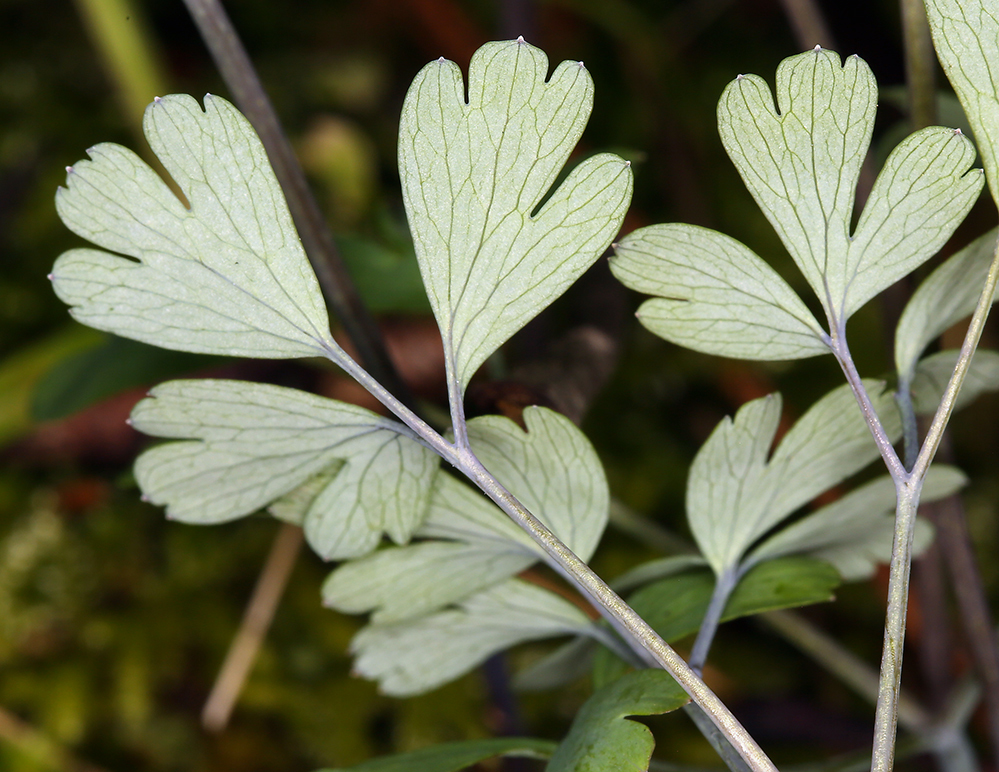
(c) Steve Matson, some rights reserved (CC BY), uploaded by Steve Matson · licence
Family: Ranunculaceae · Type: Herb · Native
Enemion occidentale (Western rue-anemone) is a native California herb in the Ranunculaceae family, recognized by clear size differences in plant height, sepal width, and fruit size.
Western rue-anemone is a California native perennial found in the North Coast Ranges, Sierra Nevada, central western California, and northern Transverse Ranges in shaded slopes, chaparral, oak woodland, and conifer forest at elevations of 200 to 1,500 meters. Flowering from March to May, this plant produces delicate white flowers occasionally tinged pink, with sepals 3 to 7 millimeters wide. Growing 8 to 34 centimeters tall with 1 to 3 erect, generally simple stems, it has a distinctive leaf structure. Its leaves are 3 to 12 centimeters long, with segment lobes divided into 2 to 3 parts, typically less than half the segment's length. The fruit develops to 8 to 10.5 millimeters long, completing the plant's annual cycle.
Identification and appearance
Key characters: 1 sympatric species; clear size differences in plant height, sepal width, and fruit size
Habitat and range
Habitat: Shaded slopes, chaparral, oak woodland, conifer forest
Elevation: 200-1500 m
California counties: Kern, Tulare, Fresno, Monterey, Mariposa, San Luis Obispo, Amador, Butte, El Dorado, Santa Clara, Calaveras, Nevada, Placer, San Benito, Santa Barbara, Santa Cruz, Solano, Tuolumne, Los Angeles, Tehama, Alameda, Trinity, San Francisco
Bloom period
Enemion occidentale blooms Mar-May.
How to tell it apart
vs Thalictrum: Enemion has white flowers with 5 broad sepals; Thalictrum has tiny inconspicuous flowers with many dangling stamens.; vs Aquilegia: Enemion lacks petals entirely with 5 simple sepals; Aquilegia has distinctive backward-projecting spurred petals.; vs Coptis: Enemion has leafy stems from clustered fleshy roots; Coptis has leafless flower stalks from slender spreading runners.; vs Caltha: Enemion has 5 sepals and no petals with compound leaves; Caltha has 5-12 showy sepals and simple rounded leaves.
Frequently asked questions
Is Enemion occidentale native to California?
Yes. Enemion occidentale is native to California (recorded as native).
When does Enemion occidentale bloom?
Enemion occidentale blooms Mar-May.
Where in California does Enemion occidentale grow?
Enemion occidentale occurs in Kern, Tulare, Fresno, Monterey, Mariposa, San Luis Obispo, Amador, Butte and other counties, at elevations of 200-1500 m.
What plant family does Enemion occidentale belong to?
Enemion occidentale is in the Ranunculaceae family, genus Enemion.
What habitat does Enemion occidentale grow in?
Enemion occidentale grows in Shaded slopes, chaparral, oak woodland, conifer forest.
Related species
Other California species in the same genus, family, or bioregion.
Sources: Jepson eFlora · Index of California Plant Names · CalPhotos
Last updated 2026-10-07
Data from The California Species Project — 14,000+ California species with verified data from CNPS, CDFW, USFWS, Cal-IPC, and more.