Epilobium campestre
Smooth boisduvalia
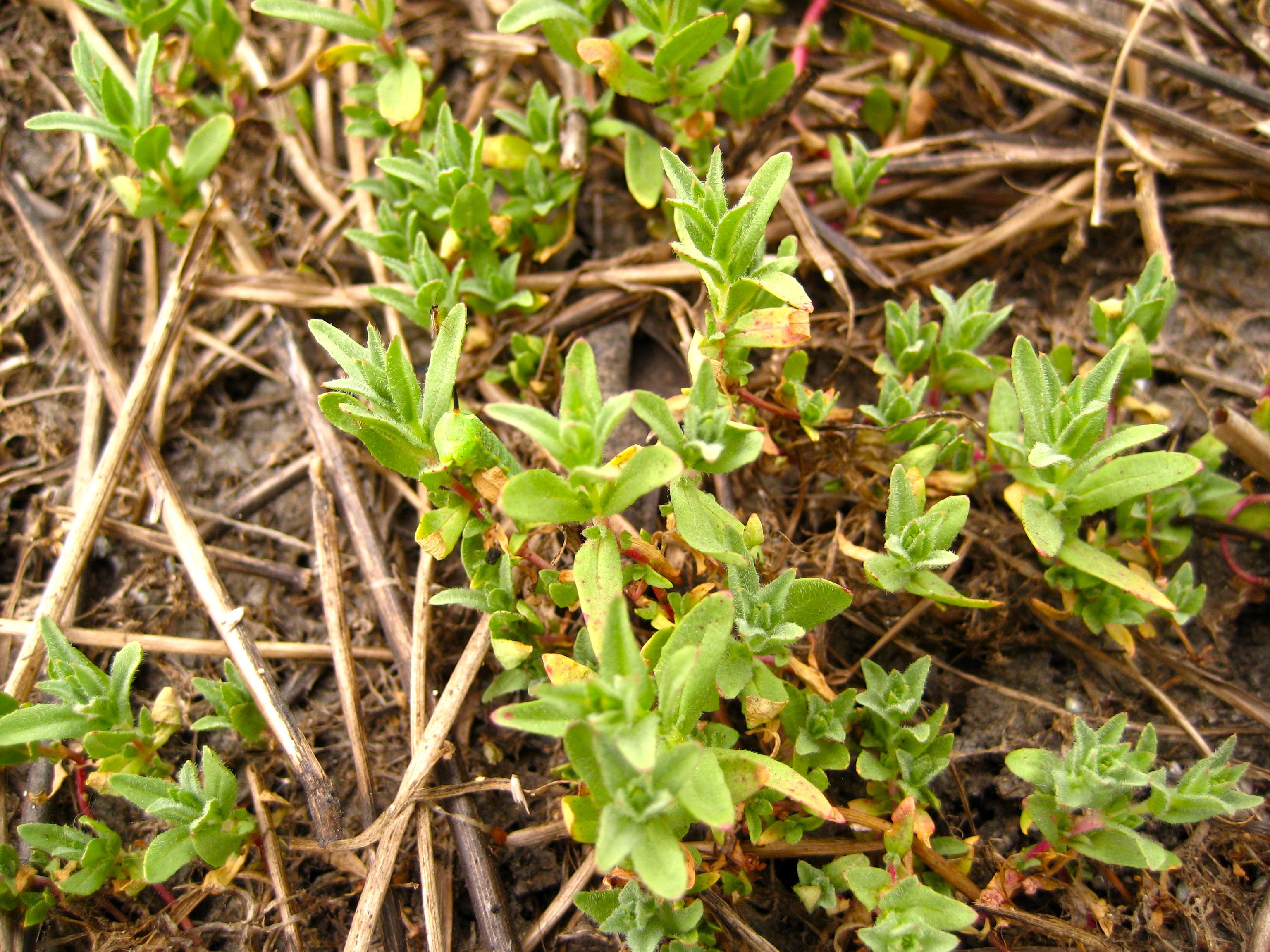
Photo by Chez Brungraber
Family: Onagraceae · Type: Herb · Native
Epilobium campestre (Smooth boisduvalia) is a native California herb in the Onagraceae family, recognized by but vernal pool habitat and indehiscent fruit base diagnostic.
Smooth boisduvalia is a California native annual found in the California Floristic Province and Modoc Plateau in vernal pools and clay mud flats at elevations of 30 to 3,000 meters. Flowering from May to September, this plant produces delicate pink flowers 1 to 3.2 millimeters long with a distinctive club-like stigma. Growing 10 to 55 centimeters tall with a taproot and decumbent basal branches, it has a glabrous lower stem that becomes minutely hairy toward the top. Its leaves are primarily lanceolate, 8 to 35 millimeters long, with opposite orientation only near the base of the plant. The fruit is a tough cylindric capsule 3.5 to 8 millimeters long, with the proximal half remaining mostly closed.
Identification and appearance
Key characters: 31 sympatric species but vernal pool habitat and indehiscent fruit base diagnostic
Habitat and range
Habitat: Vernal pools, clay mud flats
Elevation: 30-3000 m
California counties: Modoc, Lassen, Lake, Los Angeles, Butte, Riverside, Ventura, Contra Costa, San Diego, Sacramento, Solano, Yolo, Sonoma, San Luis Obispo, Monterey, Plumas, Shasta, Tehama, Sutter, Glenn, Merced, Sierra, Yuba, Tulare, Fresno, Santa Clara, Humboldt, Stanislaus, Madera, Mendocino, Alameda, Napa, Nevada, San Joaquin, Colusa, San Benito, Santa Barbara, Kern, Placer
Outside California: to western Canada, North Dakota, Utah, northern Baja California, southern South America
Bloom period
Epilobium campestre blooms May-Sep.
How to tell it apart
vs Penstemon: Epilobium has 4 notched petals and opposite leaves; Penstemon has 5-lobed tubular flowers (snapdragon family).; vs Gambelia: Epilobium has 4 notched petals; Gambelia has 5-lobed tubular snapdragon-like flowers.; vs Fuchsia: Epilobium has notched petals spreading flat; Fuchsia has dangling tubular flowers with protruding stamens.; vs Keckiella: Epilobium has 4 notched petals; Keckiella has 5-lobed tubular snapdragon-like flowers.; vs Diplacus: Epilobium has 4 notched petals; Diplacus has 5-lobed tubular monkey flowers.
Frequently asked questions
Is Epilobium campestre native to California?
Yes. Epilobium campestre is native to California (recorded as native).
When does Epilobium campestre bloom?
Epilobium campestre blooms May-Sep.
Where in California does Epilobium campestre grow?
Epilobium campestre occurs in Modoc, Lassen, Lake, Los Angeles, Butte, Riverside, Ventura, Contra Costa and other counties, at elevations of 30-3000 m.
What plant family does Epilobium campestre belong to?
Epilobium campestre is in the Onagraceae family, genus Epilobium.
What habitat does Epilobium campestre grow in?
Epilobium campestre grows in Vernal pools, clay mud flats.
Related species
Other California species in the same genus, family, or bioregion.
Sources: Jepson eFlora · Index of California Plant Names · CalPhotos
Last updated 2026-10-07
Data from The California Species Project — 14,000+ California species with verified data from CNPS, CDFW, USFWS, Cal-IPC, and more.