Epilobium canum subsp. canum
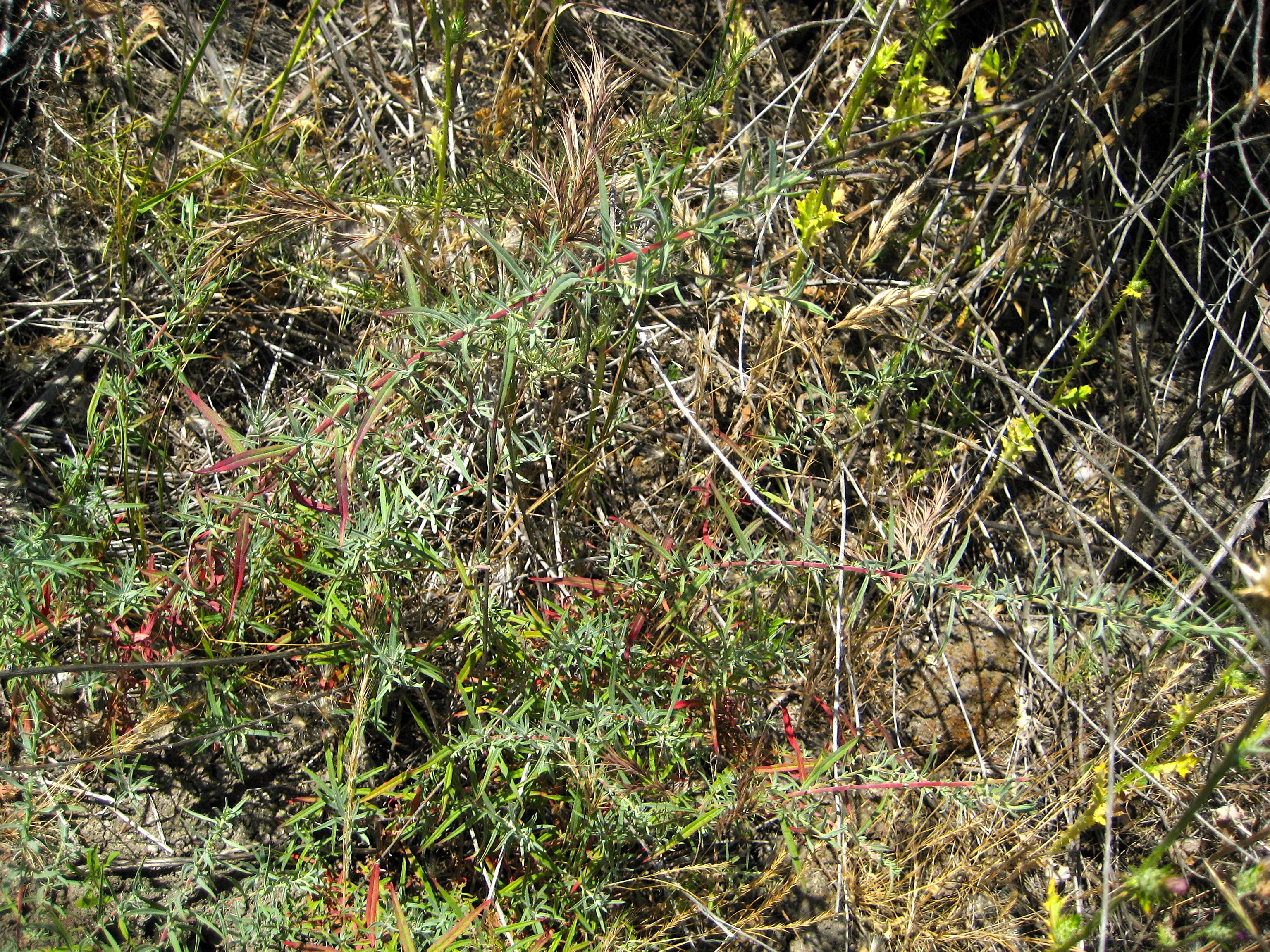
Photo by Chez Brungraber
Family: Onagraceae · Type: Subshrub · Native
Epilobium canum subsp. canum is a native California subshrub in the Onagraceae family, recognized by California-fuchsia group; leaves narrow (linear-lanceolate), often clustered, grayish and nearly entire; tallest canum subsp. (to 12 dm).
California fuchsia is a California native perennial found in the California Floristic Province (excluding northern Sierra Nevada) on dry slopes and ridges at elevations up to 2,100 meters. Flowering from June to December, this plant produces vibrant red to orange-red tubular flowers in showy clusters. Growing with erect or spreading stems 20 to 120 centimeters tall, covered in stiff spreading hairs that give the plant a grayish appearance. Its narrow leaves are often clustered, linear to lanceolate, typically gray-green and nearly entire or with minimal teeth. The plant forms a low, somewhat woody base with multiple stems spreading from a central point.
Identification and appearance
Key characters: California-fuchsia group; leaves narrow (linear-lanceolate), often clustered, grayish and nearly entire; tallest canum subsp. (to 12 dm).
Habitat and range
Habitat: dry slopes, ridges
Elevation: < 2100 m
California counties: Ventura, Los Angeles, Santa Barbara, Orange, San Luis Obispo, San Bernardino, San Diego, Monterey, San Benito, Riverside, Santa Clara, San Mateo, Solano, Contra Costa, Napa, Stanislaus, Alameda, Yolo, Kern, Tulare, Fresno, Santa Cruz, Placer, Sacramento, Marin, Sonoma, Alpine, Kings, Merced, Lake, Tuolumne, Humboldt, Mariposa, Butte
Outside California: to northwestern Mexico
Bloom period
Epilobium canum subsp. canum blooms Jun-Dec.
How to tell it apart
vs Penstemon: Epilobium has 4 notched petals and opposite leaves; Penstemon has 5-lobed tubular flowers (snapdragon family).; vs Gambelia: Epilobium has 4 notched petals; Gambelia has 5-lobed tubular snapdragon-like flowers.; vs Fuchsia: Epilobium has notched petals spreading flat; Fuchsia has dangling tubular flowers with protruding stamens.; vs Keckiella: Epilobium has 4 notched petals; Keckiella has 5-lobed tubular snapdragon-like flowers.; vs Diplacus: Epilobium has 4 notched petals; Diplacus has 5-lobed tubular monkey flowers.
Frequently asked questions
Is Epilobium canum subsp. canum native to California?
Yes. Epilobium canum subsp. canum is native to California (recorded as native).
When does Epilobium canum subsp. canum bloom?
Epilobium canum subsp. canum blooms Jun-Dec.
Where in California does Epilobium canum subsp. canum grow?
Epilobium canum subsp. canum occurs in Ventura, Los Angeles, Santa Barbara, Orange, San Luis Obispo, San Bernardino, San Diego, Monterey and other counties, at elevations of < 2100 m.
What plant family does Epilobium canum subsp. canum belong to?
Epilobium canum subsp. canum is in the Onagraceae family, genus Epilobium.
What habitat does Epilobium canum subsp. canum grow in?
Epilobium canum subsp. canum grows in dry slopes, ridges.
Related species
Other California species in the same genus, family, or bioregion.
Sources: Jepson eFlora · Index of California Plant Names · CalPhotos
Last updated 2026-10-07
Data from The California Species Project — 14,000+ California species with verified data from CNPS, CDFW, USFWS, Cal-IPC, and more.