Epilobium ciliatum subsp. ciliatum
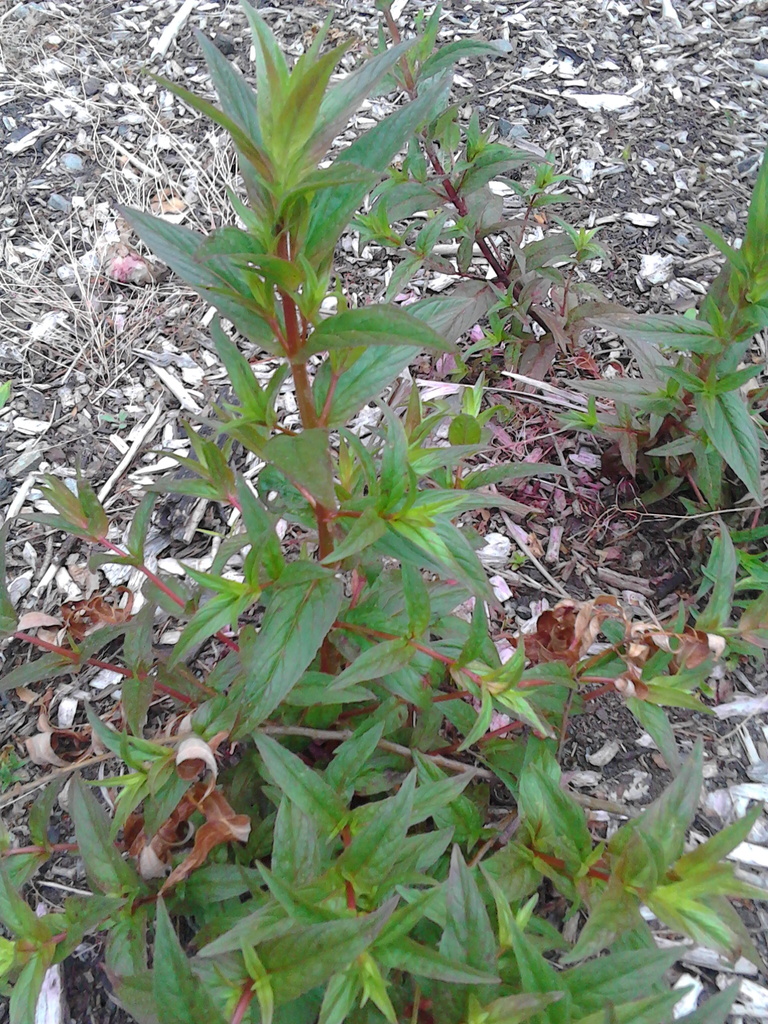
(c) Joe Potter Butler, some rights reserved (CC BY), uploaded by Joe Potter Butler · licence
Family: Onagraceae · Type: Herb · Native
Epilobium ciliatum subsp. ciliatum is a native California herb in the Onagraceae family, recognized by Widespread ciliatum; well-developed basal rosettes, narrowly lanceolate leaves reduced upward, open non-leafy inflorescence, petals 2-6….
Tall willowherb is a California native perennial found throughout California in disturbed places, moist meadows, streambanks, and roadsides at elevations up to 4,100 meters. Flowering from June to October, this plant produces delicate white to pink flowers 2 to 6 millimeters long in openly branched inflorescences. Growing with erect stems 50 to 120 centimeters tall, it develops well-formed basal rosettes and has an open, branching habit. Its leaves are narrowly lanceolate, becoming progressively smaller toward the stem tips, creating a distinctive architectural form. The plant thrives in moist, disturbed environments, adapting readily to a variety of open, wet habitats.
Identification and appearance
Key characters: Widespread ciliatum; well-developed basal rosettes, narrowly lanceolate leaves reduced upward, open non-leafy inflorescence, petals 2-6 mm white-pink.
Habitat and range
Habitat: Common. Disturbed places, moist meadows, streambanks, roadsides
Elevation: < 4100 m
California counties: Mendocino, San Diego, Los Angeles, Kern, San Bernardino, Ventura, Alameda, Orange, Trinity, Lake, Riverside, Monterey, Siskiyou, Fresno, Del Norte, Marin, Santa Clara, Humboldt, Sonoma, Nevada, Tulare, Inyo, San Luis Obispo, Santa Barbara, Placer, Shasta, Plumas, Lassen, Amador, Santa Cruz, Mono, Contra Costa, Tuolumne, Madera, Butte, Solano, Modoc, El Dorado, Alpine, Mariposa, Merced, Stanislaus, Tehama, Calaveras, San Mateo, Sacramento, San Joaquin, Sutter, Glenn, Yuba, Sierra, Colusa, Napa, San Francisco
Bloom period
Epilobium ciliatum subsp. ciliatum blooms Jun-Oct.
How to tell it apart
vs Penstemon: Epilobium has 4 notched petals and opposite leaves; Penstemon has 5-lobed tubular flowers (snapdragon family).; vs Gambelia: Epilobium has 4 notched petals; Gambelia has 5-lobed tubular snapdragon-like flowers.; vs Fuchsia: Epilobium has notched petals spreading flat; Fuchsia has dangling tubular flowers with protruding stamens.; vs Keckiella: Epilobium has 4 notched petals; Keckiella has 5-lobed tubular snapdragon-like flowers.; vs Diplacus: Epilobium has 4 notched petals; Diplacus has 5-lobed tubular monkey flowers.
Frequently asked questions
Is Epilobium ciliatum subsp. ciliatum native to California?
Yes. Epilobium ciliatum subsp. ciliatum is native to California (recorded as native).
When does Epilobium ciliatum subsp. ciliatum bloom?
Epilobium ciliatum subsp. ciliatum blooms Jun-Oct.
Where in California does Epilobium ciliatum subsp. ciliatum grow?
Epilobium ciliatum subsp. ciliatum occurs in Mendocino, San Diego, Los Angeles, Kern, San Bernardino, Ventura, Alameda, Orange and other counties, at elevations of < 4100 m.
What plant family does Epilobium ciliatum subsp. ciliatum belong to?
Epilobium ciliatum subsp. ciliatum is in the Onagraceae family, genus Epilobium.
What habitat does Epilobium ciliatum subsp. ciliatum grow in?
Epilobium ciliatum subsp. ciliatum grows in Common. Disturbed places, moist meadows, streambanks, roadsides.
Related species
Other California species in the same genus, family, or bioregion.
Sources: Jepson eFlora · Index of California Plant Names · CalPhotos
Last updated 2026-10-07
Data from The California Species Project — 14,000+ California species with verified data from CNPS, CDFW, USFWS, Cal-IPC, and more.