Epilobium densiflorum
Dense boisduvalia
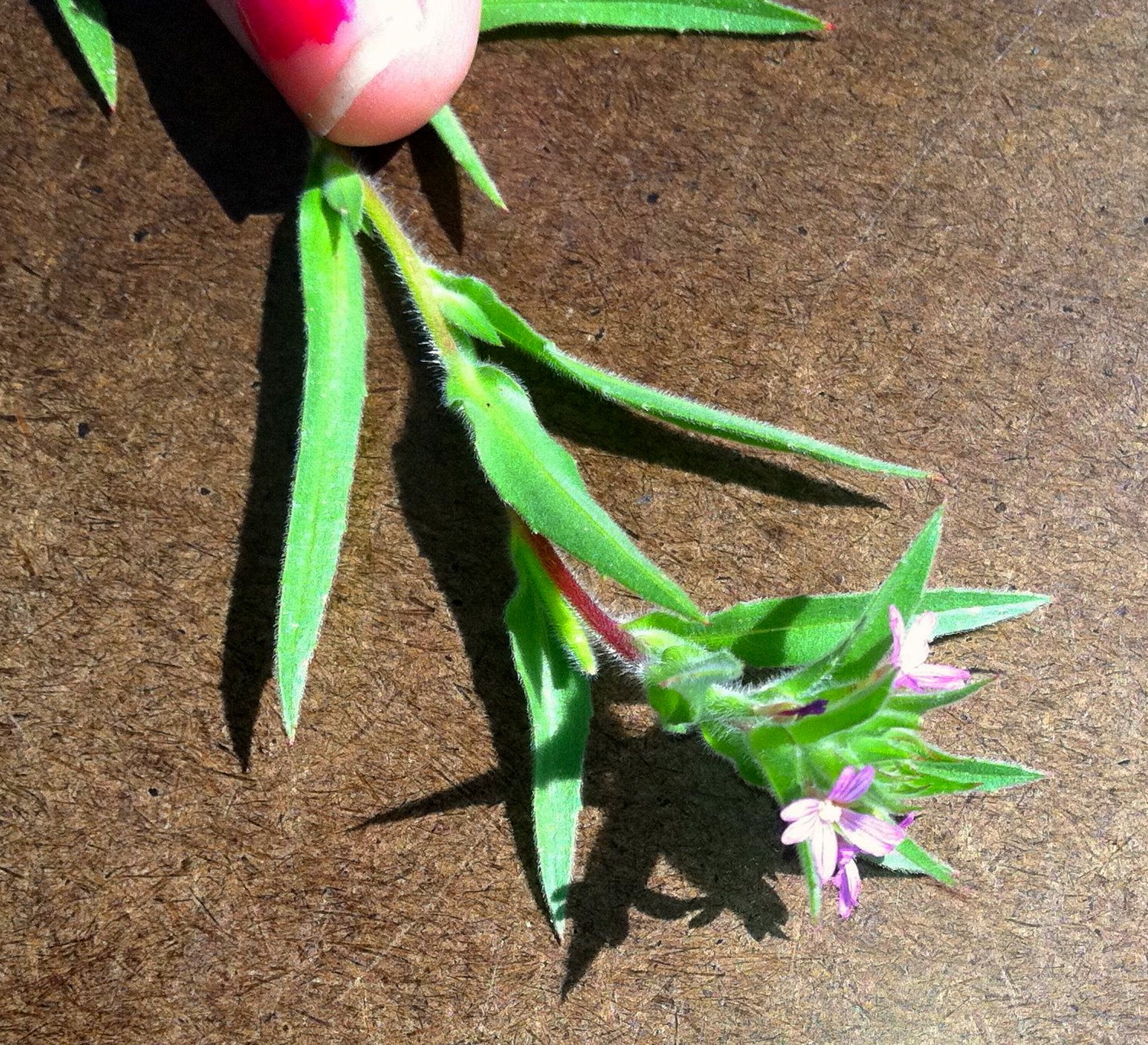
Photo by Chez Brungraber
Family: Onagraceae · Type: Herb · Native
Epilobium densiflorum (Dense boisduvalia) is a native California herb in the Onagraceae family, recognized by dense spikes and flexible pods.
Dense boisduvalia is a California native annual found in the California Floristic Province, including montane meadows, streambanks, and seasonal moist flats at elevations up to 2,600 meters. Flowering from May to October, this plant produces delicate rose-purple to white flowers 3 to 10 millimeters long in dense leafy spikes. Growing with slender stems 20 to 150 centimeters tall, it spreads with strigose or spreading hairs and branches primarily in its upper portions. Its leaves are narrow and lanceolate, primarily opposite near the base and measuring 14 to 85 millimeters long, with upper leaves becoming progressively hairier. The fruit is a cylindric, pliable capsule 4 to 11 millimeters long that dehisces to its base, releasing small netted seeds.
Identification and appearance
Key characters: 31 sympatric species, dense spikes and flexible pods help distinguish
Habitat and range
Habitat: Streambanks, outwashes, seasonal moist flats
Elevation: < 2600 m
California counties: Alpine, Los Angeles, San Bernardino, Kern, Tuolumne, Riverside, San Benito, San Diego, Modoc, Tehama, Glenn, Butte, El Dorado, Sacramento, Lake, Nevada, Monterey, Calaveras, Amador, Lassen, Tulare, Plumas, Siskiyou, Fresno, Santa Barbara, San Luis Obispo, Placer, Sonoma, Stanislaus, Marin, Trinity, Sierra, Mariposa, Solano, Mendocino, Shasta, Sutter, Colusa, Yuba, Madera, Alameda, Humboldt, Santa Cruz, Napa, Santa Clara, Contra Costa, San Mateo, Mono, Ventura, Merced, San Joaquin, Yolo
Outside California: to British Columbia, Montana, Arizona, northern Baja California
Bloom period
Epilobium densiflorum blooms May-Oct.
How to tell it apart
vs Penstemon: Epilobium has 4 notched petals and opposite leaves; Penstemon has 5-lobed tubular flowers (snapdragon family).; vs Gambelia: Epilobium has 4 notched petals; Gambelia has 5-lobed tubular snapdragon-like flowers.; vs Fuchsia: Epilobium has notched petals spreading flat; Fuchsia has dangling tubular flowers with protruding stamens.; vs Keckiella: Epilobium has 4 notched petals; Keckiella has 5-lobed tubular snapdragon-like flowers.; vs Diplacus: Epilobium has 4 notched petals; Diplacus has 5-lobed tubular monkey flowers.
Frequently asked questions
Is Epilobium densiflorum native to California?
Yes. Epilobium densiflorum is native to California (recorded as native).
When does Epilobium densiflorum bloom?
Epilobium densiflorum blooms May-Oct.
Where in California does Epilobium densiflorum grow?
Epilobium densiflorum occurs in Alpine, Los Angeles, San Bernardino, Kern, Tuolumne, Riverside, San Benito, San Diego and other counties, at elevations of < 2600 m.
What plant family does Epilobium densiflorum belong to?
Epilobium densiflorum is in the Onagraceae family, genus Epilobium.
What habitat does Epilobium densiflorum grow in?
Epilobium densiflorum grows in Streambanks, outwashes, seasonal moist flats.
Related species
Other California species in the same genus, family, or bioregion.
Sources: Jepson eFlora · Index of California Plant Names · CalPhotos
Last updated 2026-10-07
Data from The California Species Project — 14,000+ California species with verified data from CNPS, CDFW, USFWS, Cal-IPC, and more.