Epilobium glaberrimum subsp. fastigiatum
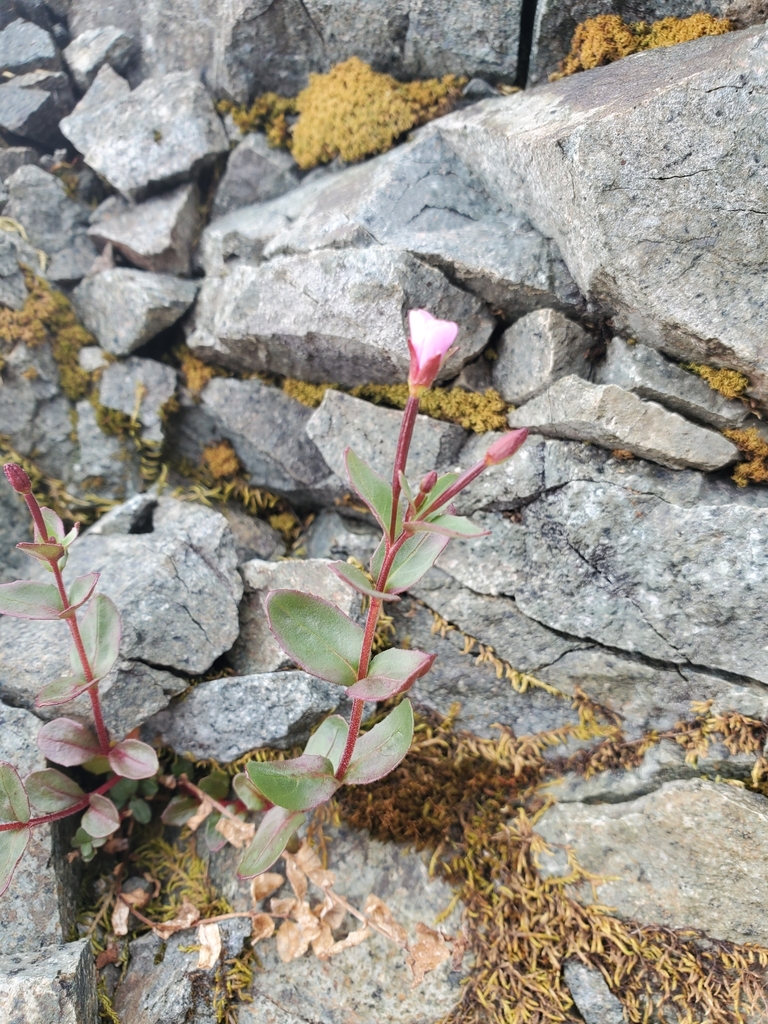
Photo: parent species Epilobium glaberrimum · no rights reserved · CC0
Family: Onagraceae · Type: Herb · Native
Epilobium glaberrimum subsp. fastigiatum is a native California herb in the Onagraceae family, recognized by but glaucous coating and high elevation habitat diagnostic.
Subspecies of tall willowherb is a California native perennial found in the Klamath Ranges, northern Coast Ranges, California Ranges, Sierra Nevada, and Warner Mountains in gravel bars, scree, roadsides, and moist rocky areas at elevations of 1,200 to 3,800 meters. Flowering from June to September, this plant produces rose-purple to pink flowers 3.4 to 8 millimeters long with distinctive coloration. Growing with stems less than 35 centimeters tall, it appears generally simple and has a distinctive glaucous appearance. Its leaves are narrow, measuring 10 to 35 millimeters long, and range from lanceolate to narrowly ovate in shape. The elongated fruit develops 20 to 55 millimeters long with a slender pedicel supporting its delicate structure.
Identification and appearance
Key characters: 28 sympatric species but glaucous coating and high elevation habitat diagnostic
Habitat and range
Habitat: Gravel bars, scree, roadsides, moist rocky areas
Elevation: 1200-3800 m
California counties: Mono, Alpine, Inyo, Fresno, Tehama, Tulare, Madera, Trinity, Siskiyou, Modoc, Riverside, Mariposa, El Dorado, Amador, Plumas, Shasta, Placer, Humboldt, Del Norte, Tuolumne
Outside California: to western Canada, Montana, Wyoming
Bloom period
Epilobium glaberrimum subsp. fastigiatum blooms Jun-Sep.
How to tell it apart
vs Penstemon: Epilobium has 4 notched petals and opposite leaves; Penstemon has 5-lobed tubular flowers (snapdragon family).; vs Gambelia: Epilobium has 4 notched petals; Gambelia has 5-lobed tubular snapdragon-like flowers.; vs Fuchsia: Epilobium has notched petals spreading flat; Fuchsia has dangling tubular flowers with protruding stamens.; vs Keckiella: Epilobium has 4 notched petals; Keckiella has 5-lobed tubular snapdragon-like flowers.; vs Diplacus: Epilobium has 4 notched petals; Diplacus has 5-lobed tubular monkey flowers.
Frequently asked questions
Is Epilobium glaberrimum subsp. fastigiatum native to California?
Yes. Epilobium glaberrimum subsp. fastigiatum is native to California (recorded as native).
When does Epilobium glaberrimum subsp. fastigiatum bloom?
Epilobium glaberrimum subsp. fastigiatum blooms Jun-Sep.
Where in California does Epilobium glaberrimum subsp. fastigiatum grow?
Epilobium glaberrimum subsp. fastigiatum occurs in Mono, Alpine, Inyo, Fresno, Tehama, Tulare, Madera, Trinity and other counties, at elevations of 1200-3800 m.
What plant family does Epilobium glaberrimum subsp. fastigiatum belong to?
Epilobium glaberrimum subsp. fastigiatum is in the Onagraceae family, genus Epilobium.
What habitat does Epilobium glaberrimum subsp. fastigiatum grow in?
Epilobium glaberrimum subsp. fastigiatum grows in Gravel bars, scree, roadsides, moist rocky areas.
Related species
Other California species in the same genus, family, or bioregion.
Sources: Jepson eFlora · Index of California Plant Names · CalPhotos
Last updated 2026-10-07
Data from The California Species Project — 14,000+ California species with verified data from CNPS, CDFW, USFWS, Cal-IPC, and more.