Epilobium minutum
Chaparral willowherb
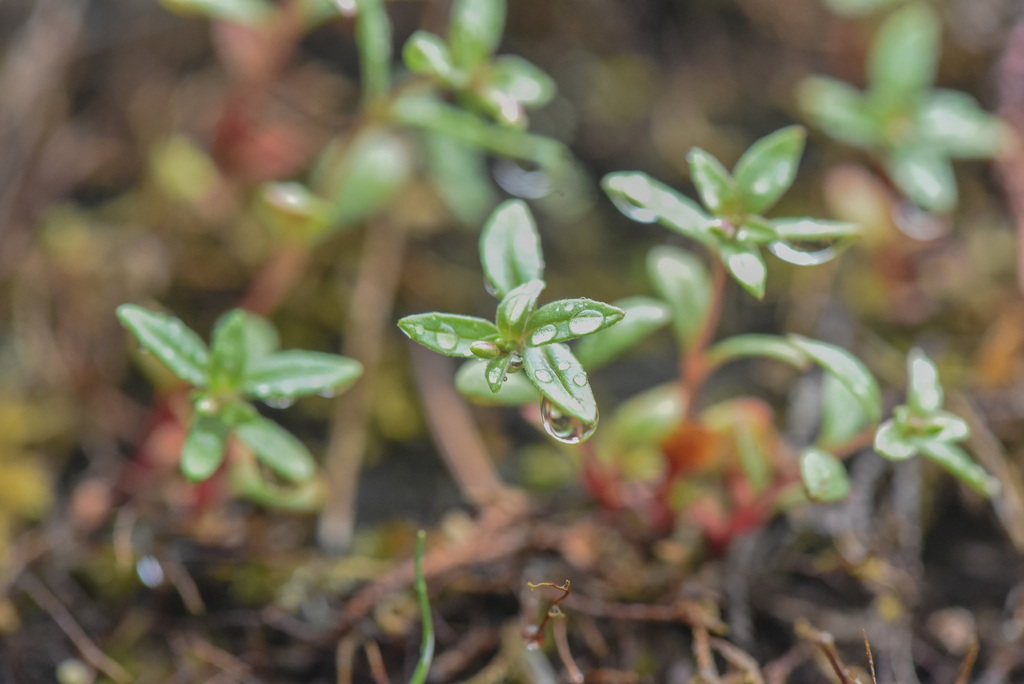
no rights reserved · CC0
Family: Onagraceae · Type: Herb · Native
Epilobium minutum (Chaparral willowherb) is a native California herb in the Onagraceae family, recognized by but dry habitat preference helps distinguish from most others.
Chaparral willowherb is a California native annual found in northwestern California, the Cascade Range, northern and central Sierra Nevada, Sacramento Valley, central western California, San Bernardino Mountains, Peninsular Ranges, Great Basin, and northern desert mountains in dry, open, disturbed areas and vernal pools at elevations of 15 to 2,320 meters. Flowering from April to September, this plant produces delicate white or pink flowers 2 to 5 millimeters long with a club-like stigma. Growing up to 40 centimeters tall with a taproot and stems that become slightly peeling near the base, it has a slender, upright form. Its leaves are opposite near the base and alternate higher on the stem, generally lanceolate to narrowly elliptic, measuring 9 to 25 millimeters long and nearly glabrous. The plant produces slender fruits 9 to 28 millimeters long, with seeds featuring a distinctive netted surface and readily deciduous hair-tuft.
Identification and appearance
Key characters: 32 sympatric species but dry habitat preference helps distinguish from most others
Habitat and range
Habitat: Dry, open, disturbed areas, vernal pools, often after fire
Elevation: 15-2320 m
California counties: Humboldt, Mendocino, Kern, Shasta, Lake, Del Norte, Butte, Tuolumne, San Mateo, Nevada, Siskiyou, Glenn, Yolo, Sonoma, Stanislaus, Placer, Trinity, Plumas, Tehama, El Dorado, San Benito, Santa Barbara, Marin, Alameda, Colusa, Lassen, Napa, Contra Costa, Inyo, Sierra, San Bernardino, San Luis Obispo, San Diego, Monterey, Modoc, Fresno, Sacramento, Yuba, Santa Clara, Solano, Santa Cruz, Amador, Mariposa, Los Angeles, Mono, Calaveras
Outside California: to British Columbia, Montana, western Nevada
Bloom period
Epilobium minutum blooms Apr-Sep.
How to tell it apart
vs Penstemon: Epilobium has 4 notched petals and opposite leaves; Penstemon has 5-lobed tubular flowers (snapdragon family).; vs Gambelia: Epilobium has 4 notched petals; Gambelia has 5-lobed tubular snapdragon-like flowers.; vs Fuchsia: Epilobium has notched petals spreading flat; Fuchsia has dangling tubular flowers with protruding stamens.; vs Keckiella: Epilobium has 4 notched petals; Keckiella has 5-lobed tubular snapdragon-like flowers.; vs Diplacus: Epilobium has 4 notched petals; Diplacus has 5-lobed tubular monkey flowers.
Frequently asked questions
Is Epilobium minutum native to California?
Yes. Epilobium minutum is native to California (recorded as native).
When does Epilobium minutum bloom?
Epilobium minutum blooms Apr-Sep.
Where in California does Epilobium minutum grow?
Epilobium minutum occurs in Humboldt, Mendocino, Kern, Shasta, Lake, Del Norte, Butte, Tuolumne and other counties, at elevations of 15-2320 m.
What plant family does Epilobium minutum belong to?
Epilobium minutum is in the Onagraceae family, genus Epilobium.
What habitat does Epilobium minutum grow in?
Epilobium minutum grows in Dry, open, disturbed areas, vernal pools, often after fire.
Related species
Other California species in the same genus, family, or bioregion.
Sources: Jepson eFlora · Index of California Plant Names · CalPhotos
Last updated 2026-10-07
Data from The California Species Project — 14,000+ California species with verified data from CNPS, CDFW, USFWS, Cal-IPC, and more.