Epipactis gigantea
Stream orchid, Stream Orchid
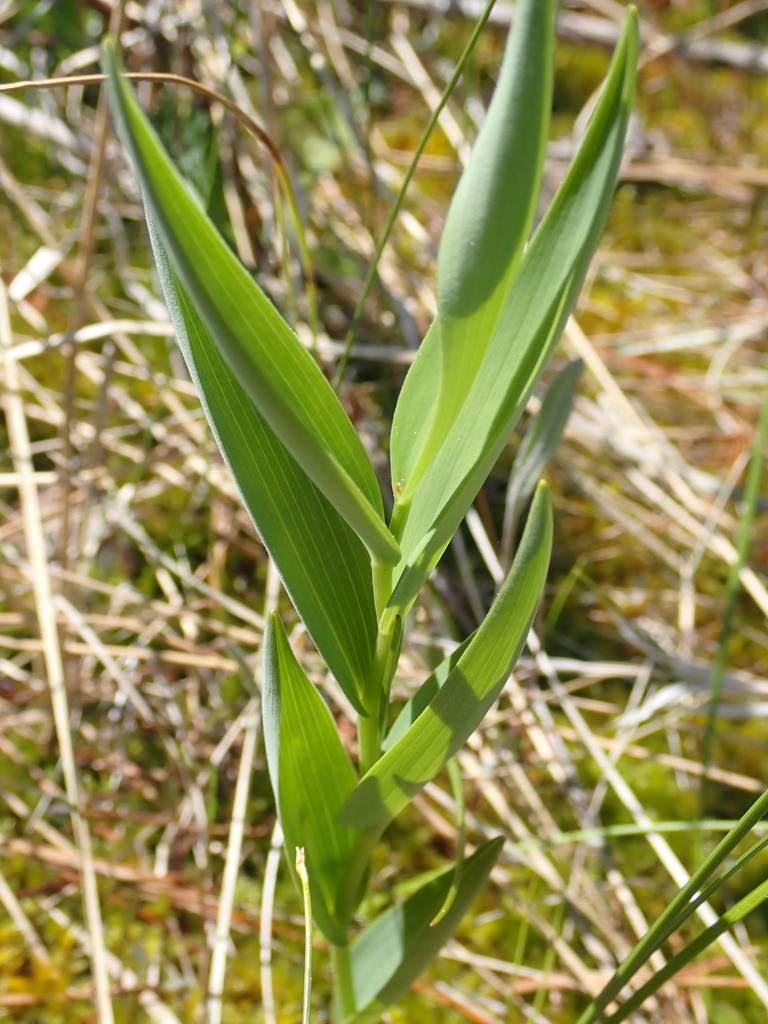
no rights reserved, uploaded by Shane Johnson · CC0
Family: Orchidaceae · Type: Herb · Native
Epipactis gigantea (Stream orchid) is a native California herb in the Orchidaceae family, recognized by habitat preference (wet vs dry) and petal size.
Stream orchid is a California native perennial found in the California Floristic Province, Great Basin, and Desert regions in seeps, wet meadows, and streambanks at elevations up to 2,600 meters. Flowering from March to October, this plant produces green to red flowers with lateral petals 13 to 15 millimeters long, featuring a uniquely colored lip that transitions from greenish-yellow to yellow with red-purple veining. Growing with robust stems 30 to 70 centimeters tall, sometimes reaching up to 1 meter in height, it develops an elegant vertical structure. Its leaves are 5 to 15 centimeters long, ranging from lanceolate to wide-elliptic in shape, displaying a vibrant green coloration. The plant produces elongated fruits measuring 20 to 28 millimeters in length, adding to its distinctive woodland orchid characteristics.
Identification and appearance
Key characters: 1 sympatric species; distinguished by habitat preference (wet vs dry) and petal size
Habitat and range
Habitat: Seeps, wet meadows, streambanks
Elevation: < 2600 m
California counties: Humboldt, San Francisco, San Luis Obispo, San Bernardino, Orange, Los Angeles, Riverside, Mendocino, Santa Barbara, Inyo, San Diego, Butte, Tuolumne, Modoc, Ventura, Santa Clara, Sonoma, Tulare, Santa Cruz, Plumas, Del Norte, Calaveras, Lake, Contra Costa, Mono, Fresno, Yolo, Napa, El Dorado, Monterey, Sierra, Mariposa, Lassen, Kern, Glenn, Imperial, Alameda, San Mateo, Madera, Marin, Colusa, Tehama, Trinity, Shasta, Nevada, Stanislaus, Siskiyou, Solano, San Benito
Outside California: to British Columbia, South Dakota, Texas, Mexico
Bloom period
Epipactis gigantea blooms Mar-Oct.
How to tell it apart
vs Maianthemum: Epipactis has pleated leaves and orchid flowers with a distinct lip petal, while Maianthemum has smooth leaves and tiny 4-parted flowers.; vs Veratrum: Epipactis leaves have 3-5 pleats and orchid flowers, while Veratrum has heavily pleated fan-like leaves and small 6-parted flowers in large clusters.; vs Platanthera: Epipactis leaves have multiple pleats and flowers lack spurs, while Platanthera leaves have one central fold and flowers have spurs.; vs Cymbidium: Epipactis has pleated leaves arranged up the stem, while cultivated Cymbidium has smooth strap-like leaves in clusters.; vs Iris: Epipactis has pleated leaves arranged alternately up the stem, while Iris has smooth sword-shaped leaves in fans from the base.
Frequently asked questions
Is Epipactis gigantea native to California?
Yes. Epipactis gigantea is native to California (recorded as native).
When does Epipactis gigantea bloom?
Epipactis gigantea blooms Mar-Oct.
Where in California does Epipactis gigantea grow?
Epipactis gigantea occurs in Humboldt, San Francisco, San Luis Obispo, San Bernardino, Orange, Los Angeles, Riverside, Mendocino and other counties, at elevations of < 2600 m.
What plant family does Epipactis gigantea belong to?
Epipactis gigantea is in the Orchidaceae family, genus Epipactis.
What habitat does Epipactis gigantea grow in?
Epipactis gigantea grows in Seeps, wet meadows, streambanks.
Related species
Other California species in the same genus, family, or bioregion.
Sources: Jepson eFlora · Index of California Plant Names · CalPhotos
Last updated 2026-10-07
Data from The California Species Project — 14,000+ California species with verified data from CNPS, CDFW, USFWS, Cal-IPC, and more.