Eremalche parryi subsp. kernensis
Kern mallow, Kern Mallow
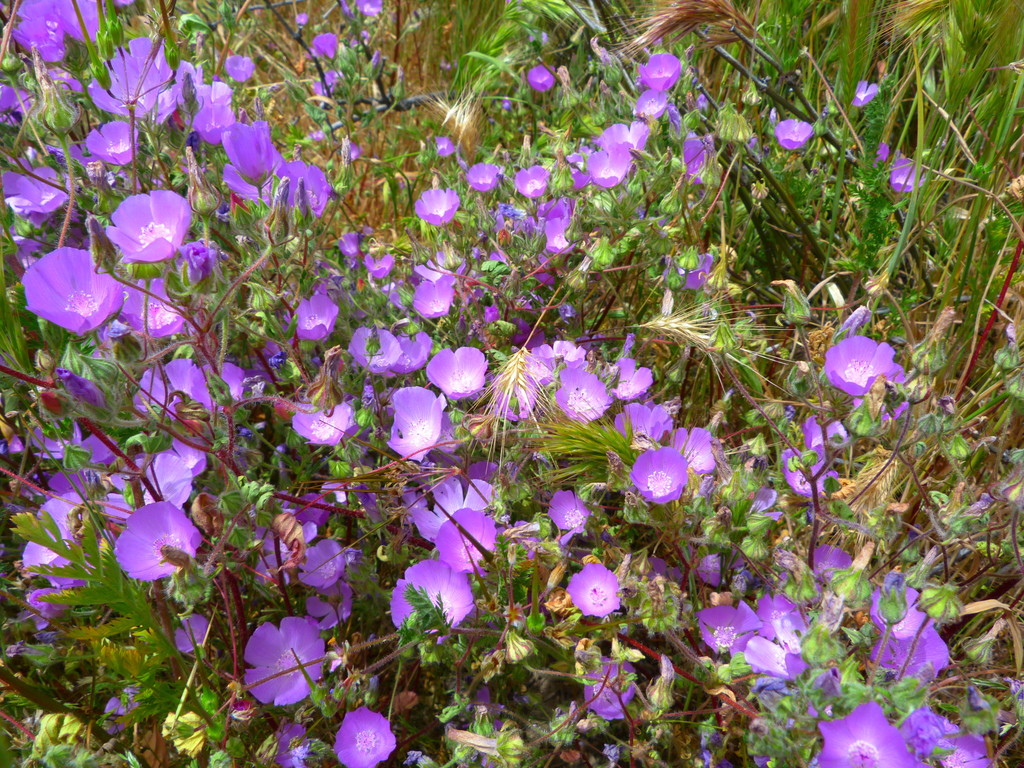
Photo: parent species Eremalche parryi · (c) Zack Abbey, some rights reserved (CC BY) · licence
Family: Malvaceae · Type: Herb · Native
Conservation status: CNPS 1B.2 · Endangered
Eremalche parryi subsp. kernensis (Kern mallow) is a native California herb in the Malvaceae family, recognized by differentiated by erect habit, larger flowers, and deeply dissected leaves.
Kern mallow is a rare (CNPS 1B.2) California native annual found in southern San Joaquin Valley and southern Coast Ranges in Kern and San Luis Obispo counties, growing on eroded hillsides and alkali flats at elevations of 100 to 1,000 meters. Flowering from March to May, this plant produces white to pale purple petals 8 to 25 millimeters long with delicate, distinctive blossoms. Growing as a low-spreading plant with multiple stems, it develops compact growth patterns typical of harsh desert and alkali environments. Its leaves are relatively small and adapted to arid conditions, likely featuring lobed or divided shapes to minimize water loss. The fruit develops with 9 to 19 distinctive segment clusters, reflecting the plant's resilience in challenging landscapes.
Identification and appearance
Key characters: 2 sympatric species; differentiated by erect habit, larger flowers, and deeply dissected leaves
Habitat and range
Habitat: Eroded hillsides, alkali flats
Elevation: 100-1000 m
California counties: Santa Barbara, Kern, San Luis Obispo, Ventura, San Joaquin, Tulare, San Diego, Kings
Bloom period
Eremalche parryi subsp. kernensis blooms Mar-May.
Conservation status
CNPS 1B.2 · Endangered
How to tell it apart
vs Alyogyne: Eremalche is a small prostrate annual; Alyogyne is a large upright shrub with much larger flowers.; vs Malva: Eremalche is native with sparse hairs in deserts; Malva is a weedy introduced plant in disturbed areas.; vs Sidalcea: Eremalche is prostrate with symmetric leaves; Sidalcea is upright with palmately lobed leaves.; vs Sphaeralcea: Eremalche is a small green annual; Sphaeralcea is a larger perennial with gray hairs and orange flowers.; vs Chylismia: Eremalche has mallow flowers with fused stamens; Chylismia has 4-petaled evening primrose flowers with 8 stamens.
Frequently asked questions
Is Eremalche parryi subsp. kernensis native to California?
Yes. Eremalche parryi subsp. kernensis is native to California (recorded as native).
When does Eremalche parryi subsp. kernensis bloom?
Eremalche parryi subsp. kernensis blooms Mar-May.
Where in California does Eremalche parryi subsp. kernensis grow?
Eremalche parryi subsp. kernensis occurs in Santa Barbara, Kern, San Luis Obispo, Ventura, San Joaquin, Tulare, San Diego, Kings, at elevations of 100-1000 m.
What plant family does Eremalche parryi subsp. kernensis belong to?
Eremalche parryi subsp. kernensis is in the Malvaceae family, genus Eremalche.
Is Eremalche parryi subsp. kernensis rare or endangered?
Eremalche parryi subsp. kernensis carries California Rare Plant Rank 1B.2, state rank S3.
Related species
Other California species in the same genus, family, or bioregion.
Sources: Jepson eFlora · CNPS Rare Plant Inventory · Index of California Plant Names · CalPhotos · CDFW CNDDB
Last updated 2026-10-07
Data from The California Species Project — 14,000+ California species with verified data from CNPS, CDFW, USFWS, Cal-IPC, and more.