Eremogone congesta var. crassula
Rough sandwort
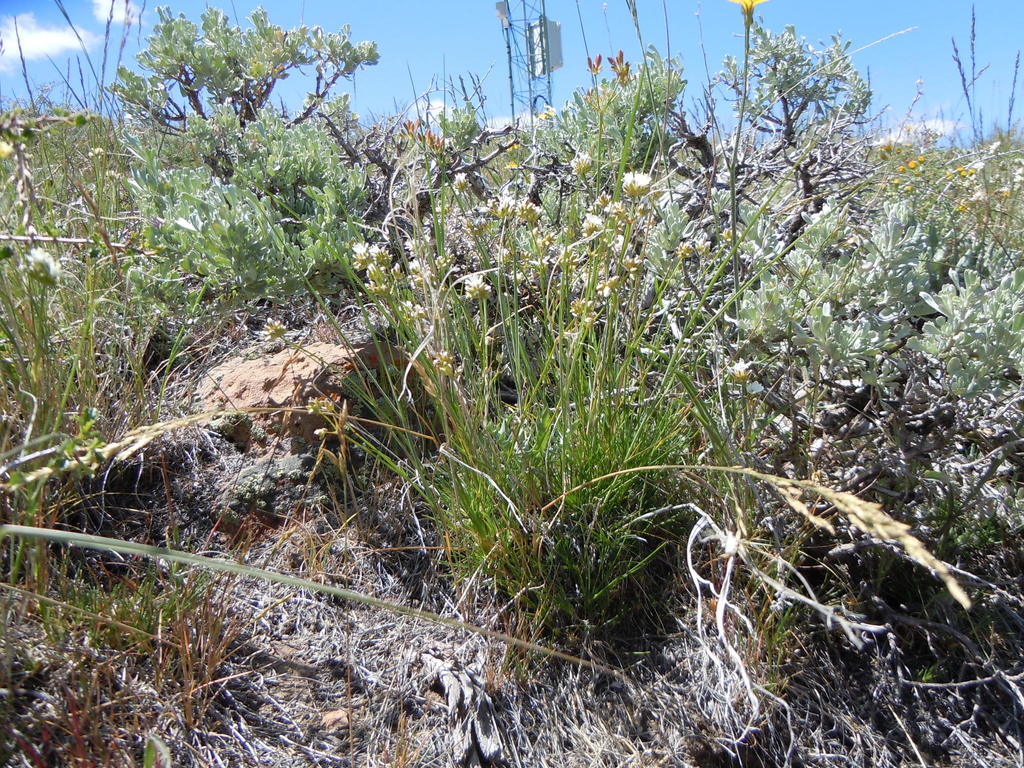
(c) Matt Lavin, some rights reserved (CC BY-SA) · licence
Family: Caryophyllaceae · Type: Subshrub · Native
Eremogone congesta var. crassula (Rough sandwort) is a native California subshrub in the Caryophyllaceae family, recognized by fleshy leaves and dense inflorescence.
Rough sandwort is a native perennial found in the Klamath Ranges, northern Coast Ranges, and Modoc Plateau on dry ridges and rock crevices at elevations of 2,200 to 2,500 meters. Flowering from June to July, this plant produces small white flowers in dense clusters with bracts closely enveloping the sepals. Growing with compact stems that form dense clusters, it develops a sturdy, low-growing habit typical of alpine and rocky environments. Its leaves are notably thick and fleshy, measuring 20 to 30 millimeters long and only 1 to 2 millimeters wide, giving the plant a distinctive succulent-like appearance. The flower sepals are blunt and rounded, measuring 3.5 to 4 millimeters in length, contributing to its delicate yet robust botanical structure.
Identification and appearance
Key characters: 5 sympatric species, distinguished by fleshy leaves and dense inflorescence
Habitat and range
Habitat: dry ridges, rock crevices
Elevation: 2200-2500 m
California counties: Tehama, Mendocino, Sierra, Siskiyou, Tulare, Glenn, Trinity, Modoc, Humboldt, Lake
Outside California: southwestern Oregon
Bloom period
Eremogone congesta var. crassula blooms Jun-Jul.
How to tell it apart
vs Sabulina: Eremogone has rigid, spine-tipped needle leaves in dense cushions; Sabulina has softer, narrower leaves more scattered on stems.; vs Minuartia: Eremogone cushions have spine-tipped needles that prick; Minuartia has softer, more flexible narrow leaves.; vs Ivesia: Eremogone has simple needle leaves in cushions; Ivesia has compound, fern-like leaves in rosettes.; vs Hesperolinon: Eremogone forms cushions of sharp needle leaves; Hesperolinon is upright with scattered narrow leaves.; vs Linanthus: Eremogone has dense needle-leaf cushions; Linanthus has palmate-divided leaves like tiny hands.
Frequently asked questions
Is Eremogone congesta var. crassula native to California?
Yes. Eremogone congesta var. crassula is native to California (recorded as native).
When does Eremogone congesta var. crassula bloom?
Eremogone congesta var. crassula blooms Jun-Jul.
Where in California does Eremogone congesta var. crassula grow?
Eremogone congesta var. crassula occurs in Tehama, Mendocino, Sierra, Siskiyou, Tulare, Glenn, Trinity, Modoc and other counties, at elevations of 2200-2500 m.
What plant family does Eremogone congesta var. crassula belong to?
Eremogone congesta var. crassula is in the Caryophyllaceae family, genus Eremogone.
What habitat does Eremogone congesta var. crassula grow in?
Eremogone congesta var. crassula grows in dry ridges, rock crevices.
Related species
Other California species in the same genus, family, or bioregion.
- Eremogone congesta var. simulans — Capitate sandwort
- Eremogone congesta var. subcongesta — Capitate sandwort
- Eremogone congesta var. suffrutescens — Suffrutescent sandwort
- Eremogone ferrisiae — Ferris' sandwort
- Eremogone kingii var. glabrescens — King's sandwort
- Eremogone macradenia — Mojave or desert sandwort
Sources: Jepson eFlora · Index of California Plant Names · CalPhotos
Last updated 2026-10-07
Data from The California Species Project — 14,000+ California species with verified data from CNPS, CDFW, USFWS, Cal-IPC, and more.