Eremothera boothii subsp. decorticans
Shredding evening-primrose, Shredding Evening-Primrose
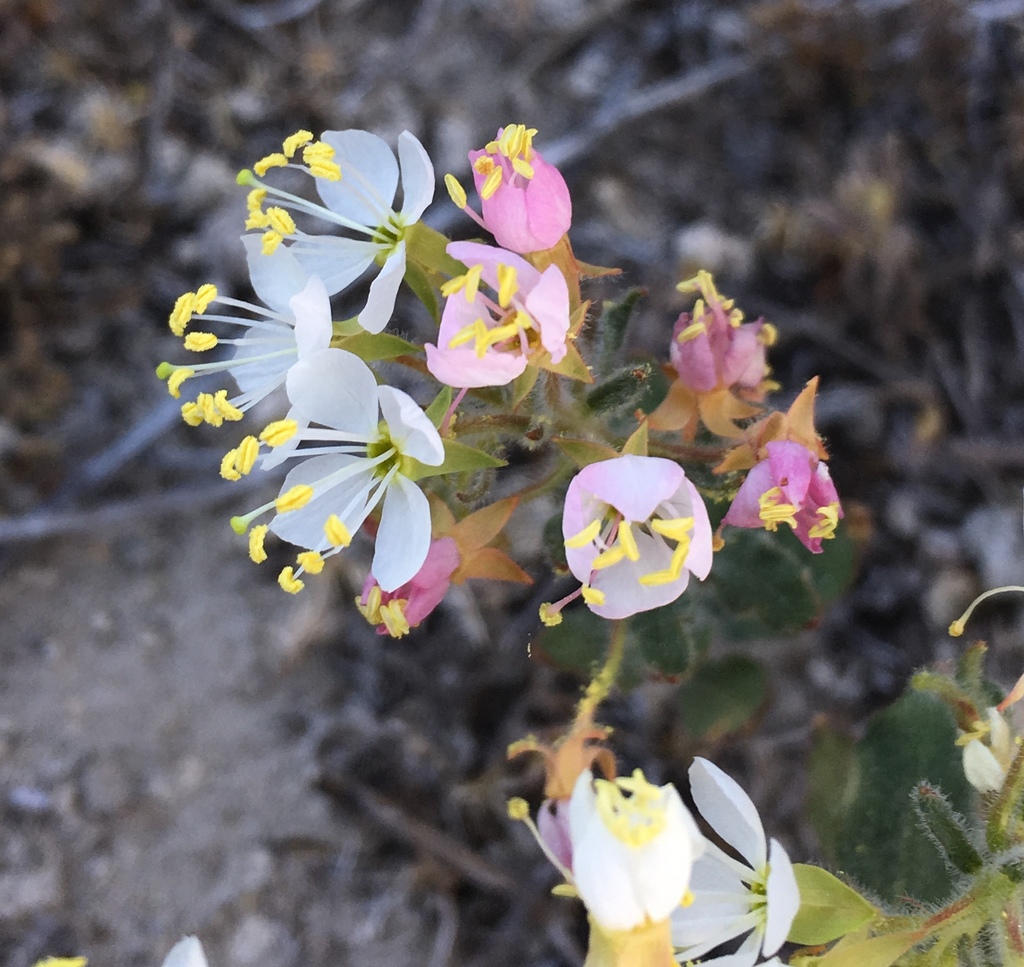
(c) Matt Berger, some rights reserved (CC BY), uploaded by Matt Berger · licence
Family: Onagraceae · Type: Herb · Native
Eremothera boothii subsp. decorticans (Shredding evening-primrose) is a native California herb in the Onagraceae family, recognized by (parent taxon). Geographic isolation from other subspecies.
Shredding evening-primrose is a California native annual found in southern Sierra Nevada foothills, Tehachapi Mountains, southern San Joaquin Valley, San Francisco Bay Area, south Coast Ranges, and western Transverse Ranges in open, generally steep and rocky habitats, especially on shale slopes at elevations below 1,850 meters. Flowering from March to June, this plant produces yellow flowers in delicate clusters. Growing with sturdy stems 12 to 65 centimeters tall, it develops a well-defined basal rosette with mostly glabrous vegetation. Its leaves are generally 20 to 80 millimeters long, predominantly lanceolate or narrowly ovate on the lower stem, ranging from entire to minutely toothed. The fruit is slightly curved and approximately 1.7 to 2.3 millimeters wide.
Identification and appearance
Key characters: 1 sympatric species (parent taxon). Geographic isolation from other subspecies
Habitat and range
Habitat: Open, generally steep and rocky, especially shale slopes
Elevation: < 1850 m
California counties: Ventura, Kern, Riverside, Los Angeles, Alameda, San Bernardino, San Joaquin, Stanislaus, Tulare, Fresno, Monterey, San Benito, San Luis Obispo, Santa Barbara, Merced, San Diego, Kings, Inyo, Imperial
Bloom period
Eremothera boothii subsp. decorticans blooms Mar-Jun.
How to tell it apart
vs Chylismia: Eremothera has white/pink flowers opening at night; Chylismia has yellow day flowers.; vs Chorizanthe: Eremothera has regular 4-petaled flowers; Chorizanthe has tiny flowers in papery involucres (buckwheat family).; vs Oenothera: Eremothera has white/pink flowers; Oenothera typically has yellow flowers with 4-lobed stigma.; vs Camissonia: Eremothera has white/pink night flowers; Camissonia has yellow day flowers.; vs Gayophytum: Eremothera has larger white/pink flowers; Gayophytum has tiny thread-like stems and minute flowers.
Frequently asked questions
Is Eremothera boothii subsp. decorticans native to California?
Yes. Eremothera boothii subsp. decorticans is native to California (recorded as native).
When does Eremothera boothii subsp. decorticans bloom?
Eremothera boothii subsp. decorticans blooms Mar-Jun.
Where in California does Eremothera boothii subsp. decorticans grow?
Eremothera boothii subsp. decorticans occurs in Ventura, Kern, Riverside, Los Angeles, Alameda, San Bernardino, San Joaquin, Stanislaus and other counties, at elevations of < 1850 m.
What plant family does Eremothera boothii subsp. decorticans belong to?
Eremothera boothii subsp. decorticans is in the Onagraceae family, genus Eremothera.
What habitat does Eremothera boothii subsp. decorticans grow in?
Eremothera boothii subsp. decorticans grows in Open, generally steep and rocky, especially shale slopes.
Related species
Other California species in the same genus, family, or bioregion.
Sources: Jepson eFlora · Index of California Plant Names · CalPhotos
Last updated 2026-10-07
Data from The California Species Project — 14,000+ California species with verified data from CNPS, CDFW, USFWS, Cal-IPC, and more.