Eriastrum densifolium subsp. sanctorum
Santa ana river woolly-star, Santa Ana River Woollystar
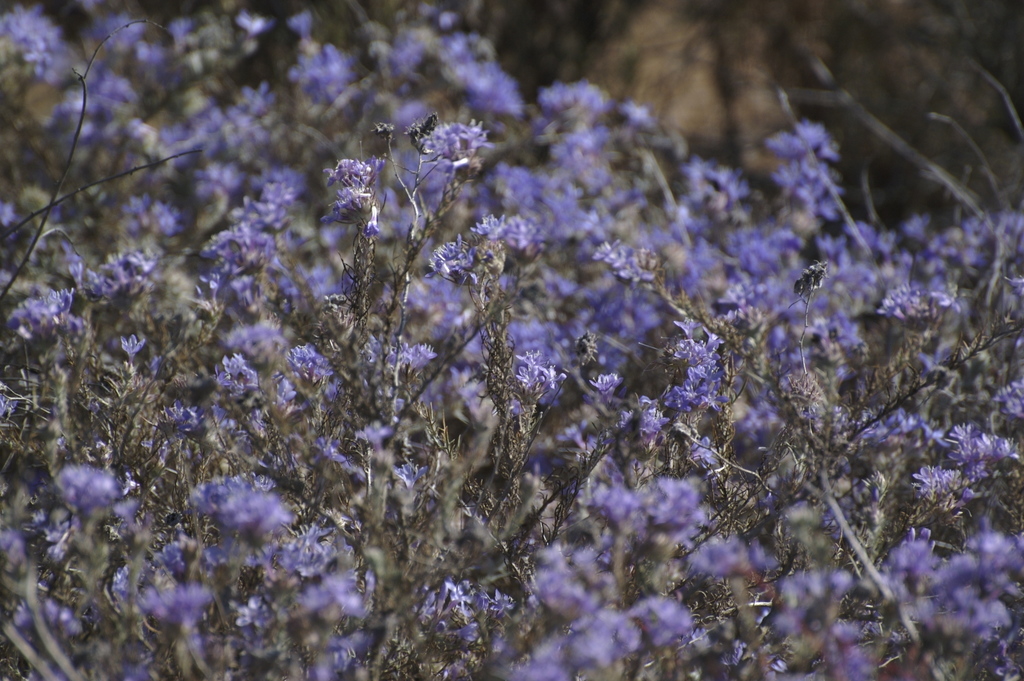
(c) Jerry Kirkhart, some rights reserved (CC BY) · licence
Family: Polemoniaceae · Type: Subshrub · Native
Conservation status: CNPS 1B.1 · Endangered
Eriastrum densifolium subsp. sanctorum (Santa ana river woolly-star) is a native California subshrub in the Polemoniaceae family, recognized by large size and exceptionally long corolla tubes diagnostic.
Santa ana river woolly-star is a rare (CNPS 1B.1) California native shrub found in eastern Santa Clara Mountains in the Santa Ana River drainage of southwestern San Bernardino County, growing in washes, floodplains, and sandbars in alluvial scrub and chaparral at elevations of 270 to 800 meters. Flowering from June to July, this plant produces purple to lavender to white flowers with blue to pale blue lobes, arranged in dense terminal heads 4 to 30 flowers wide. Growing 25 to 75 centimeters tall with mostly erect stems and well-developed short shoots, it features densely white-woolly branches with distinctive axillary growth. Its leaves are 25 to 50 millimeters long, gray-green to white-woolly, with 0 to 7 small lobes and a somewhat rigid texture. The fruit is a capsule approximately 5.5 to 5.8 millimeters long, typically containing 2 to 11 brown, elliptic seeds per chamber.
Identification and appearance
Key characters: 9 sympatric species; large size and exceptionally long corolla tubes diagnostic
Habitat and range
Habitat: Washes, floodplains, sandbars in riverbeds, in alluvial scrub, chaparral
Elevation: 270-800 m
California counties: San Bernardino, Orange, Riverside
Bloom period
Eriastrum densifolium subsp. sanctorum blooms Jun-Jul.
Conservation status
CNPS 1B.1 · Endangered
How to tell it apart
vs Navarretia: Eriastrum has fluffy white woolly hairs; Navarretia has spine-tipped bracts and leaves without woolly hairs.; vs Gilia: Eriastrum flower clusters are densely woolly-hairy; Gilia flower clusters lack woolly hairs.; vs Loeseliastrum: Eriastrum has woolly tufted hairs and radial flowers; Loeseliastrum has simple hairs and bilateral flowers.; vs Langloisia: Eriastrum has woolly tufted white hairs; Langloisia has stiff branched bristly hairs.; vs Petalonyx: Eriastrum has opposite lobed leaves in Polemoniaceae; Petalonyx has alternate simple leaves in Loasaceae.
Frequently asked questions
Is Eriastrum densifolium subsp. sanctorum native to California?
Yes. Eriastrum densifolium subsp. sanctorum is native to California (recorded as native).
When does Eriastrum densifolium subsp. sanctorum bloom?
Eriastrum densifolium subsp. sanctorum blooms Jun-Jul.
Where in California does Eriastrum densifolium subsp. sanctorum grow?
Eriastrum densifolium subsp. sanctorum occurs in San Bernardino, Orange, Riverside, at elevations of 270-800 m.
What plant family does Eriastrum densifolium subsp. sanctorum belong to?
Eriastrum densifolium subsp. sanctorum is in the Polemoniaceae family, genus Eriastrum.
Is Eriastrum densifolium subsp. sanctorum rare or endangered?
Eriastrum densifolium subsp. sanctorum carries California Rare Plant Rank 1B.1, state rank S1.
Related species
Other California species in the same genus, family, or bioregion.
- Eriastrum diffusum — Spreading woolly-star
- Eriastrum diffusum subsp. coachellae — Coachella woolly-star
- Eriastrum diffusum subsp. diffusum — Spreading woolly-star
- Eriastrum eremicum subsp. eremicum — Desert woolly-star
- Eriastrum ertterae — Lime ridge woolly-star
- Eriastrum filifolium — Thread-leaved woolly-star
Sources: Jepson eFlora · CNPS Rare Plant Inventory · Index of California Plant Names · CalPhotos · CDFW CNDDB
Last updated 2026-10-07
Data from The California Species Project — 14,000+ California species with verified data from CNPS, CDFW, USFWS, Cal-IPC, and more.