Eriobotrya japonica
Loquat
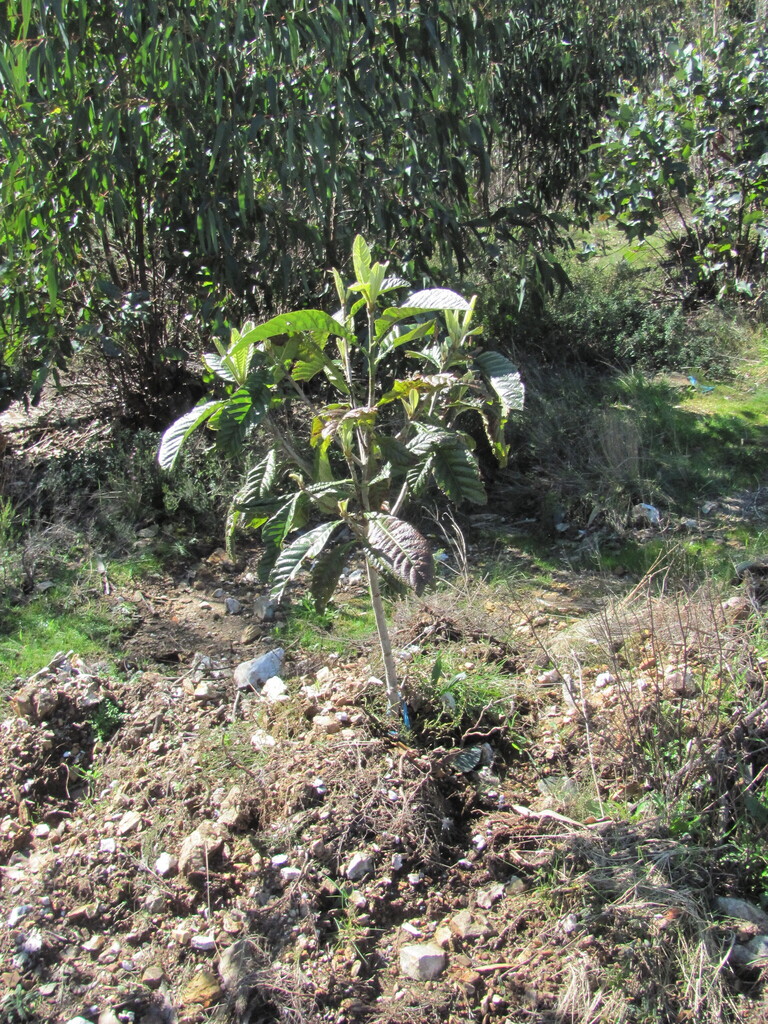
(c) zebedeugalinha, some rights reserved (CC BY) · licence
Family: Rosaceae · Type: Tree · Not Native
Eriobotrya japonica (Loquat) is a non-native California tree in the Rosaceae family, recognized by Asian genus representing subtropical branch of Rosaceae; different fruit structure from native stone fruits.
Loquat is a naturalized tree found in the San Francisco Bay Area in urban areas and gardens. Flowering with white, oblong to obovate petals 8 to 10 millimeters long, this tree produces delicate blossoms. Growing to a small size with lance-oblong leaves 15 to 20 centimeters long, tomentose on the underside and glabrous above, with the distal half serrated and acute at the tip. Its leaves have a distinctive texture, being woolly beneath and smooth on top, with toothed edges toward the leaf tip. The fruit is pale orange-yellow, approximately 2 to 3 centimeters in diameter, spherical, and covered in fine hairs with sweet flesh containing 3 to 5 shiny black, ovoid seeds.
Identification and appearance
Key characters: Asian genus representing subtropical branch of Rosaceae; different fruit structure from native stone fruits
Habitat and range
Habitat: Urban areas, gardens
Outside California: warm temperate eastern Asia
How to tell it apart
vs Heteromeles: Eriobotrya (loquat) has very large leaves 15-20 cm with rusty wool beneath and produces large, sweet, fleshy orange pomes; Heteromeles (toyon) has smaller, sharply serrate, glabrous leaves and small bright-red berry-like pomes.; vs Malus: Loquat is evergreen with thick, persistently woolly, deeply corrugated leaves; apples and pears are deciduous with thin, nearly glabrous leaves.; vs Crataegus: Loquat branches are unarmed; hawthorns bear stiff woody thorns.; vs Cotoneaster: Loquat is an erect small tree with large, toothed, woolly leaves; Cotoneaster is a low arching shrub with small, entire, glossy leaves.; vs Amelanchier: Loquat fruit is a large fleshy pome with a few big brown seeds on an evergreen tree; Amelanchier (serviceberry) is a deciduous shrub with small round purple pomes.
Frequently asked questions
Is Eriobotrya japonica native to California?
No. Eriobotrya japonica is not native to California (recorded as not native).
What plant family does Eriobotrya japonica belong to?
Eriobotrya japonica is in the Rosaceae family, genus Eriobotrya.
What habitat does Eriobotrya japonica grow in?
Eriobotrya japonica grows in Urban areas, gardens.
Related species
Other California species in the same genus, family, or bioregion.
Sources: Jepson eFlora · CalPhotos
Last updated 2026-10-07
Data from The California Species Project — 14,000+ California species with verified data from CNPS, CDFW, USFWS, Cal-IPC, and more.