Eriodictyon parryi
Poodle-dog bush
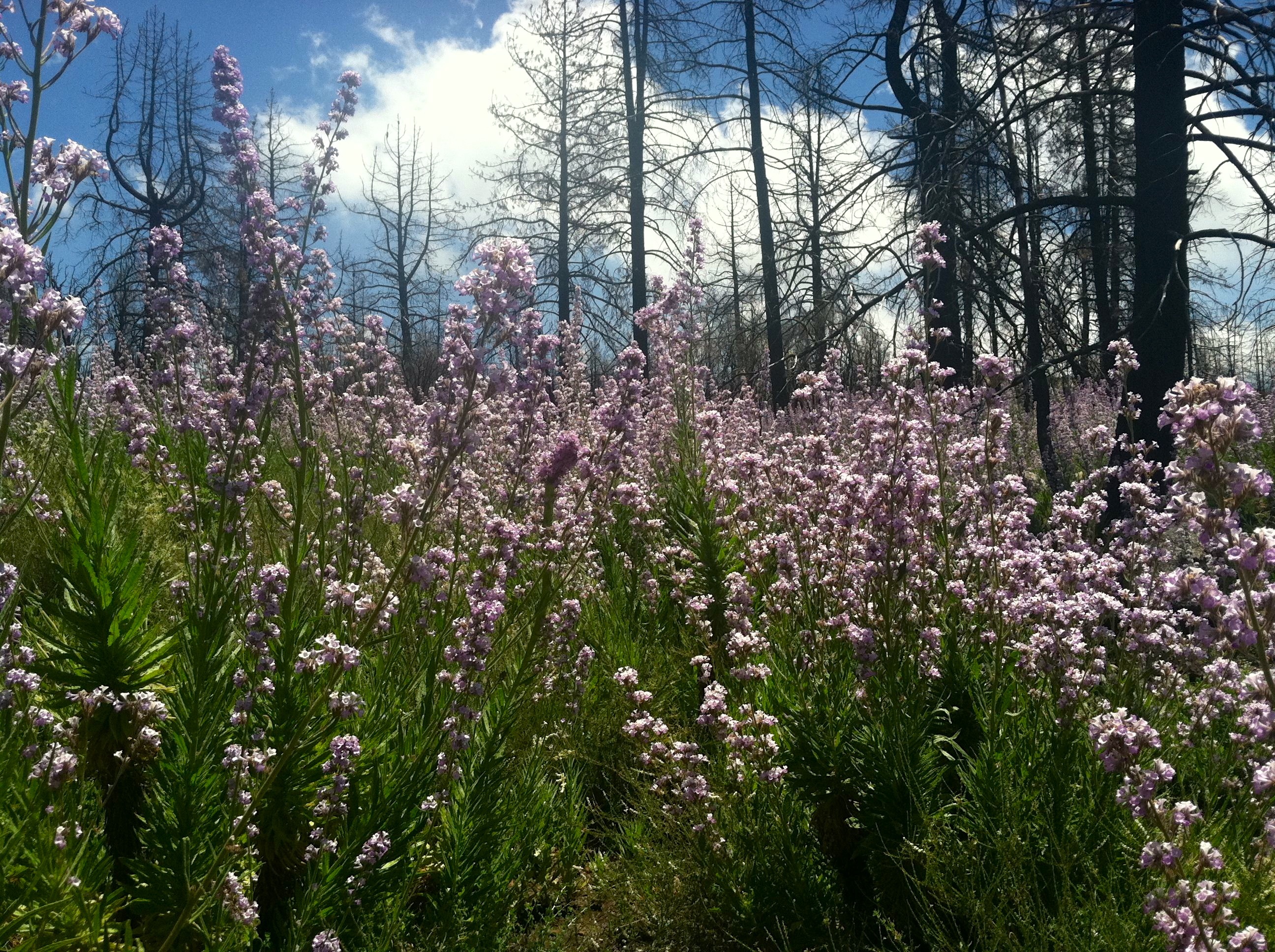
Photo by Chez Brungraber
Family: Namaceae · Type: Subshrub · Native
Eriodictyon parryi (Poodle-dog bush) is a native California subshrub in the Namaceae family, recognized by . Key features: dense glandular sticky coating, large blue-purple flowers, strong scent.
Poodle-dog bush is a native shrub found in southern Sierra Nevada, Tehachapi, southern Coastal Ranges, Transverse Ranges, Peninsular Ranges, desert mountains including Panamint and Little San Bernardino Mountains, and the western edge of the Sonoran Desert at elevations of 120 to 2,440 meters. Flowering from May to August, this plant produces blue, lavender, or purple flowers in dense clusters with funnel-shaped corollas 10 to 20 millimeters long. Growing as a dense, glandular subshrub with erect stems 1 to 3 meters tall and generally woody at the base, it develops stout, branching stems that are notably sticky and strong-scented. Its leaves are dense and sessile, ranging 4 to 30 centimeters long, lanceolate in shape, and may be entire or toothed with upper margins occasionally rolled under. The plant is particularly known for its sticky, glandular texture and tendency to colonize disturbed areas and burned landscapes.
Identification and appearance
Key characters: 14 sympatric species. Key features: dense glandular sticky coating, large blue-purple flowers, strong scent
Habitat and range
Habitat: Generally disturbed areas, chaparral, dry granitic soils of slopes, ridges; often following fires
Elevation: 120-2440 m
California counties: Kern, Los Angeles, Santa Barbara, Inyo, Orange, Fresno, Riverside, San Bernardino, San Diego, San Luis Obispo, Ventura, Tulare
Outside California: Baja California
Bloom period
Eriodictyon parryi blooms May-Aug.
How to tell it apart
vs Salvia: Eriodictyon has tubular flowers in branched clusters; Salvia has 2-lipped flowers in whorled spikes.; vs Baccharis: Eriodictyon has showy tubular flowers with petals; Baccharis has tiny flowers in fuzzy white/tan heads without petals.; vs Eriogonum: Eriodictyon has tubular flowers with petals; Eriogonum has tiny petal-less flowers in ball-like clusters.; vs Heteromeles: Eriodictyon has tubular flowers; Heteromeles has flat-topped clusters of white 5-petaled flowers with red berries.; vs Pseudognaphalium: Eriodictyon is a woody shrub with tubular flowers; Pseudognaphalium is an herb with fuzzy leaves and papery flower heads.
Frequently asked questions
Is Eriodictyon parryi native to California?
Yes. Eriodictyon parryi is native to California (recorded as native).
When does Eriodictyon parryi bloom?
Eriodictyon parryi blooms May-Aug.
Where in California does Eriodictyon parryi grow?
Eriodictyon parryi occurs in Kern, Los Angeles, Santa Barbara, Inyo, Orange, Fresno, Riverside, San Bernardino and other counties, at elevations of 120-2440 m.
What plant family does Eriodictyon parryi belong to?
Eriodictyon parryi is in the Namaceae family, genus Eriodictyon.
What habitat does Eriodictyon parryi grow in?
Eriodictyon parryi grows in Generally disturbed areas, chaparral, dry granitic soils of slopes, ridges; often following fires.
Related species
Other California species in the same genus, family, or bioregion.
Sources: Jepson eFlora · Index of California Plant Names · CalPhotos
Last updated 2026-10-07
Data from The California Species Project — 14,000+ California species with verified data from CNPS, CDFW, USFWS, Cal-IPC, and more.