Eriogonum breedlovei var. shevockii
The needles buckwheat
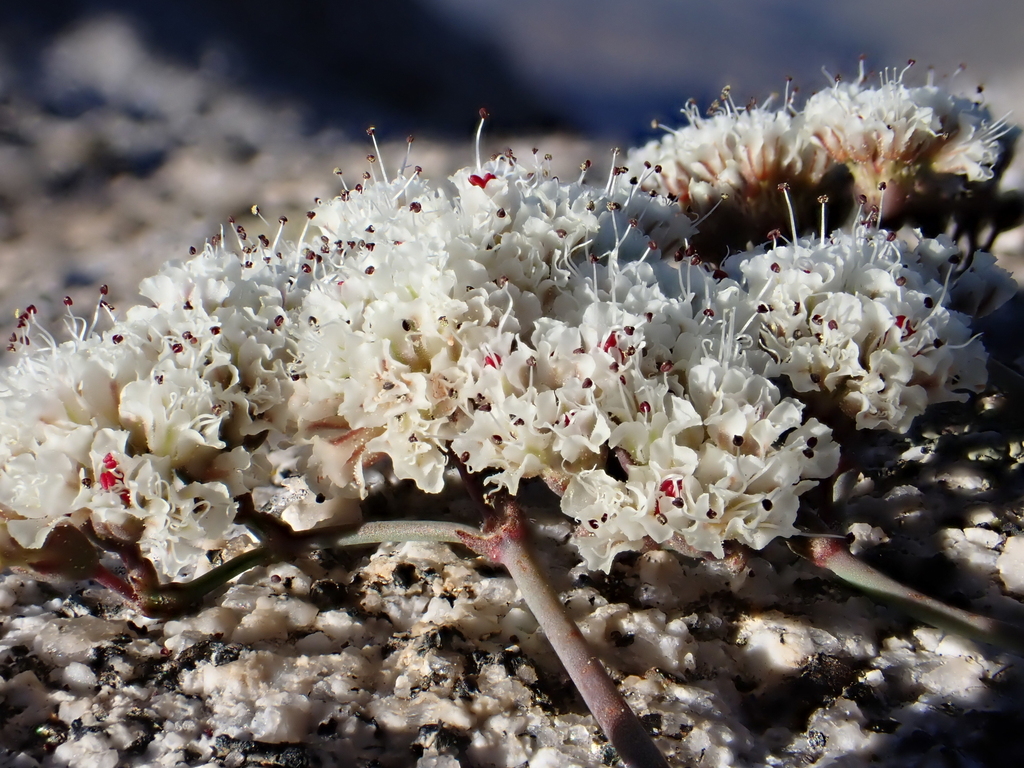
Photo: parent species Eriogonum breedlovei · (c) Ryan Donnelly, some rights reserved (CC BY) · licence
Family: Polygonaceae · Type: Herb · Native
Conservation status: CNPS 4.3
Eriogonum breedlovei var. shevockii (The needles buckwheat) is a native California herb in the Polygonaceae family, recognized by suberect to prostrate growth, thinly glandular stems, longer peduncles (0.3-0.5 cm) on granite.
The needles buckwheat is a rare (CNPS 4.3) California native perennial found in southern Sierra Nevada Mountains, specifically in the Needles, Baker Point, Little Kern River Gorge areas of Kern and Tulare counties on granite landscapes at elevations of 1,800 to 2,300 meters. Flowering from June to October, this plant produces small white to cream-colored flowers in delicate clusters. Growing with suberect to prostrate stems that are thinly covered in glandular hairs, it forms low, compact mats across rocky terrain. Its leaves are small and clustered, providing a subtle, textured appearance against the granite landscape. This distinctive buckwheat thrives in harsh, high-elevation environments, adapting to the rugged granite outcrops of the southern Sierra Nevada Mountains.
Identification and appearance
Key characters: Co-occurs with 67 species; distinguished by suberect to prostrate growth, thinly glandular stems, longer peduncles (0.3-0.5 cm) on granite
Habitat and range
Habitat: Granite
Elevation: 1800-2300 m
California counties: Kern, Tulare
Bloom period
Eriogonum breedlovei var. shevockii blooms Jun-Oct.
Conservation status
CNPS 4.3
How to tell it apart
vs Adenostoma: Eriogonum has flowers in cup-like involucres; Adenostoma has tiny white rose-family flowers in spikes.; vs Salvia: Eriogonum has six similar perianth parts; Salvia has two-lipped tubular flowers.; vs Fagopyrum: Eriogonum has flowers in involucred clusters; Fagopyrum has loose branching sprays without involucres.; vs Artemisia: Eriogonum has cup-surrounded flower clusters; Artemisia has tiny inconspicuous heads in drooping sprays.; vs Chorizanthe: Eriogonum has multiple flowers per involucre; Chorizanthe has one flower per involucre with spiny teeth.
Frequently asked questions
Is Eriogonum breedlovei var. shevockii native to California?
Yes. Eriogonum breedlovei var. shevockii is native to California (recorded as native).
When does Eriogonum breedlovei var. shevockii bloom?
Eriogonum breedlovei var. shevockii blooms Jun-Oct.
Where in California does Eriogonum breedlovei var. shevockii grow?
Eriogonum breedlovei var. shevockii occurs in Kern, Tulare, at elevations of 1800-2300 m.
What plant family does Eriogonum breedlovei var. shevockii belong to?
Eriogonum breedlovei var. shevockii is in the Polygonaceae family, genus Eriogonum.
Is Eriogonum breedlovei var. shevockii rare or endangered?
Eriogonum breedlovei var. shevockii carries California Rare Plant Rank 4.3, state rank S3.
Related species
Other California species in the same genus, family, or bioregion.
Sources: Jepson eFlora · CNPS Rare Plant Inventory · Index of California Plant Names · CalPhotos · CDFW CNDDB
Last updated 2026-10-07
Data from The California Species Project — 14,000+ California species with verified data from CNPS, CDFW, USFWS, Cal-IPC, and more.