Eriophorum gracile
Slender cottongrass, Slender Cottongrass
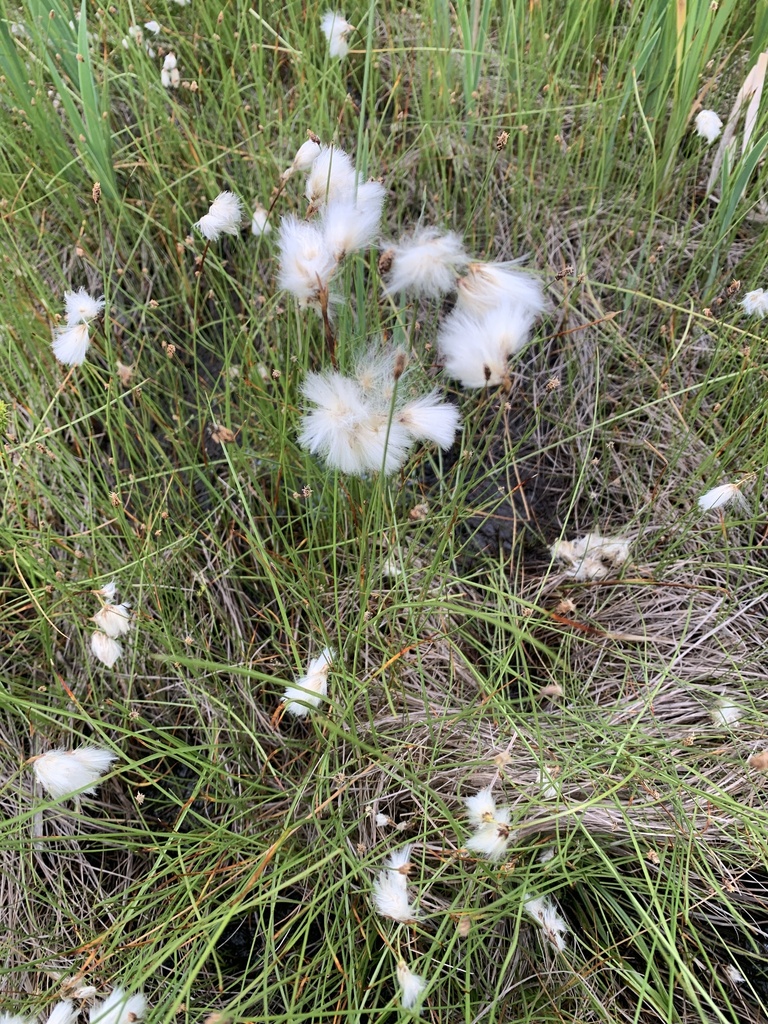
(c) naturalist charlie, some rights reserved (CC BY) · licence
Family: Cyperaceae · Type: Grass · Native
Conservation status: CNPS 4.3
Eriophorum gracile (Slender cottongrass) is a native California grass in the Cyperaceae family, recognized by Circumpolar genus reaching southern range limit in California mountains; unique seed dispersal adaptation within sedge family.
Slender cottongrass is a California native perennial found in the Klamath Ranges, northern California Range, northern and central Sierra Nevada Highlands, and historically in San Francisco Bay Area at elevations of 600 to 2,900 meters in wet meadows and bogs. Flowering from May to July, this plant produces white, delicate perianth bristles 10 to 20 millimeters long that give it a distinctive cotton-like appearance. Growing with smooth stems 30 to 60 centimeters tall and long rhizomes, it spreads gradually across wet landscapes. Its leaves are thin and narrow, measuring 2 to 30 centimeters long and only 1 to 2 millimeters wide, with a distinctively three-sided blade that tapers towards the tip. The plant produces 1 to 5 small spikelets 7 to 11 millimeters long, each with delicate white flower bracts.
Identification and appearance
Key characters: Circumpolar genus reaching southern range limit in California mountains; unique seed dispersal adaptation within sedge family
Habitat and range
Habitat: Wet meadows, bogs
Elevation: generally 600-2900 m
California counties: El Dorado, Lassen, Tuolumne, Sierra, Shasta, Nevada, Butte, Plumas, Siskiyou, Mariposa, Modoc, Madera, Mono, Monterey, Alpine, Mendocino
Outside California: circumboreal
Bloom period
Eriophorum gracile blooms May-Jul.
Conservation status
CNPS 4.3
How to tell it apart
vs Centaurea: Eriophorum has round smooth stems and sedge-like leaves, Centaurea has branched leafy stems.; vs Taraxacum: Eriophorum has multiple stems from base with cotton on each, dandelion has single hollow stem per flower.; vs Fimbristylis: Eriophorum has 10-25 long white bristles per seed, Fimbristylis has few or no bristles.; vs Bulbostylis: Eriophorum produces showy white cotton-balls, Bulbostylis completely lacks bristles.; vs Bolboschoenus: Eriophorum has round stems, Bolboschoenus has three-angled stems.
Frequently asked questions
Is Eriophorum gracile native to California?
Yes. Eriophorum gracile is native to California (recorded as native).
When does Eriophorum gracile bloom?
Eriophorum gracile blooms May-Jul.
Where in California does Eriophorum gracile grow?
Eriophorum gracile occurs in El Dorado, Lassen, Tuolumne, Sierra, Shasta, Nevada, Butte, Plumas and other counties, at elevations of generally 600-2900 m.
What plant family does Eriophorum gracile belong to?
Eriophorum gracile is in the Cyperaceae family, genus Eriophorum.
Is Eriophorum gracile rare or endangered?
Eriophorum gracile carries California Rare Plant Rank 4.3, state rank S4.
Related species
Other California species in the same genus, family, or bioregion.
Sources: Jepson eFlora · CNPS Rare Plant Inventory · Index of California Plant Names · CalPhotos · CDFW CNDDB
Last updated 2026-10-07
Data from The California Species Project — 14,000+ California species with verified data from CNPS, CDFW, USFWS, Cal-IPC, and more.