Eriophyllum wallacei
Wallace's woolly daisy, Wallace's Woolly Daisy
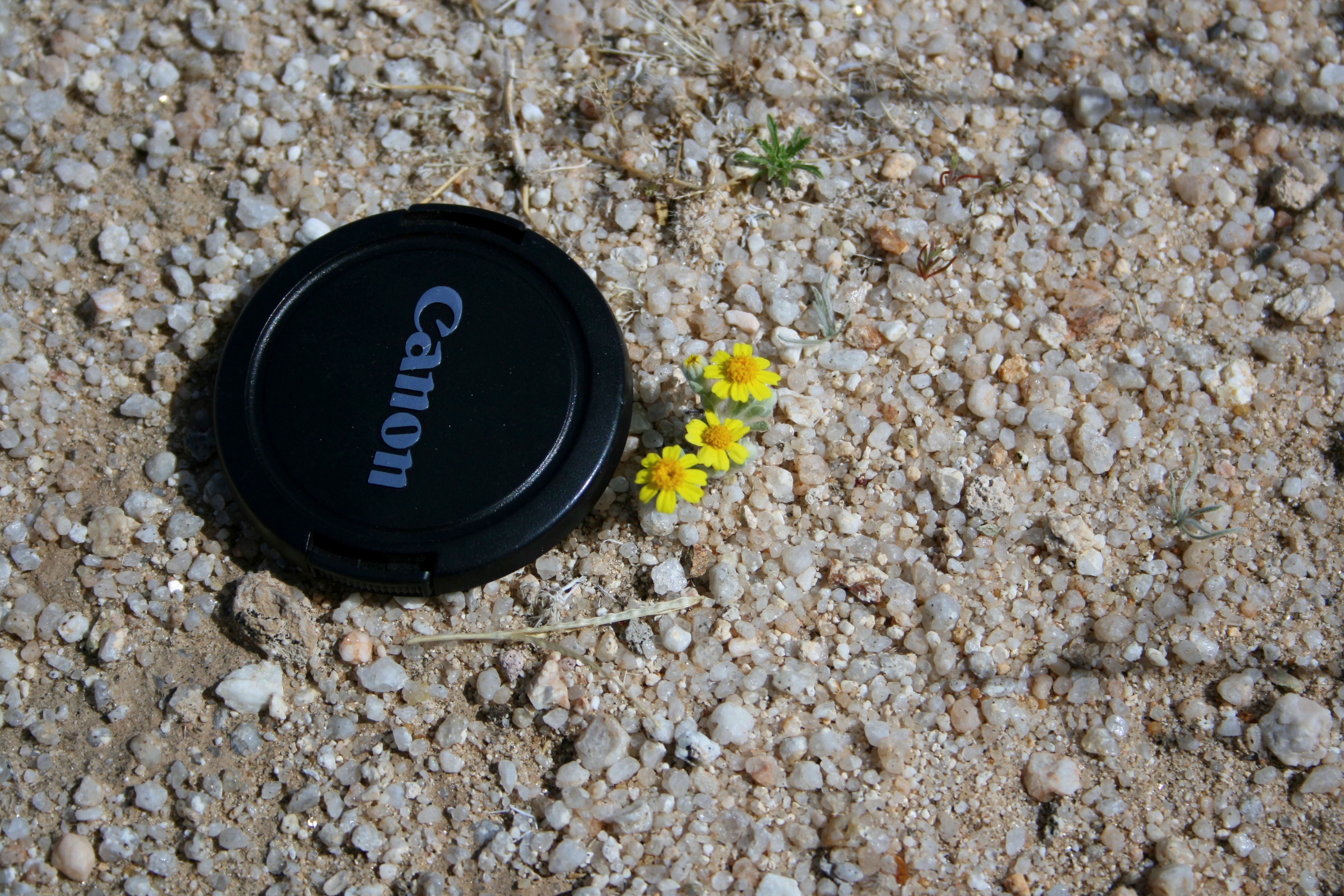
Photo by Chez Brungraber
Family: Asteraceae · Type: Herb · Native
Eriophyllum wallacei (Wallace's woolly daisy) is a native California herb in the Asteraceae family, recognized by short rays and occasional white color help distinguish from similar annuals.
Wallace's woolly daisy is a California native annual herb found in eastern San Francisco Bay, San Gabriel Mountains, San Bernardino Mountains, Peninsular Ranges, southeastern Sierra Nevada, and desert regions in chaparral, sagebrush scrub, and woodland habitats at elevations of 30 to 2,400 meters. Flowering from December to July, this plant produces yellow (occasionally cream-white) ray flowers in heads 5 to 10 millimeters wide. Growing as a small, often tufted plant 1 to 15 centimeters tall with woolly stems, it forms compact clusters in arid landscapes. Its leaves are spoon-shaped to obovate, 7 to 20 millimeters long, typically entire or occasionally divided into three lobes. The fruit is narrow and club-shaped, approximately 2 millimeters long with a minimal pappus.
Identification and appearance
Key characters: 14 sympatric species; short rays and occasional white color help distinguish from similar annuals
Habitat and range
Habitat: Chaparral, sagebrush or desert scrub or woodland
Elevation: 30-2400 m
Outside California: to southwestern Utah, northwestern Arizona, northern Baja California
Bloom period
Eriophyllum wallacei blooms Dec-Jul.
How to tell it apart
vs Achillea: Eriophyllum has woolly leaves; Achillea has feathery fern-like leaves and flat-topped white/pink flower clusters.; vs Lasthenia: Eriophyllum has densely woolly leaves; Lasthenia has smooth or sparsely hairy leaves.; vs Monolopia: Eriophyllum rays fall off cleanly; Monolopia rays have a small opposite lobe at base.; vs Artemisia: Eriophyllum has yellow ray flowers; Artemisia has tiny rayless heads and aromatic silver-gray foliage.; vs Pseudognaphalium: Eriophyllum has yellow ray petals; Pseudognaphalium has white/cream rayless everlasting flowers.
Frequently asked questions
Is Eriophyllum wallacei native to California?
Yes. Eriophyllum wallacei is native to California (recorded as native).
When does Eriophyllum wallacei bloom?
Eriophyllum wallacei blooms Dec-Jul.
What plant family does Eriophyllum wallacei belong to?
Eriophyllum wallacei is in the Asteraceae family, genus Eriophyllum.
What habitat does Eriophyllum wallacei grow in?
Eriophyllum wallacei grows in Chaparral, sagebrush or desert scrub or woodland.
Related species
Other California species in the same genus, family, or bioregion.
- Eriophyllum ambiguum — Annual woolly sunflower
- Eriophyllum ambiguum var. ambiguum — Beautiful woolly sunflower
- Eriophyllum ambiguum var. paleaceum — Annual woolly sunflower
- Eriophyllum confertiflorum — Golden-yarrow
- Eriophyllum confertiflorum var. confertiflorum — Golden yarrow
- Eriophyllum confertiflorum var. tanacetiflorum — Tansy-flowered woolly sunflower
- Euchiton gymnocephalus — Creeping cudweed
- Euchiton involucratus — Star cottonleaf
- Euchiton sp. — Cottonleaf
- Euchiton sphaericus — Globe cottonleaf
Sources: Jepson eFlora · Index of California Plant Names · CalPhotos
Last updated 2026-10-07
Data from The California Species Project — 14,000+ California species with verified data from CNPS, CDFW, USFWS, Cal-IPC, and more.