Erysimum cheiranthoides
Wormseed mustard
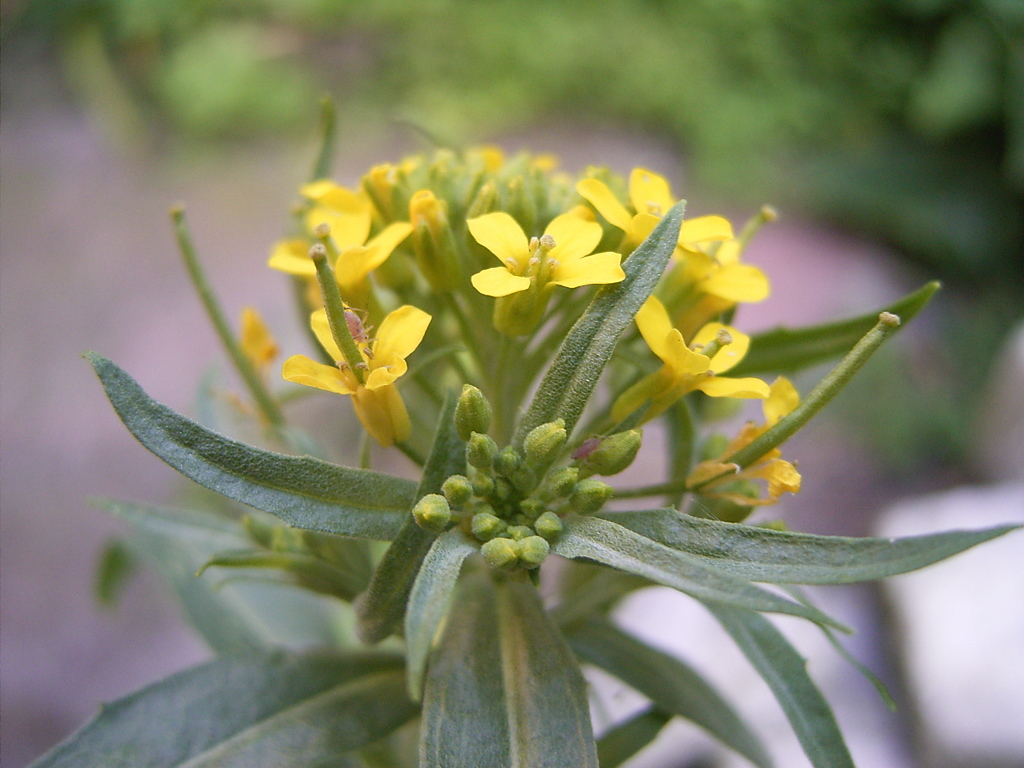
(c) anonymous, some rights reserved (CC BY-SA) · licence
Family: Brassicaceae · Type: Herb · Not Native
Erysimum cheiranthoides (Wormseed mustard) is a non-native California herb in the Brassicaceae family, recognized by small flowers and annual habit clearly distinguish from perennial natives.
Wormseed mustard is a naturalized annual found in the Sierra Nevada and Central Valley in disturbed areas, fields, and pastures at elevations below 3,000 meters. Flowering from June to August, this plant produces bright yellow flowers 3 to 5.5 millimeters long with petals about 2 millimeters wide. Growing 1.5 to 10 meters tall with spreading stems, it displays lance-shaped leaves with entire to slightly toothed margins covered in distinctive 3 to 4-rayed hairs. Its leaves range from 0.5 to 1.2 centimeters wide, with basal and lower stem leaves being particularly notable. The fruit develops as a slender pod 1.5 to 2.5 centimeters long, slightly angular and constricted between seeds.
Identification and appearance
Key characters: 2 sympatric species; small flowers and annual habit clearly distinguish from perennial natives
Habitat and range
Habitat: Uncommon. Disturbed areas, fields, pastures
Elevation: < 3000 m
Outside California: to eastern North America, circumboreal, native to Eurasia
Bloom period
Erysimum cheiranthoides blooms Jun-Aug.
Frequently asked questions
Is Erysimum cheiranthoides native to California?
No. Erysimum cheiranthoides is not native to California (recorded as not native).
When does Erysimum cheiranthoides bloom?
Erysimum cheiranthoides blooms Jun-Aug.
What plant family does Erysimum cheiranthoides belong to?
Erysimum cheiranthoides is in the Brassicaceae family, genus Erysimum.
What habitat does Erysimum cheiranthoides grow in?
Erysimum cheiranthoides grows in Uncommon. Disturbed areas, fields, pastures.
Related species
Other California species in the same genus, family, or bioregion.
Sources: Jepson eFlora · CalPhotos
Last updated 2026-10-07
Data from The California Species Project — 14,000+ California species with verified data from CNPS, CDFW, USFWS, Cal-IPC, and more.