Erysimum cheiri
Aegean wallflower
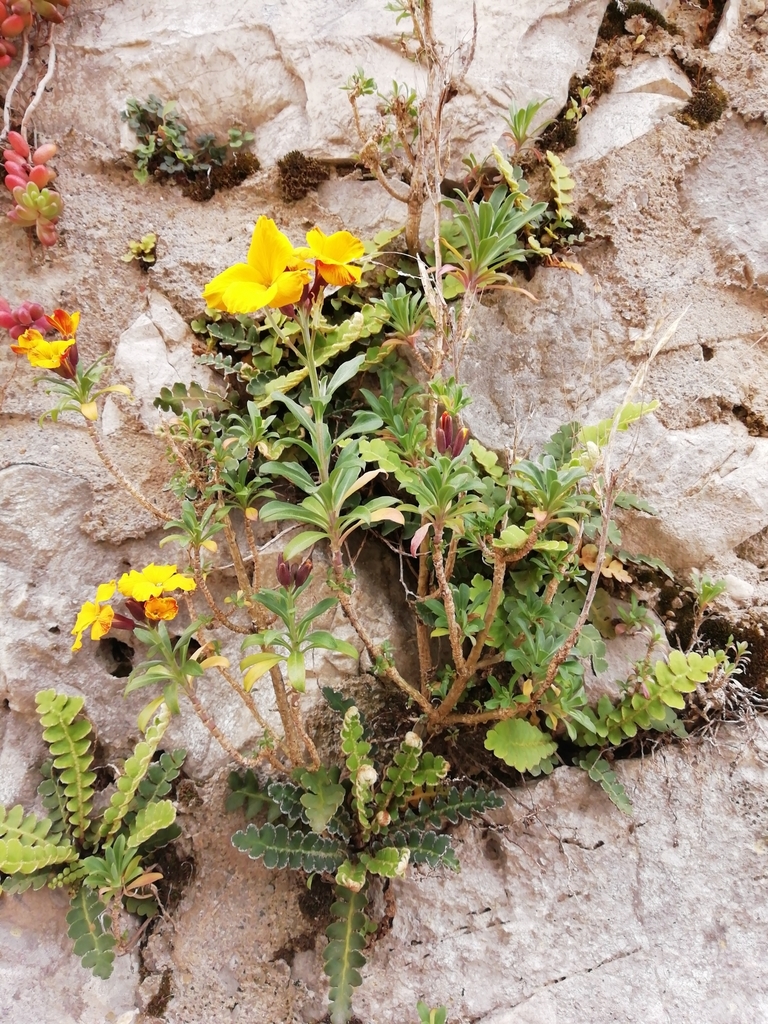
(c) David Delon, some rights reserved (CC BY) · licence
Family: Brassicaceae · Type: Herb · Not Native
Erysimum cheiri (Aegean wallflower) is a non-native California herb in the Brassicaceae family, recognized by woody base and highly variable flower colors.
Aegean wallflower is a naturalized biennial found on Santa Catalina Island and eastern Transverse Ranges in disturbed areas at elevations below 1,500 meters. Flowering from April to July, this plant produces strikingly variable flowers ranging from orange, yellow, and brown to purple, red, and white, with petals 20 to 35 millimeters long. Growing 1.5 to 8 decimeters tall with a woody base, it develops branching stems with distinctive two- to three-rayed hairs. Its leaves are oblanceolate to obovate, 3 to 15 millimeters wide, with entire margins covered in multi-branched hairs. The fruit develops as a long cylindric pod 3 to 10 centimeters in length, bearing 32 to 44 flattened seeds with potential wing-like extensions.
Identification and appearance
Key characters: 3 sympatric species; woody base and highly variable flower colors are diagnostic
Habitat and range
Habitat: Uncommon. Disturbed areas
Elevation: < 1500 m
Outside California: Canada, native to southern Europe
Bloom period
Erysimum cheiri blooms Apr-Jul.
Frequently asked questions
Is Erysimum cheiri native to California?
No. Erysimum cheiri is not native to California (recorded as not native).
When does Erysimum cheiri bloom?
Erysimum cheiri blooms Apr-Jul.
What plant family does Erysimum cheiri belong to?
Erysimum cheiri is in the Brassicaceae family, genus Erysimum.
What habitat does Erysimum cheiri grow in?
Erysimum cheiri grows in Uncommon. Disturbed areas.
Related species
Other California species in the same genus, family, or bioregion.
Sources: Jepson eFlora · CalPhotos
Last updated 2026-10-07
Data from The California Species Project — 14,000+ California species with verified data from CNPS, CDFW, USFWS, Cal-IPC, and more.