Erythranthe acutidens
Kings river monkeyflower
no rights reserved · CC0
Family: Phrymaceae · Type: Annual · Native
Conservation status: CNPS 3
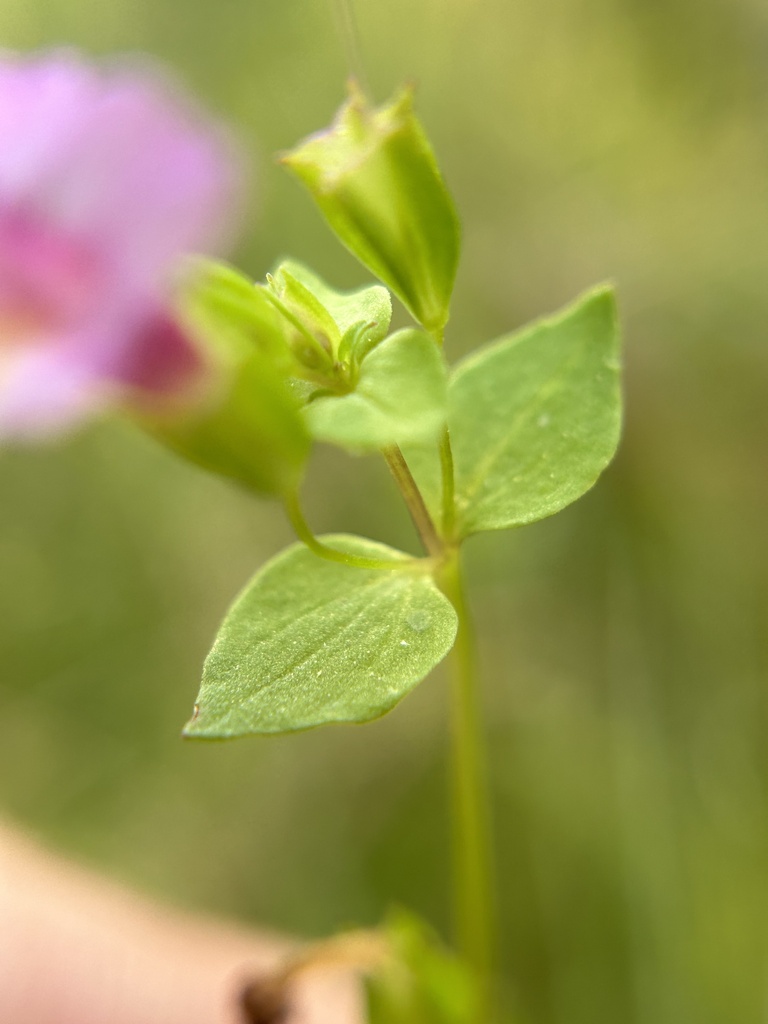
Erythranthe acutidens (Kings river monkeyflower) is a native California annual in the Phrymaceae family, recognized by rose to lavender flowers with deeply notched petal tips.
Kings river monkeyflower is a California native annual found in the western Sierra Nevada foothills near hillside streams and seeps, in partially shaded environments at elevations of 200 to 2,000 meters. Flowering from April to June, this delicate plant produces rose to lavender flowers with deeply notched petals, creating a soft and intricate bloom. Growing 3 to 30 centimeters tall with a glabrous (smooth, hairless) structure, it forms a distinct basal rosette of leaves at its base. Its leaves are ovate to broadly ovate, ranging 7 to 20 millimeters long, with the lower leaves petioled and upper leaves sessile, featuring rounded to heart-shaped bases. The plant's fruit develops 4 to 9 millimeters long, with a symmetrically swollen calyx that becomes slightly enlarged during fruiting.
Identification and appearance
Key characters: Geographically isolated; rose to lavender flowers with deeply notched petal tips
Habitat and range
Habitat: Near hillside streams or seeps, in partial shade
Elevation: 200-2000 m
Bloom period
Erythranthe acutidens blooms Apr-Jun.
Conservation status
CNPS 3
Frequently asked questions
Is Erythranthe acutidens native to California?
Yes. Erythranthe acutidens is native to California (recorded as native).
When does Erythranthe acutidens bloom?
Erythranthe acutidens blooms Apr-Jun.
What plant family does Erythranthe acutidens belong to?
Erythranthe acutidens is in the Phrymaceae family, genus Erythranthe.
Is Erythranthe acutidens rare or endangered?
Erythranthe acutidens carries California Rare Plant Rank 3, state rank S2S3.
What habitat does Erythranthe acutidens grow in?
Erythranthe acutidens grows in Near hillside streams or seeps, in partial shade.
Related species
Other California species in the same genus, family, or bioregion.
Sources: Jepson eFlora · CDFW CNDDB
Last updated 2026-09-30
Data from The California Species Project — 14,000+ California species with verified data from CNPS, CDFW, USFWS, Cal-IPC, and more.