Erythranthe androsacea
Rock-jasmine monkeyflower
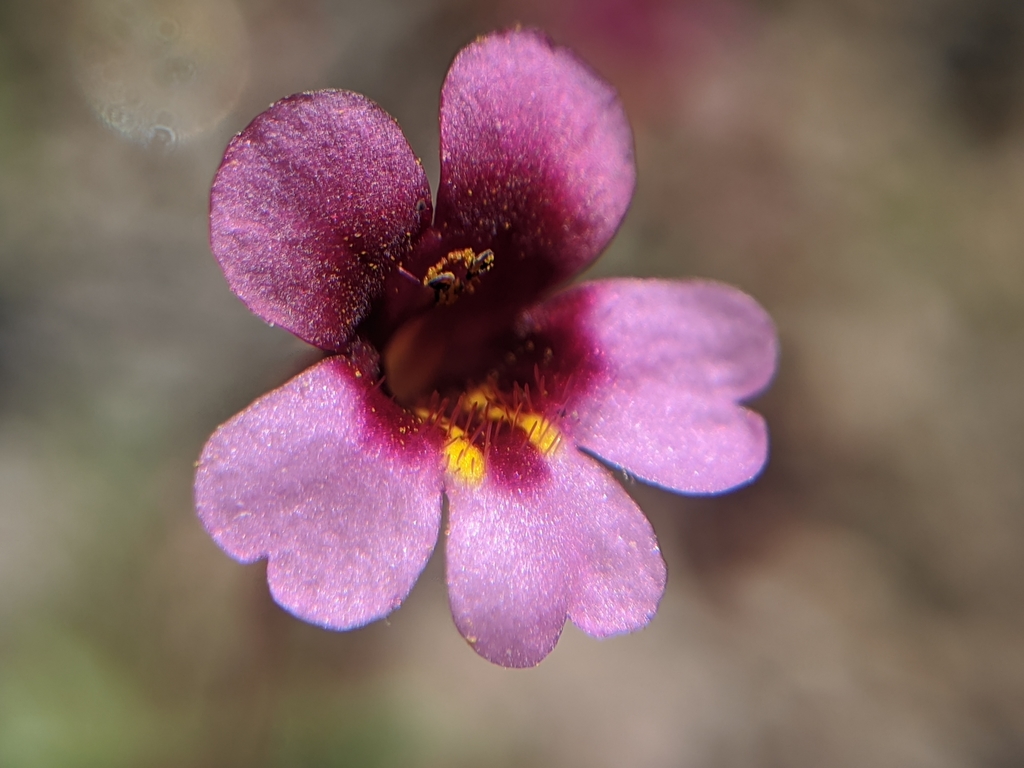
no rights reserved, uploaded by Alex Heyman · CC0
Family: Phrymaceae · Type: Herb · Native
Erythranthe androsacea (Rock-jasmine monkeyflower) is a native California herb in the Phrymaceae family, recognized by small size and pink-purple flowers help distinguish from yellow-flowered species.
Rock-jasmine monkeyflower is a California native annual found in northern coastal California, Tehama County, central western California, western Transverse Ranges, San Bernardino Mountains, eastern Peninsular Ranges, and western edge of the Mojave Desert in moist runoff areas on gentle slopes at elevations below 2,100 meters. Flowering from March to June, this delicate plant produces pink to purple flowers with a tube-throat 3 to 8 millimeters long and a limb 3 to 7 millimeters wide. Growing as a tiny plant 0.5 to 10 centimeters tall, it has minutely puberulent stems that spread close to the ground. Its leaves are 3 to 13 millimeters long, ranging from lanceolate to oblong or ovate in shape. The fruit is small, measuring 3 to 5 millimeters in length.
Identification and appearance
Key characters: 17 sympatric species; small size and pink-purple flowers help distinguish from yellow-flowered species
Habitat and range
Habitat: Uncommon. Moist runoff areas on gentle slopes
Elevation: < 2100 m
Bloom period
Erythranthe androsacea blooms Mar-Jun.
Frequently asked questions
Is Erythranthe androsacea native to California?
Yes. Erythranthe androsacea is native to California (recorded as native).
When does Erythranthe androsacea bloom?
Erythranthe androsacea blooms Mar-Jun.
What plant family does Erythranthe androsacea belong to?
Erythranthe androsacea is in the Phrymaceae family, genus Erythranthe.
What habitat does Erythranthe androsacea grow in?
Erythranthe androsacea grows in Uncommon. Moist runoff areas on gentle slopes.
Related species
Other California species in the same genus, family, or bioregion.
Sources: Jepson eFlora · CalPhotos
Last updated 2026-10-07
Data from The California Species Project — 14,000+ California species with verified data from CNPS, CDFW, USFWS, Cal-IPC, and more.