Erythranthe barbata
Bearded monkeyflower
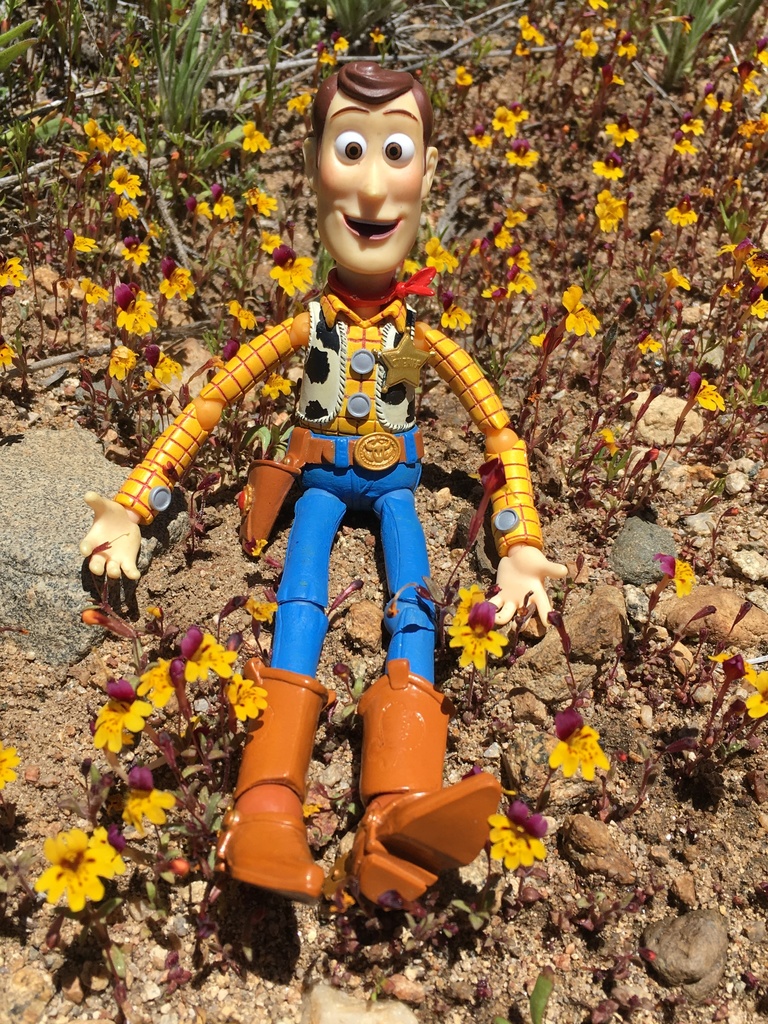
(c) Matt Berger, some rights reserved (CC BY) · licence
Family: Phrymaceae · Type: Herb · Native
Erythranthe barbata (Bearded monkeyflower) is a native California herb in the Phrymaceae family, recognized by high elevation (1800-3400m) with linear leaves and notched flower lobes.
Bearded monkeyflower is a California native annual found in the Sierra Nevada Mountains at elevations of 1,800 to 3,400 meters, growing in decomposed granite at the edges of meadows and streams and occasionally in open sandy barrens. Flowering from May to August, this plant produces yellow flowers with a distinctive maroon upper lip, the delicate blooms measuring 8 to 12 millimeters long. Growing with slender stems 2 to 15 centimeters tall and sparsely covered in glandular hairs, it forms compact clusters in alpine and subalpine environments. Its narrow leaves range from 5 to 19 millimeters long, linear to oblanceolate in shape, with tapered bases and unrolled margins. The tiny fruits measure 2 to 5 millimeters long, developing from equally small calyces with acute, glabrous lobes.
Identification and appearance
Key characters: Geographically isolated; high elevation (1800-3400m) with linear leaves and notched flower lobes
Habitat and range
Habitat: Decomposed granite at edges of meadows and streams, occasionally in open sandy barrens
Elevation: 1800-3400 m
Bloom period
Erythranthe barbata blooms May-Aug.
Frequently asked questions
Is Erythranthe barbata native to California?
Yes. Erythranthe barbata is native to California (recorded as native).
When does Erythranthe barbata bloom?
Erythranthe barbata blooms May-Aug.
What plant family does Erythranthe barbata belong to?
Erythranthe barbata is in the Phrymaceae family, genus Erythranthe.
What habitat does Erythranthe barbata grow in?
Erythranthe barbata grows in Decomposed granite at edges of meadows and streams, occasionally in open sandy barrens.
Related species
Other California species in the same genus, family, or bioregion.
Sources: Jepson eFlora
Last updated 2026-10-07
Data from The California Species Project — 14,000+ California species with verified data from CNPS, CDFW, USFWS, Cal-IPC, and more.