Erythranthe breviflora
Short-flower monkeyflower
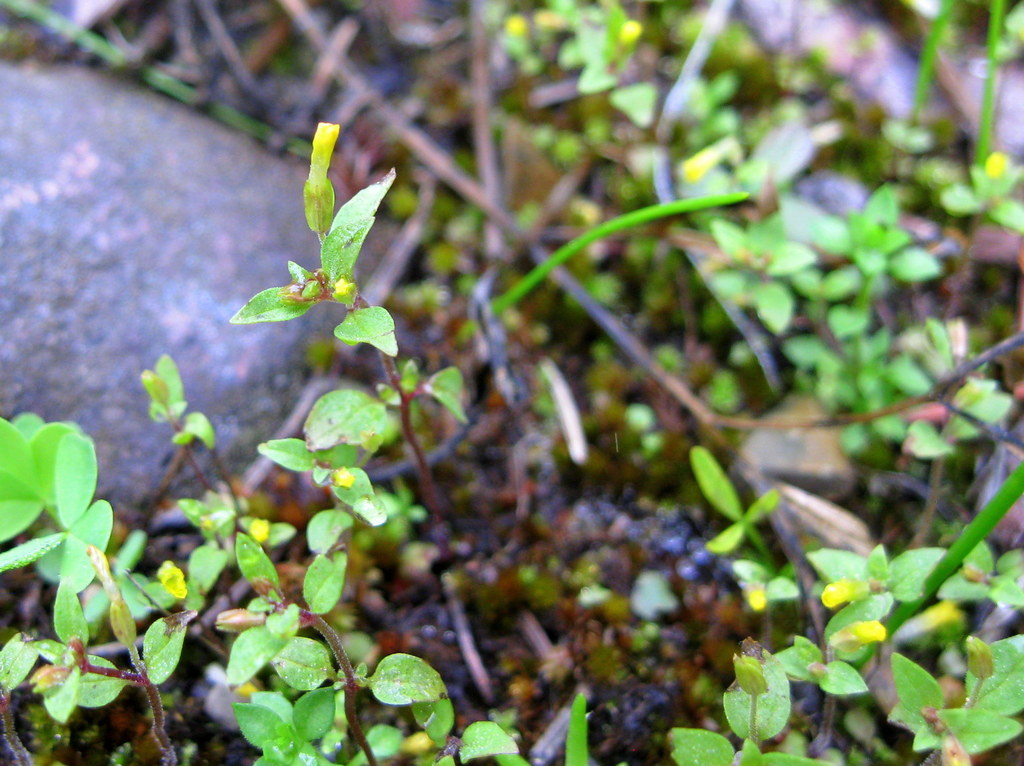
(c) Forest Service Northern Region, some rights reserved (CC BY) · licence
Family: Phrymaceae · Type: Herb · Native
Erythranthe breviflora (Short-flower monkeyflower) is a native California herb in the Phrymaceae family, recognized by distinctively short flowers compared to other yellow-flowered species.
Short-flower monkeyflower is a California native annual found in northern Sierra Nevada and Modoc Plateau in moist places at elevations of 1,500 to 2,200 meters. Flowering from May to June, this plant produces bright yellow flowers with a delicate tube-throat 3 to 6.5 millimeters long. Growing with slender stems 2 to 17 centimeters tall and covered in fine soft hairs, it has a delicate, spreading form. Its leaves are elliptic, petioled, measuring 3 to 28 millimeters long with a soft, pale green appearance. The fruit develops 3 to 6.5 millimeters long, with a calyx that becomes swollen and slightly enlarged after flowering.
Identification and appearance
Key characters: 16 sympatric species; distinctively short flowers compared to other yellow-flowered species
Habitat and range
Habitat: Uncommon. Moist places
Elevation: 1500-2200 m
Outside California: to Washington, Idaho, Nevada
Bloom period
Erythranthe breviflora blooms May-Jun.
Frequently asked questions
Is Erythranthe breviflora native to California?
Yes. Erythranthe breviflora is native to California (recorded as native).
When does Erythranthe breviflora bloom?
Erythranthe breviflora blooms May-Jun.
What plant family does Erythranthe breviflora belong to?
Erythranthe breviflora is in the Phrymaceae family, genus Erythranthe.
What habitat does Erythranthe breviflora grow in?
Erythranthe breviflora grows in Uncommon. Moist places.
Related species
Other California species in the same genus, family, or bioregion.
Sources: Jepson eFlora · CalPhotos
Last updated 2026-10-07
Data from The California Species Project — 14,000+ California species with verified data from CNPS, CDFW, USFWS, Cal-IPC, and more.