Erythranthe cardinalis
Scarlet monkeyflower
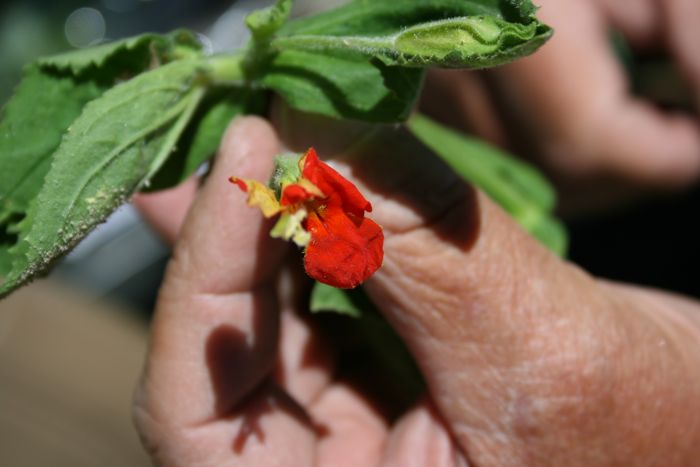
Photo by Chez Brungraber
Family: Phrymaceae · Type: Herb · Native
Erythranthe cardinalis (Scarlet monkeyflower) is a native California herb in the Phrymaceae family, recognized by unique orange-red flowers and large perennial habit.
Scarlet monkeyflower is a California native perennial found in the Central Coast, Western Sierra Nevada, and Panamint Range Mountains in moist to wet stream and seepage areas at elevations below 2,400 meters. Flowering from May to September, this plant produces vibrant orange to red flowers with a long tubular shape, the upper lip arched forward and lower lip reflexed. Growing 25 to 80 centimeters tall with generally decumbent to ascending hairy stems, it spreads through underground rhizomes. Its leaves are 20 to 80 millimeters long, oblong to obovate with distinctive palmately arranged 3 to 5 veins, clasping the stem in the upper portions. The fruit develops 16 to 18 millimeters long, continuing the plant's dramatic botanical display.
Identification and appearance
Key characters: 28 sympatric species; unique orange-red flowers and large perennial habit
Habitat and range
Habitat: Moist to wet places along streams, seepage areas
Elevation: < 2400 m
Outside California: to Oregon, Nevada, Baja California
Bloom period
Erythranthe cardinalis blooms May-Sep.
Frequently asked questions
Is Erythranthe cardinalis native to California?
Yes. Erythranthe cardinalis is native to California (recorded as native).
When does Erythranthe cardinalis bloom?
Erythranthe cardinalis blooms May-Sep.
What plant family does Erythranthe cardinalis belong to?
Erythranthe cardinalis is in the Phrymaceae family, genus Erythranthe.
What habitat does Erythranthe cardinalis grow in?
Erythranthe cardinalis grows in Moist to wet places along streams, seepage areas.
Related species
Other California species in the same genus, family, or bioregion.
Sources: Jepson eFlora · CalPhotos
Last updated 2026-10-07
Data from The California Species Project — 14,000+ California species with verified data from CNPS, CDFW, USFWS, Cal-IPC, and more.