Erythranthe geniculata
Bent-stem monkeyflower
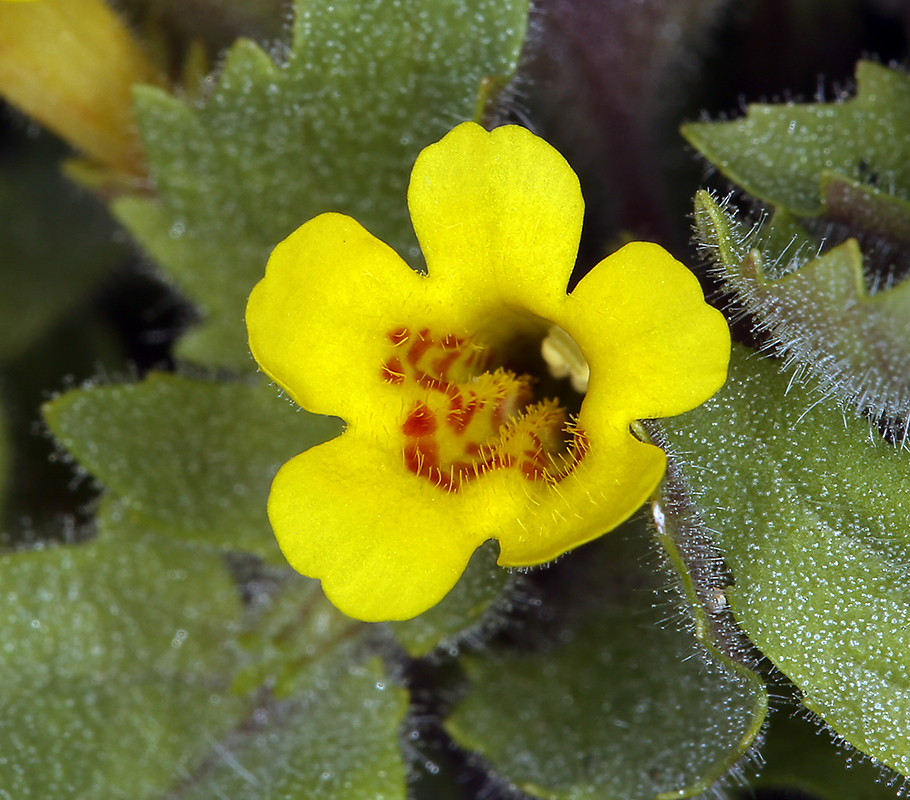
(c) Steve Matson, some rights reserved (CC BY), uploaded by Steve Matson · licence
Family: Phrymaceae · Type: Annual · Native
Erythranthe geniculata (Bent-stem monkeyflower) is a native California annual in the Phrymaceae family, recognized by prostrate to climbing habit with triangular to ovate leaves.
Bent-stem monkeyflower is a California native annual found in granite outcrop seeps at elevations of 200 to 1,200 meters. Flowering from April to July, this plant produces yellow flowers with a distinctive 9 to 11 millimeter tube-throat. Growing with prostrate or decumbent stems 5 to 60 centimeters long that are generally hairy and slightly slimy, it has a sprawling, climbing habit. Its leaves are ovate to triangular, 8 to 35 millimeters long, with rounded to heart-shaped bases and pinnate veining. The plant bears small fruits 4 to 7 millimeters long, characteristic of its delicate monkeyflower form.
Identification and appearance
Key characters: Geographically isolated; prostrate to climbing habit with triangular to ovate leaves
Habitat and range
Habitat: Crevices, granite outcrop seeps
Elevation: 200-1200 m
Bloom period
Erythranthe geniculata blooms Apr-Jul.
Frequently asked questions
Is Erythranthe geniculata native to California?
Yes. Erythranthe geniculata is native to California (recorded as native).
When does Erythranthe geniculata bloom?
Erythranthe geniculata blooms Apr-Jul.
What plant family does Erythranthe geniculata belong to?
Erythranthe geniculata is in the Phrymaceae family, genus Erythranthe.
What habitat does Erythranthe geniculata grow in?
Erythranthe geniculata grows in Crevices, granite outcrop seeps.
Related species
Other California species in the same genus, family, or bioregion.
Sources: Jepson eFlora
Last updated 2026-09-30
Data from The California Species Project — 14,000+ California species with verified data from CNPS, CDFW, USFWS, Cal-IPC, and more.