Erythranthe glaucescens
Shield-bracted monkeyflower
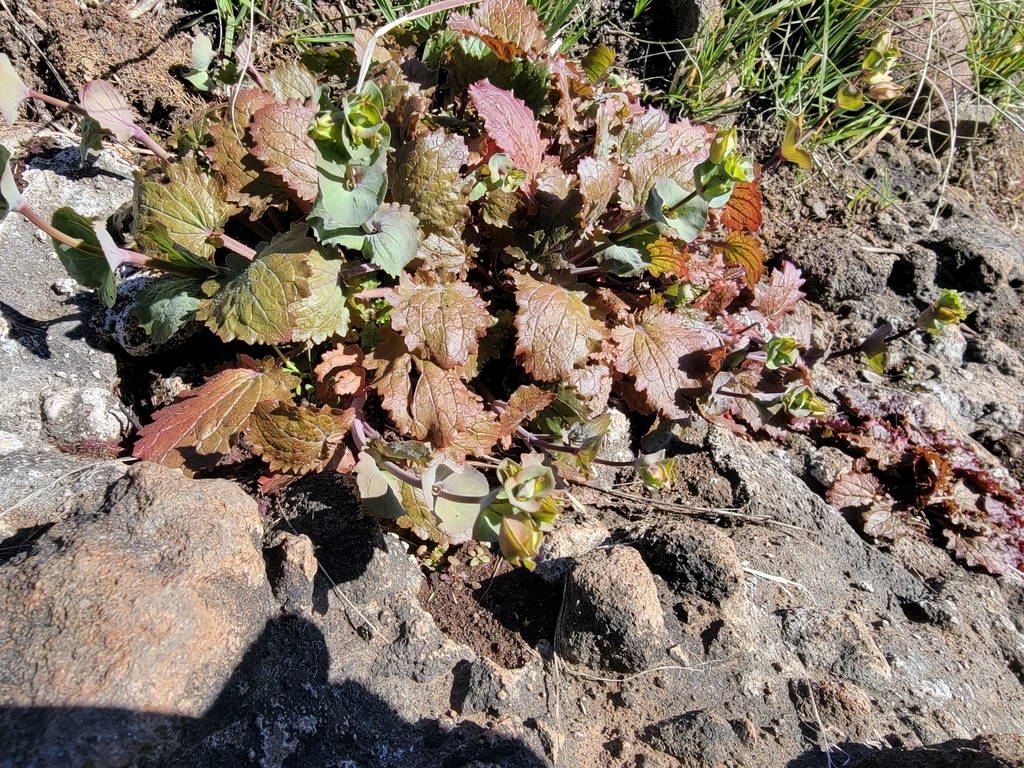
(c) Colin J Pryor, some rights reserved (CC BY) · licence
Family: Phrymaceae · Type: Herb · Native
Conservation status: CNPS 4.3
Erythranthe glaucescens (Shield-bracted monkeyflower) is a native California herb in the Phrymaceae family, recognized by unique round disk-like bracts and glaucous coating.
Shield-bracted monkeyflower is a California native annual found in southern California Range Front and northern Sierra Nevada Foothill bioregions in seepage areas at elevations below 600 meters. Flowering from March to May, this plant produces yellow flowers with a distinctive tube-throat 15 to 35 millimeters long. Growing 6 to 80 centimeters tall with an almost glabrous, glaucous appearance, it develops distinctively wide bracts 5 to 45 millimeters wide that form round disks completely encircling the stem. Its leaves are ovate to nearly round, ranging 5 to 70 millimeters long with petioles up to 60 millimeters. The fruit is 6 to 12 millimeters long with an asymmetrically swollen calyx and unequal lobes that curve upward.
Identification and appearance
Key characters: 14 sympatric species; unique round disk-like bracts and glaucous coating are diagnostic
Habitat and range
Habitat: Seepage areas
Elevation: < 600 m
Bloom period
Erythranthe glaucescens blooms Mar-May.
Conservation status
CNPS 4.3
Frequently asked questions
Is Erythranthe glaucescens native to California?
Yes. Erythranthe glaucescens is native to California (recorded as native).
When does Erythranthe glaucescens bloom?
Erythranthe glaucescens blooms Mar-May.
What plant family does Erythranthe glaucescens belong to?
Erythranthe glaucescens is in the Phrymaceae family, genus Erythranthe.
Is Erythranthe glaucescens rare or endangered?
Erythranthe glaucescens carries California Rare Plant Rank 4.3, state rank S3S4.
What habitat does Erythranthe glaucescens grow in?
Erythranthe glaucescens grows in Seepage areas.
Related species
Other California species in the same genus, family, or bioregion.
Sources: Jepson eFlora · CalPhotos · CDFW CNDDB
Last updated 2026-10-07
Data from The California Species Project — 14,000+ California species with verified data from CNPS, CDFW, USFWS, Cal-IPC, and more.