Erythranthe grandis
Magnificent seep monkeyflower
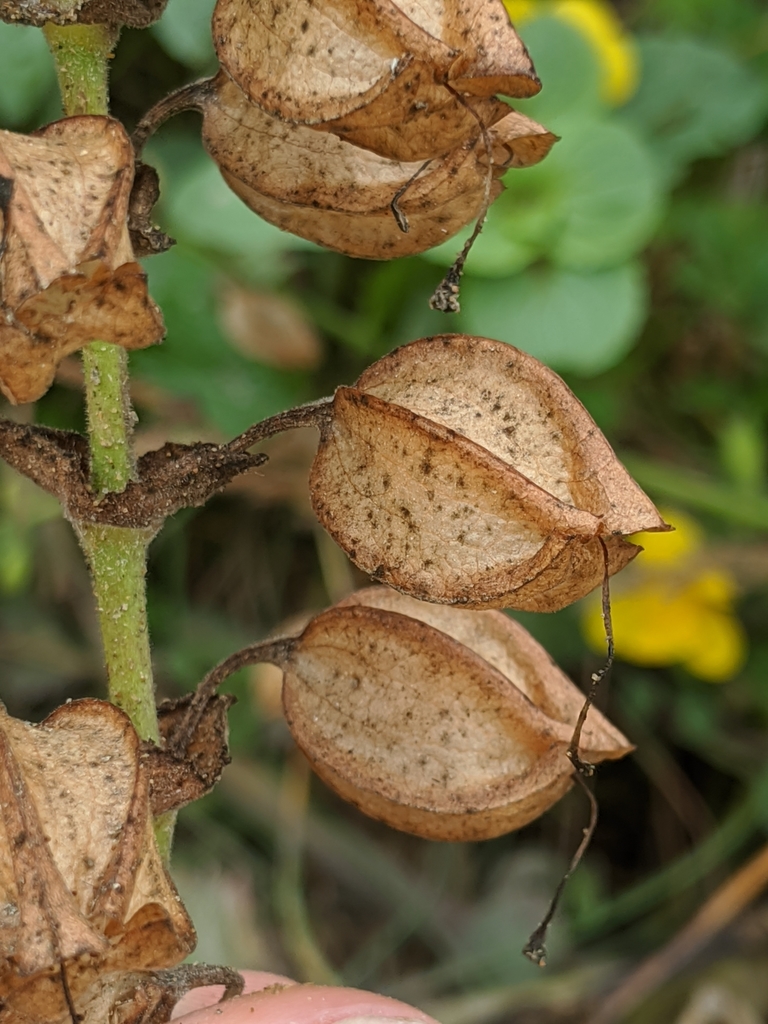
no rights reserved, uploaded by Alex Heyman · CC0
Family: Phrymaceae · Type: Perennial · Native
Erythranthe grandis (Magnificent seep monkeyflower) is a native California perennial in the Phrymaceae family, recognized by large coastal perennial.
Magnificent seep monkeyflower is a California native perennial found along coastal regions in beaches, dunes, coastal bluffs, seeps, and creeks at elevations from sea level to 800 meters. Flowering from May to July, this plant produces bright yellow flowers in racemes with 8 to 26 blooms, each flower featuring a 14 to 24 millimeter tube and distinctive open form. Growing 50 to 120 centimeters tall with a rhizomatous root system, it features densely glandular stems that become increasingly hairy toward the upper parts of the plant. Its leaves are notably distinctive, with broad ovate to round blades 25 to 60 millimeters long, featuring crenate edges and a truncate to slightly heart-shaped base, with leaf size abruptly reducing toward the stem's upper sections. The fruit develops 8 to 12 millimeters long, with a calyx 15 to 22 millimeters in length that becomes asymmetrically swollen as it matures.
Identification and appearance
Key characters: Geographically isolated; large coastal perennial
Habitat and range
Habitat: Beaches, dunes, coastal bluffs, seeps, creeks
Elevation: 0-800 m
Outside California: Oregon
Bloom period
Erythranthe grandis blooms May-Jul.
Frequently asked questions
Is Erythranthe grandis native to California?
Yes. Erythranthe grandis is native to California (recorded as native).
When does Erythranthe grandis bloom?
Erythranthe grandis blooms May-Jul.
What plant family does Erythranthe grandis belong to?
Erythranthe grandis is in the Phrymaceae family, genus Erythranthe.
What habitat does Erythranthe grandis grow in?
Erythranthe grandis grows in Beaches, dunes, coastal bluffs, seeps, creeks.
Related species
Other California species in the same genus, family, or bioregion.
Sources: Jepson eFlora
Last updated 2026-10-06
Data from The California Species Project — 14,000+ California species with verified data from CNPS, CDFW, USFWS, Cal-IPC, and more.