Erythranthe guttata
Common monkeyflower, seep monkeyflower, Seep Monkeyflower
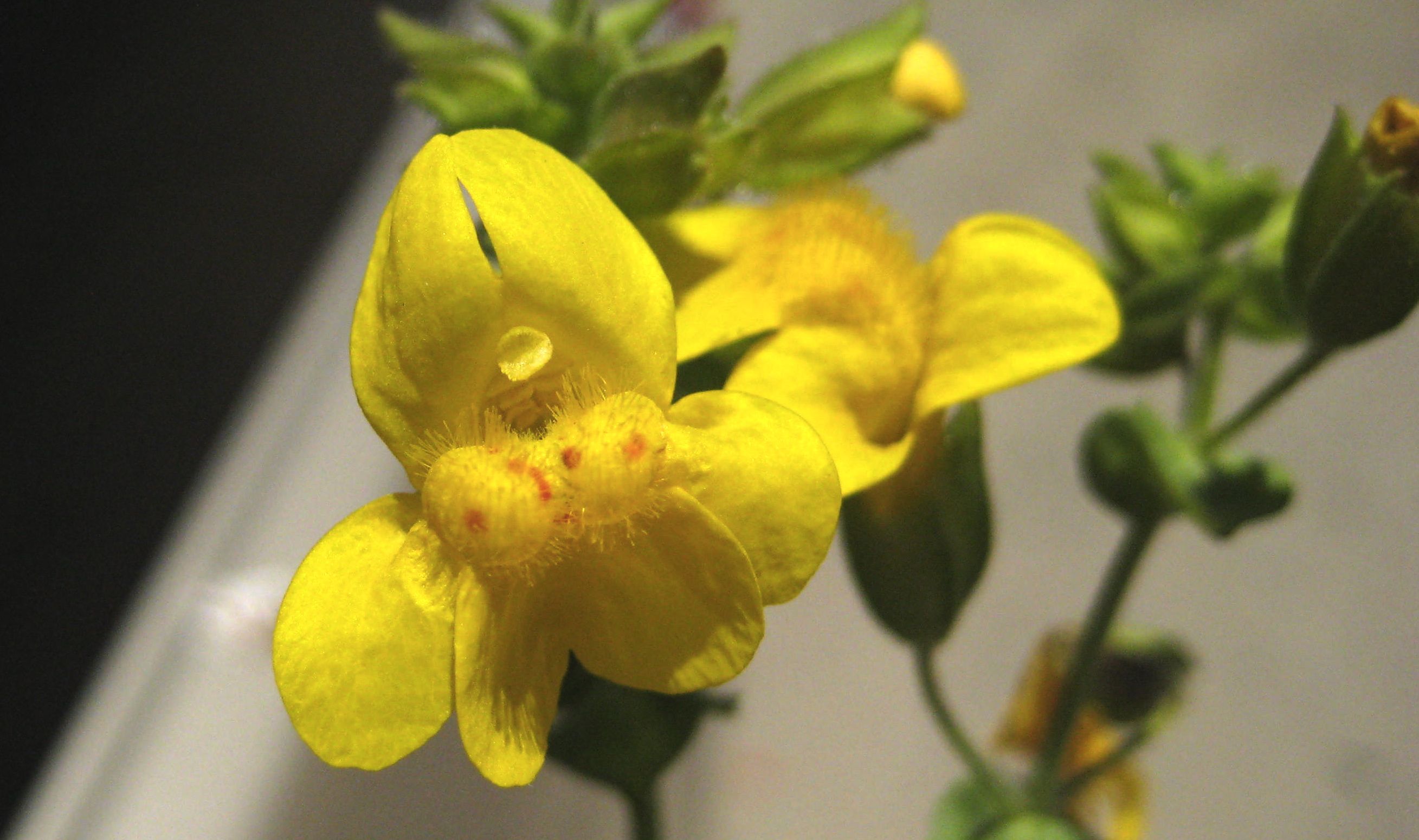
Photo by Chez Brungraber
Family: Phrymaceae · Type: Herb · Native
Erythranthe guttata (Common monkeyflower) is a native California herb in the Phrymaceae family, recognized by most widespread, identified by robust size and yellow racemes.
Common monkeyflower is a California native perennial found in wet places throughout California at elevations below 2,500 meters. Flowering from April to September, this plant produces bright yellow flowers with distinctive markings, arranged in racemes with 3 to 20 blooms. Growing 15 to 65 centimeters tall with rhizomatous roots, it forms spreading clumps with variable leaf shapes. Its leaves are ovate to round, ranging from 4 to 125 millimeters long, with irregularly crenate edges and sometimes small lobes at the base. The plant can be found in terrestrial habitats and occasionally forms floating mats in wet environments.
Identification and appearance
Key characters: 29 sympatric species; most widespread, identified by robust size and yellow racemes
Habitat and range
Habitat: Common. Wet places, generally terrestrial, occasionally emergent or floating in mats
Elevation: < 2500 m
Outside California: to Alaska, western Canada, Rocky Mountains, northern Mexico, introduced in northeastern United States, eastern Canada
Bloom period
Erythranthe guttata blooms Apr-Sep.
Frequently asked questions
Is Erythranthe guttata native to California?
Yes. Erythranthe guttata is native to California (recorded as native).
When does Erythranthe guttata bloom?
Erythranthe guttata blooms Apr-Sep.
What plant family does Erythranthe guttata belong to?
Erythranthe guttata is in the Phrymaceae family, genus Erythranthe.
What habitat does Erythranthe guttata grow in?
Erythranthe guttata grows in Common. Wet places, generally terrestrial, occasionally emergent or floating in mats.
Related species
Other California species in the same genus, family, or bioregion.
Sources: Jepson eFlora · CalPhotos
Last updated 2026-10-07
Data from The California Species Project — 14,000+ California species with verified data from CNPS, CDFW, USFWS, Cal-IPC, and more.