Erythranthe inflatula
Ephemeral monkeyflower, disappearing monkeyflower
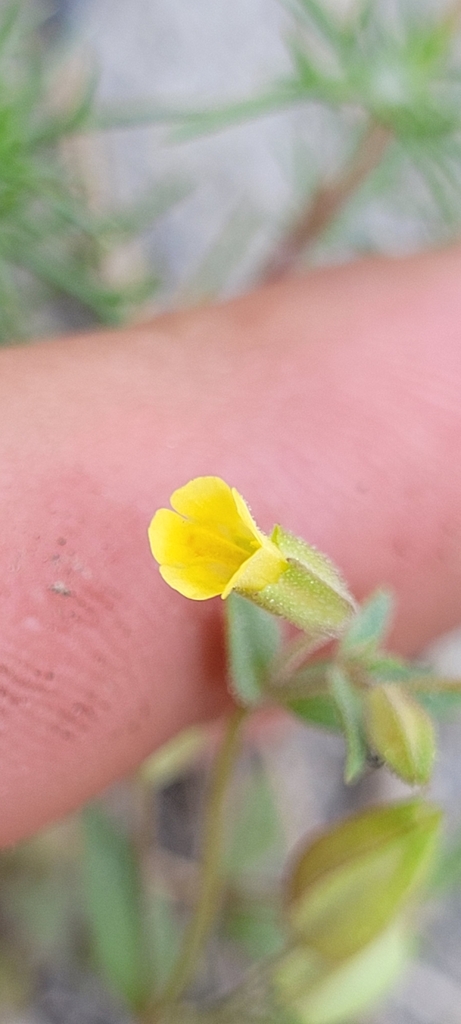
(c) Konshau Duman, some rights reserved (CC BY) · licence
Family: Phrymaceae · Type: Annual · Native
Conservation status: CNPS 1B.2
Erythranthe inflatula (Ephemeral monkeyflower) is a native California annual in the Phrymaceae family, recognized by habitat and inflated fruits.
Ephemeral monkeyflower is a rare (CNPS 1B.2) California native annual found in the Modoc Plateau in rocky, moist gravel areas previously flooded at elevations of 1,200 to 1,700 meters. Flowering in July, this plant produces yellow flowers with a tube-throat 4 to 9.5 millimeters long, nestled among delicate green foliage. Growing 6 to 25 centimeters tall with glandular-puberulent stems, it spreads in low, compact clusters among rocky terrain. Its leaves are broadly ovate to lance-shaped, measuring 1 to 4 centimeters long, sessile except near the plant's base. The fruit develops 5 to 9 millimeters long, with calyx lobes swelling to 7 to 11 millimeters after flowering.
Identification and appearance
Key characters: 7 sympatric species; distinguished by habitat and inflated fruits
Habitat and range
Habitat: Among rocks and boulders on moist gravel, previously flooded
Elevation: 1200-1700 m
Outside California: to southwestern Idaho
Bloom period
Erythranthe inflatula blooms Jul.
Conservation status
CNPS 1B.2
Frequently asked questions
Is Erythranthe inflatula native to California?
Yes. Erythranthe inflatula is native to California (recorded as native).
When does Erythranthe inflatula bloom?
Erythranthe inflatula blooms Jul.
What plant family does Erythranthe inflatula belong to?
Erythranthe inflatula is in the Phrymaceae family, genus Erythranthe.
Is Erythranthe inflatula rare or endangered?
Erythranthe inflatula carries California Rare Plant Rank 1B.2, state rank S2.
What habitat does Erythranthe inflatula grow in?
Erythranthe inflatula grows in Among rocks and boulders on moist gravel, previously flooded.
Related species
Other California species in the same genus, family, or bioregion.
Sources: Jepson eFlora · CalPhotos · CDFW CNDDB
Last updated 2026-09-30
Data from The California Species Project — 14,000+ California species with verified data from CNPS, CDFW, USFWS, Cal-IPC, and more.