Erythranthe linearifolia
Threadleaf primrose monkeyflower, Threadleaf Primrose Monkeyflower
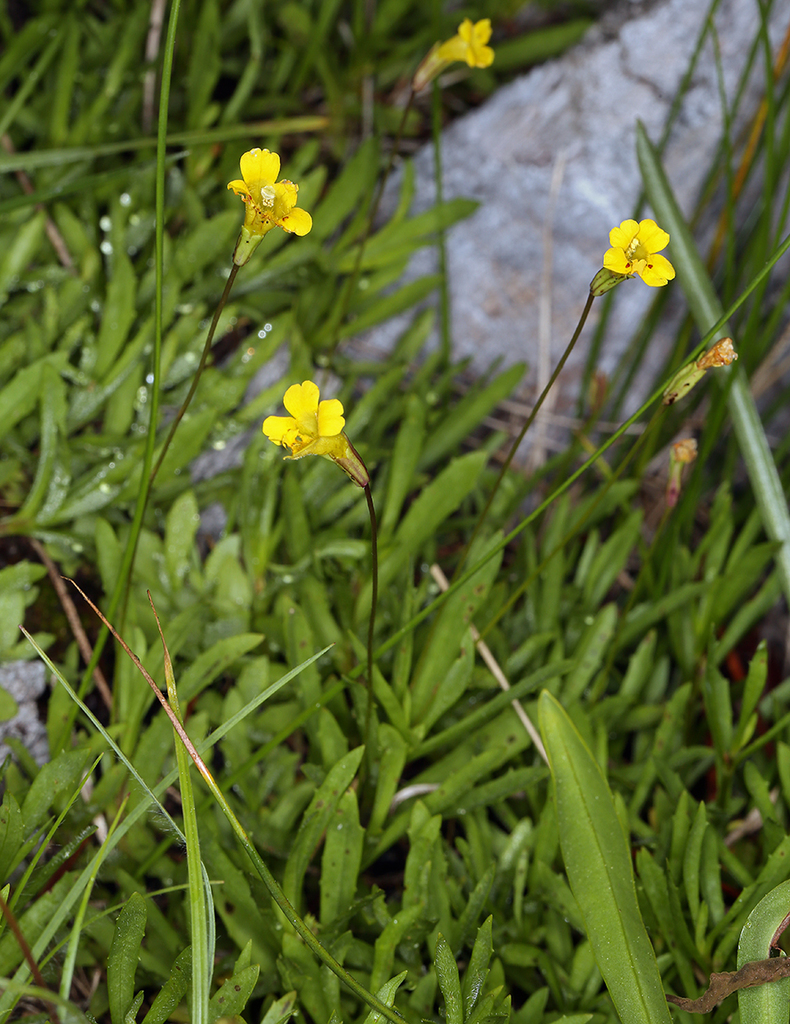
(c) Steve Matson, some rights reserved (CC BY), uploaded by Steve Matson · licence
Family: Phrymaceae · Type: Perennial · Native
Erythranthe linearifolia (Threadleaf primrose monkeyflower) is a native California perennial in the Phrymaceae family, recognized by distinctive thread-like leaves and very long pedicels.
Threadleaf primrose monkeyflower is a California native perennial found in the Klamath Ranges in wet meadows, seeps, and streambanks at elevations of 600 to 2,200 meters. Flowering from July to August, this plant produces yellow flowers with a tube-throat 18 to 22 millimeters long. Growing with erect to ascending stems 4 to 12 centimeters tall, it forms mats of tufted plants with rhizomes or stolons and creates bulblets in fall. Its leaves are mostly erect, 15 to 50 millimeters long, ranging from linear to oblanceolate in shape. The plant develops delicate yellow blossoms on pedicels 65 to 85 millimeters long, with a glabrous calyx 7 to 12 millimeters in length.
Identification and appearance
Key characters: 9 sympatric species; distinctive thread-like leaves and very long pedicels
Habitat and range
Habitat: Wet meadows, seeps, streambanks
Elevation: 600-2200 m
Bloom period
Erythranthe linearifolia blooms Jul-Aug.
Frequently asked questions
Is Erythranthe linearifolia native to California?
Yes. Erythranthe linearifolia is native to California (recorded as native).
When does Erythranthe linearifolia bloom?
Erythranthe linearifolia blooms Jul-Aug.
What plant family does Erythranthe linearifolia belong to?
Erythranthe linearifolia is in the Phrymaceae family, genus Erythranthe.
What habitat does Erythranthe linearifolia grow in?
Erythranthe linearifolia grows in Wet meadows, seeps, streambanks.
Related species
Other California species in the same genus, family, or bioregion.
Sources: Jepson eFlora · CalPhotos
Last updated 2026-09-30
Data from The California Species Project — 14,000+ California species with verified data from CNPS, CDFW, USFWS, Cal-IPC, and more.