Erythranthe moschata
Musk monkeyflower
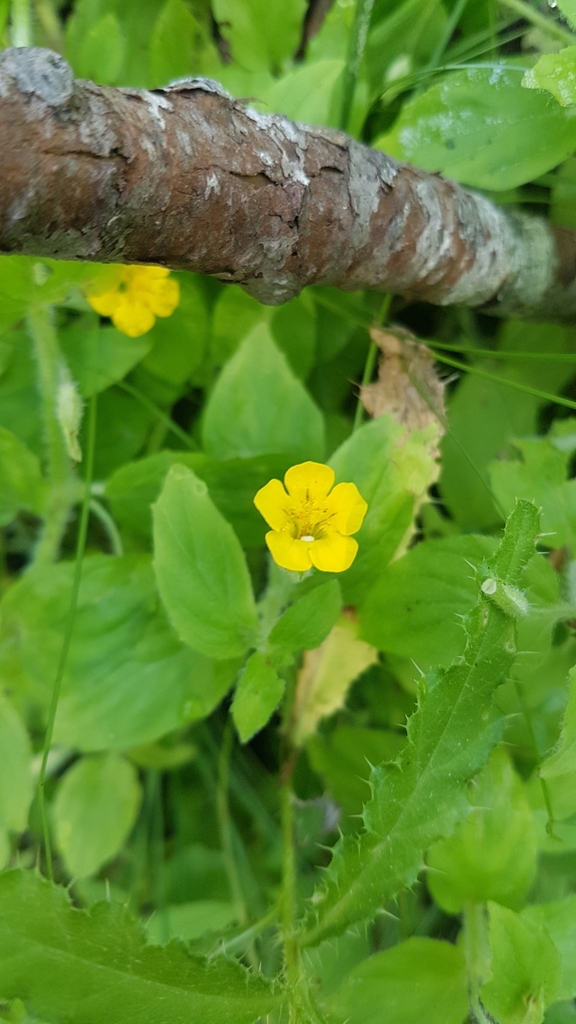
(c) Dan Riley, some rights reserved (CC BY) · licence
Family: Phrymaceae · Type: Perennial · Native
Erythranthe moschata (Musk monkeyflower) is a native California perennial in the Phrymaceae family, recognized by musk scent and narrow flower tube.
Musk monkeyflower is a California native perennial found in the Central California Floristic Province and Great Basin in seeps, streambanks, and partially shaded areas at elevations up to 2,900 meters. Flowering from June to August, this plant produces yellow flowers with a distinctive musk scent, blooming on pedicels 10 to 40 millimeters long. Growing 2 to 30 centimeters tall with spreading to erect stems, it has a rhizomatous growth habit and ranges from nearly glabrous to densely slimy-hairy. Its leaves are oblong to ovate, 10 to 50 millimeters long with petioles up to 15 millimeters, displaying a pinnate venation pattern. The plant's unique musk fragrance and yellow flowers with a deeply grooved throat make it a notable species in its habitat.
Identification and appearance
Key characters: 29 sympatric species; distinguished by musk scent and narrow flower tube
Habitat and range
Habitat: Common. Seeps, streambanks, generally partial shade
Elevation: < 2900 m
Outside California: to British Columbia, Rocky Mountains, naturalized in northeastern United States, Chile, Europe
Bloom period
Erythranthe moschata blooms Jun-Aug.
Frequently asked questions
Is Erythranthe moschata native to California?
Yes. Erythranthe moschata is native to California (recorded as native).
When does Erythranthe moschata bloom?
Erythranthe moschata blooms Jun-Aug.
What plant family does Erythranthe moschata belong to?
Erythranthe moschata is in the Phrymaceae family, genus Erythranthe.
What habitat does Erythranthe moschata grow in?
Erythranthe moschata grows in Common. Seeps, streambanks, generally partial shade.
Related species
Other California species in the same genus, family, or bioregion.
Sources: Jepson eFlora · CalPhotos
Last updated 2026-10-08
Data from The California Species Project — 14,000+ California species with verified data from CNPS, CDFW, USFWS, Cal-IPC, and more.