Erythranthe nudata
Bare monkeyflower
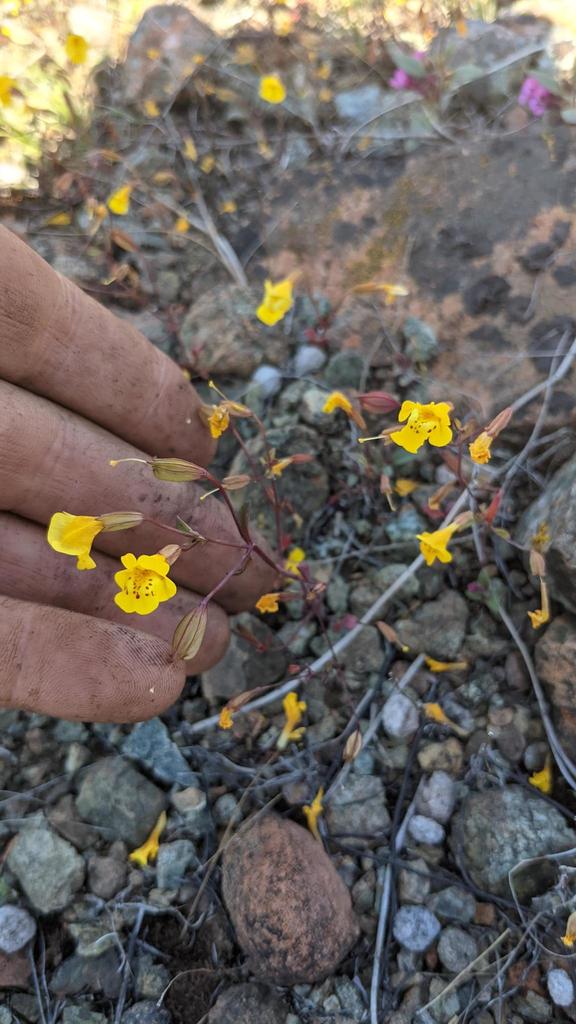
(c) Trevor Van Loon, some rights reserved (CC BY) · licence
Family: Phrymaceae · Type: Herb · Native
Conservation status: CNPS 4.3
Erythranthe nudata (Bare monkeyflower) is a native California herb in the Phrymaceae family, recognized by serpentine specialist with large flowers.
Bare monkeyflower is a rare (CNPS 4.3) California native annual found in the northern Coast Ranges, specifically in Lake and Napa counties, growing on serpentine seeps at elevations of 250 to 700 meters. Flowering from May to June, this delicate plant produces bright yellow flowers with distinctive tube-shaped throats 10 to 20 millimeters long. Growing 4 to 30 centimeters tall with nearly smooth stems that are slightly glandular, the plant has an open, branching structure. Its leaves vary from lanceolate to narrowly ovate, with lower leaves measuring 5 to 25 millimeters long and becoming progressively narrower toward the stem tips. The fruit is 5.5 to 9.5 millimeters long, with a distinctively asymmetrical calyx that swells as it matures.
Identification and appearance
Key characters: 10 sympatric species; serpentine specialist with large flowers
Habitat and range
Habitat: Seeps on serpentine outcrops
Elevation: 250-700 m
Bloom period
Erythranthe nudata blooms May-Jun.
Conservation status
CNPS 4.3
Frequently asked questions
Is Erythranthe nudata native to California?
Yes. Erythranthe nudata is native to California (recorded as native).
When does Erythranthe nudata bloom?
Erythranthe nudata blooms May-Jun.
What plant family does Erythranthe nudata belong to?
Erythranthe nudata is in the Phrymaceae family, genus Erythranthe.
Is Erythranthe nudata rare or endangered?
Erythranthe nudata carries California Rare Plant Rank 4.3, state rank S4.
What habitat does Erythranthe nudata grow in?
Erythranthe nudata grows in Seeps on serpentine outcrops.
Related species
Other California species in the same genus, family, or bioregion.
Sources: Jepson eFlora · CalPhotos · CDFW CNDDB
Last updated 2026-10-07
Data from The California Species Project — 14,000+ California species with verified data from CNPS, CDFW, USFWS, Cal-IPC, and more.