Erythranthe parishii
Parish's monkeyflower, Parish's Monkeyflower
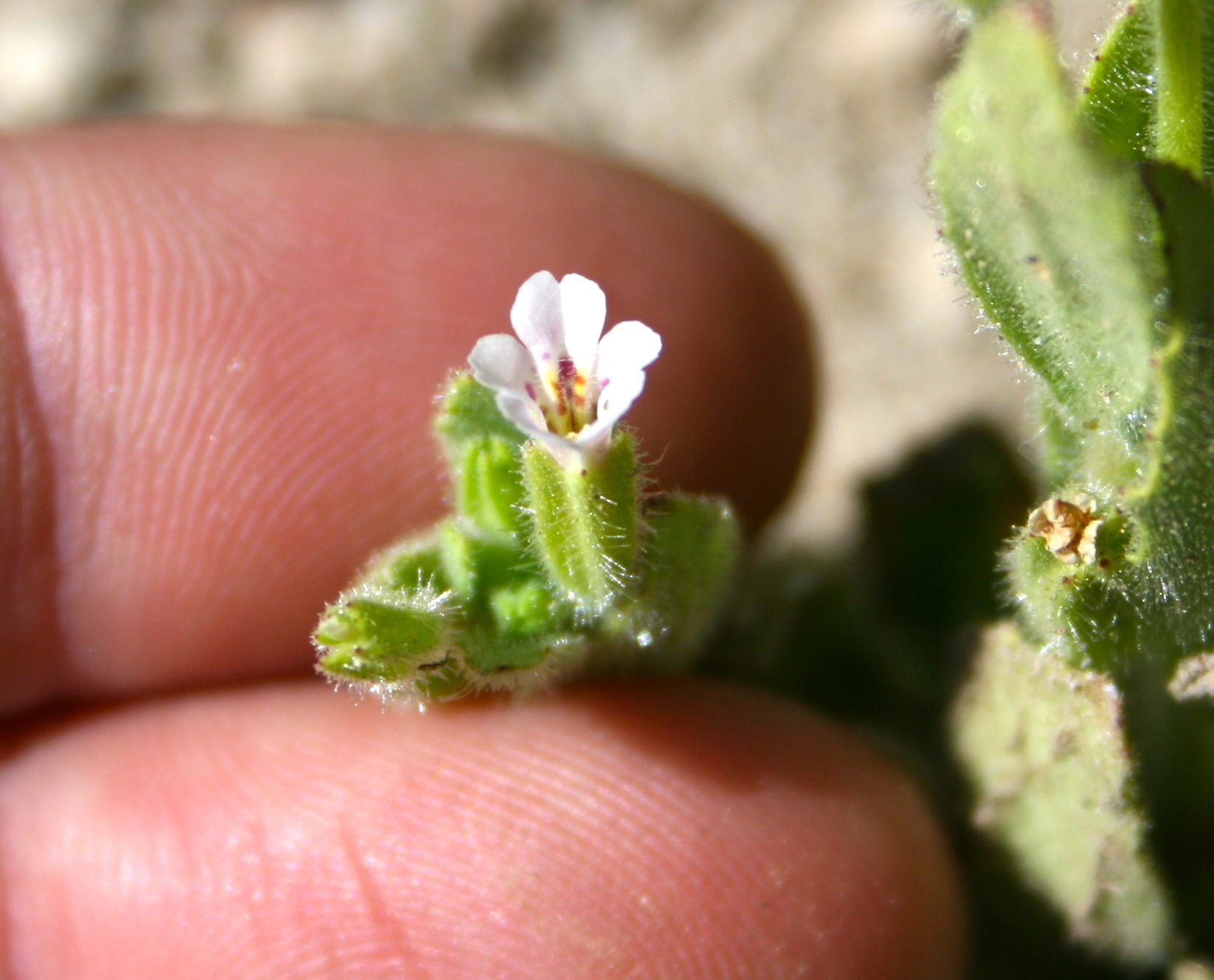
Photo by Chez Brungraber
Family: Phrymaceae · Type: Herb · Native
Erythranthe parishii (Parish's monkeyflower) is a native California herb in the Phrymaceae family, recognized by palmately veined leaves and size.
Parish's monkeyflower is a California native annual found in southern Sierra Nevada, southwestern California, western Deserts, and northern eastern Desert Mountains including Granite, New York, and Panamint Ranges on wet, sandy streambanks at elevations below 2,100 meters. Flowering from May to August, this plant produces pale pink to white flowers with a tube-throat 9 to 14 millimeters long. Growing with hairy stems 3 to 85 centimeters tall, it spreads across sandy habitats with a delicate, branching structure. Its leaves are oblanceolate to ovate, 8 to 75 millimeters long, distinctively marked with three prominent veins radiating from the base. The fruit develops 6 to 10 millimeters long, maturing within a hairy calyx that expands to 13 millimeters.
Identification and appearance
Key characters: 23 sympatric species; distinguished by palmately veined leaves and size
Habitat and range
Habitat: Uncommon. Wet, sandy streambanks
Elevation: < 2100 m
Outside California: northern Baja California
Bloom period
Erythranthe parishii blooms May-Aug.
Frequently asked questions
Is Erythranthe parishii native to California?
Yes. Erythranthe parishii is native to California (recorded as native).
When does Erythranthe parishii bloom?
Erythranthe parishii blooms May-Aug.
What plant family does Erythranthe parishii belong to?
Erythranthe parishii is in the Phrymaceae family, genus Erythranthe.
What habitat does Erythranthe parishii grow in?
Erythranthe parishii grows in Uncommon. Wet, sandy streambanks.
Related species
Other California species in the same genus, family, or bioregion.
Sources: Jepson eFlora · CalPhotos
Last updated 2026-10-07
Data from The California Species Project — 14,000+ California species with verified data from CNPS, CDFW, USFWS, Cal-IPC, and more.