Erythranthe percaulis
Serpentine canyon monkeyflower
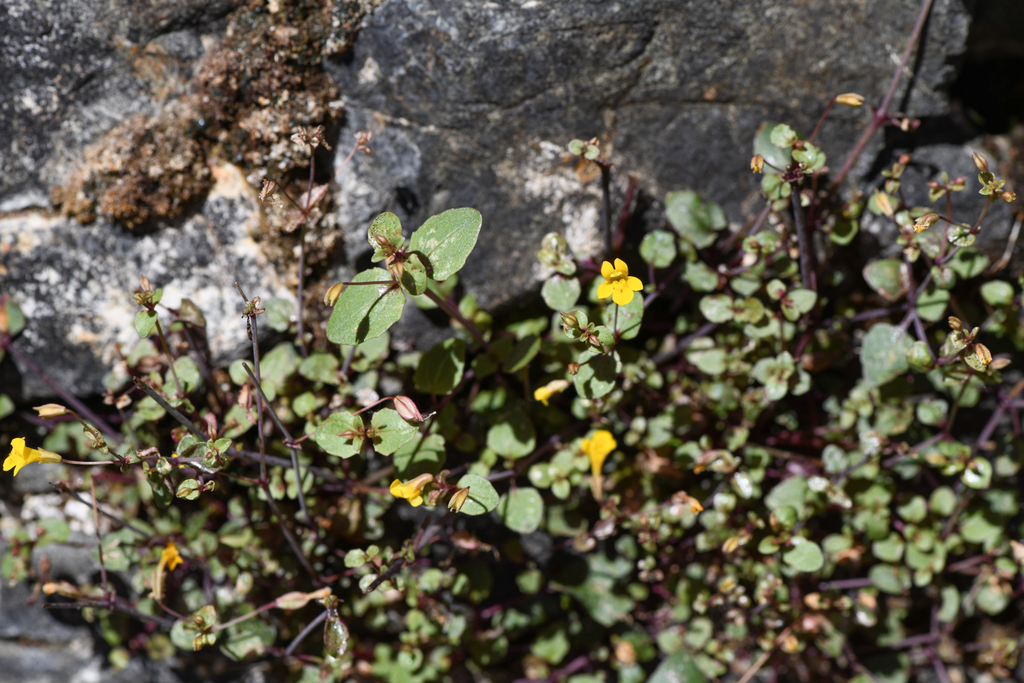
(c) Trevor Van Loon, some rights reserved (CC BY), uploaded by Trevor Van Loon · licence
Family: Phrymaceae · Type: Annual · Native
Conservation status: CNPS 1B.1
Erythranthe percaulis (Serpentine canyon monkeyflower) is a native California annual in the Phrymaceae family, recognized by tiny annual in serpentine at high elevation.
Serpentine canyon monkeyflower is a rare (CNPS 1B.1) California native annual found in serpentine cliff environments at elevations around 2,800 meters. Flowering from May to June, this diminutive plant produces bright yellow flowers with delicate, asymmetrical petals. Growing extremely small at just 3 to 5 centimeters tall, the plant forms a compact, glabrous structure with reduced stems. Its leaves are narrow and oval-shaped, measuring 4 to 10 millimeters long, with distinctive palm-like veining. Each flower emerges on a slender pedicel 15 to 35 millimeters long, with an unusual calyx featuring unequal lobes that curve upward in fruit.
Identification and appearance
Key characters: Geographically isolated; tiny annual in serpentine at high elevation
Habitat and range
Habitat: Crevices in serpentine cliffs
Elevation: 2800 m
Bloom period
Erythranthe percaulis blooms May-Jun.
Conservation status
CNPS 1B.1
Frequently asked questions
Is Erythranthe percaulis native to California?
Yes. Erythranthe percaulis is native to California (recorded as native).
When does Erythranthe percaulis bloom?
Erythranthe percaulis blooms May-Jun.
What plant family does Erythranthe percaulis belong to?
Erythranthe percaulis is in the Phrymaceae family, genus Erythranthe.
Is Erythranthe percaulis rare or endangered?
Erythranthe percaulis carries California Rare Plant Rank 1B.1, state rank S1.
What habitat does Erythranthe percaulis grow in?
Erythranthe percaulis grows in Crevices in serpentine cliffs.
Related species
Other California species in the same genus, family, or bioregion.
Sources: Jepson eFlora · CDFW CNDDB
Last updated 2026-09-30
Data from The California Species Project — 14,000+ California species with verified data from CNPS, CDFW, USFWS, Cal-IPC, and more.