Erythranthe ptilota
Wing-leaf monkeyflower
no rights reserved · CC0
Family: Phrymaceae · Type: Perennial · Native
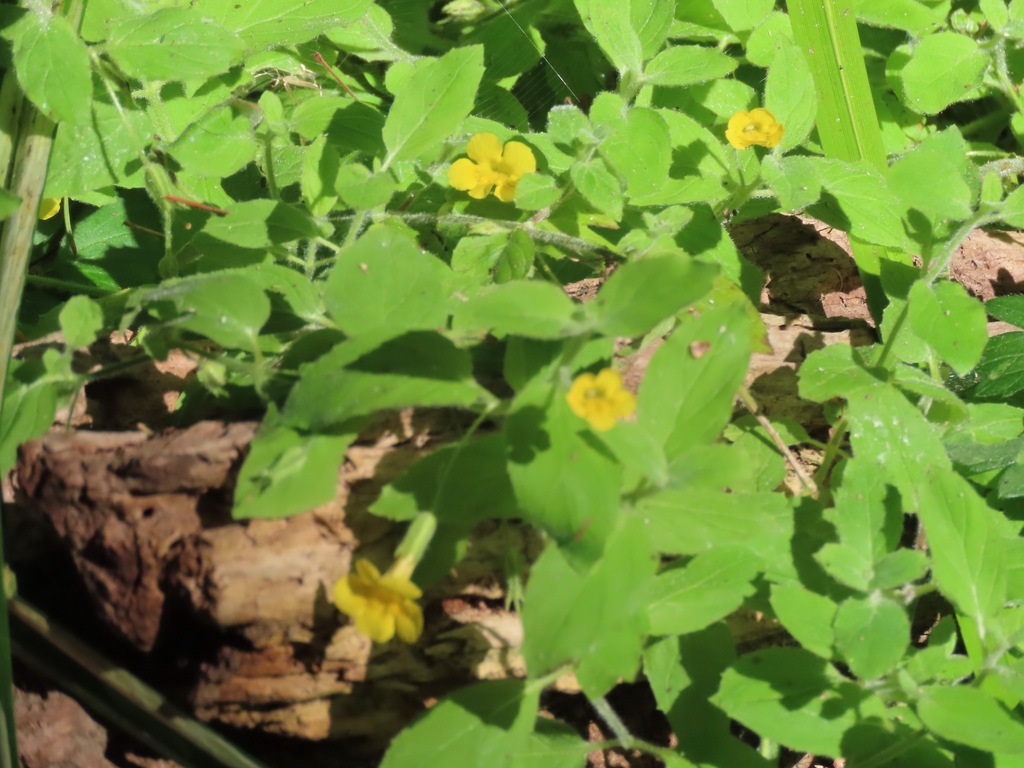
Erythranthe ptilota (Wing-leaf monkeyflower) is a native California perennial in the Phrymaceae family, recognized by large perennial with long leaves.
Wing-leaf monkeyflower is a California native perennial found in northern California's seeps, streambanks, and shaded coniferous woods at elevations of 0 to 1,900 meters. Flowering from March to June, this plant produces yellow flowers with delicate tubular corollas around 15 to 18 millimeters long. Growing with prostrate or ascending stems 20 to 80 centimeters tall, it spreads with a lax and diffuse habit from a rhizomatous base. Its leaves are oblong to lanceolate, measuring 30 to 70 millimeters long with distinctive pinnate veining and short petioles. The fruit develops as a small capsule 6 to 8 millimeters in length, nestled within slightly hairy calyxes 10 to 12 millimeters long.
Identification and appearance
Key characters: Geographically isolated; large perennial with long leaves
Habitat and range
Habitat: Seeps, streambanks, shade in coniferous woods
Elevation: 0-1900 m
Outside California: Oregon
Bloom period
Erythranthe ptilota blooms Mar-Jun.
Frequently asked questions
Is Erythranthe ptilota native to California?
Yes. Erythranthe ptilota is native to California (recorded as native).
When does Erythranthe ptilota bloom?
Erythranthe ptilota blooms Mar-Jun.
What plant family does Erythranthe ptilota belong to?
Erythranthe ptilota is in the Phrymaceae family, genus Erythranthe.
What habitat does Erythranthe ptilota grow in?
Erythranthe ptilota grows in Seeps, streambanks, shade in coniferous woods.
Related species
Other California species in the same genus, family, or bioregion.
Sources: Jepson eFlora
Last updated 2026-09-30
Data from The California Species Project — 14,000+ California species with verified data from CNPS, CDFW, USFWS, Cal-IPC, and more.