Erythranthe pulsiferae
Candelabrum monkeyflower
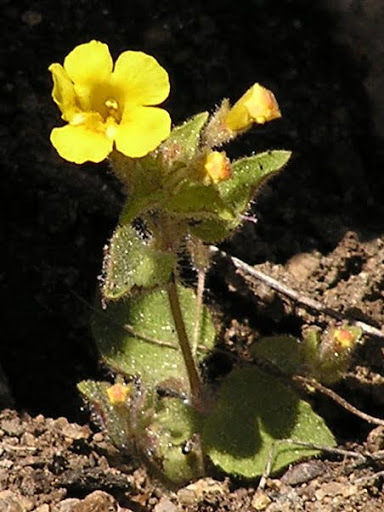
(c) 101595408250610106310, some rights reserved (CC BY), uploaded by 101595408250610106310 · licence
Family: Phrymaceae · Type: Herb · Native
Erythranthe pulsiferae (Candelabrum monkeyflower) is a native California herb in the Phrymaceae family, recognized by rosette and branching pattern.
Candelabrum monkeyflower is a California native annual found in northwestern California, the Cascade Range, northern and central Sierra Nevada, and Modoc Plateau in runoff areas and moist stream-side habitats at elevations of 500 to 1,900 meters. Flowering from April to June, this delicate plant produces yellow flowers with slender pedicels and a tube-throat 7 to 13 millimeters long. Growing to 2 to 21 centimeters tall with fine puberulent hairs, it forms a compact structure with distinctive growth. Its leaves vary from basal ovate rosettes to elliptic cauline leaves, measuring 3 to 20 millimeters with petioles up to 2 millimeters long. The fruit develops 5 to 10 millimeters long, with a calyx expanding from 3.5 to 7.5 millimeters during fruiting.
Identification and appearance
Key characters: 19 sympatric species; distinguished by rosette and branching pattern
Habitat and range
Habitat: Runoff areas, moist places along streams
Elevation: 500-1900 m
Outside California: to Washington
Bloom period
Erythranthe pulsiferae blooms Apr-Jun.
Frequently asked questions
Is Erythranthe pulsiferae native to California?
Yes. Erythranthe pulsiferae is native to California (recorded as native).
When does Erythranthe pulsiferae bloom?
Erythranthe pulsiferae blooms Apr-Jun.
What plant family does Erythranthe pulsiferae belong to?
Erythranthe pulsiferae is in the Phrymaceae family, genus Erythranthe.
What habitat does Erythranthe pulsiferae grow in?
Erythranthe pulsiferae grows in Runoff areas, moist places along streams.
Related species
Other California species in the same genus, family, or bioregion.
Sources: Jepson eFlora · CalPhotos
Last updated 2026-10-07
Data from The California Species Project — 14,000+ California species with verified data from CNPS, CDFW, USFWS, Cal-IPC, and more.