Eschscholzia parishii
Parish's poppy; gold poppy
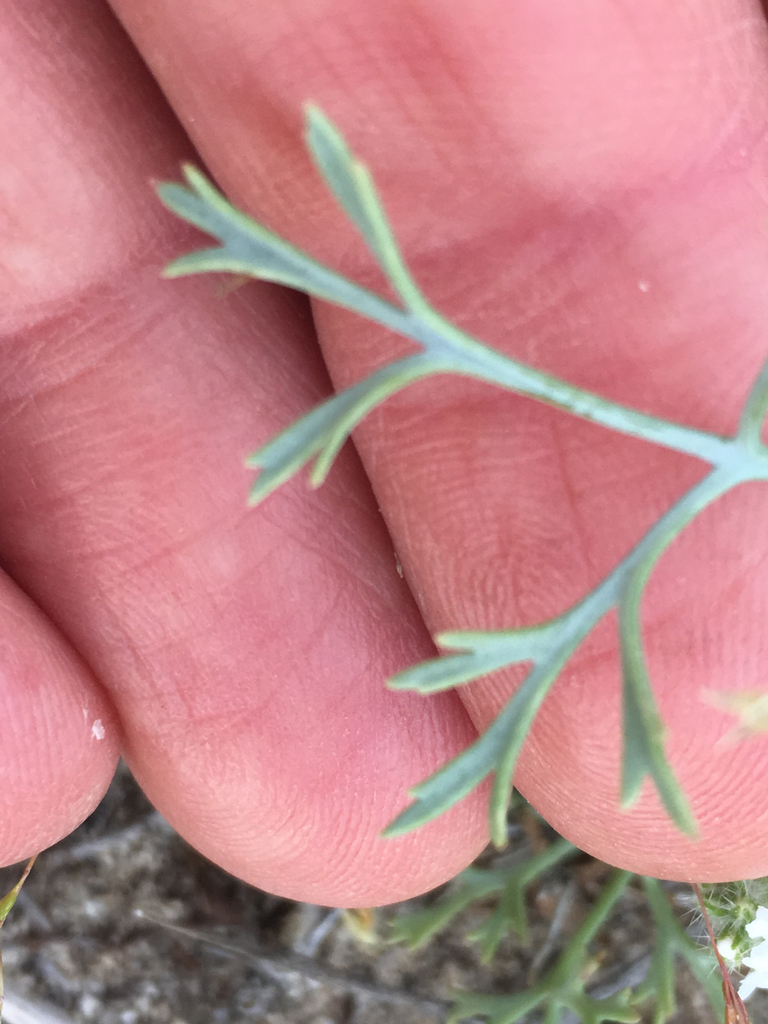
(c) W. Terry Hunefeld, some rights reserved (CC BY), uploaded by W. Terry Hunefeld · licence
Family: Papaveraceae · Type: Herb · Native
Eschscholzia parishii (Parish's poppy; gold poppy) is a native California herb in the Papaveraceae family, recognized by bright yellow-green color and long bud tips.
Parish's poppy is a California native annual found in southern Desert Mountains and Desert Sonoran regions in desert washes, slopes, and hillsides at elevations below 1,300 meters. Flowering from February to May, this poppy produces bright yellow or occasionally orange-yellow flowers 8 to 25 millimeters long with nodding buds that have distinctively long-pointed tips. Growing 5 to 35 centimeters tall with an erect habit, the plant has a glabrous bright to yellow-green stem that is occasionally glaucous. Its leaves are bright to yellow-green with distal cauline leaves featuring 3 to 5 narrow segments that have acute to acuminate tips. The seed is generally round, 1 to 1.4 millimeters wide, with a distinctive net-ridged surface in tan to brown coloration.
Identification and appearance
Key characters: 6 sympatric species; distinguished by bright yellow-green color and long bud tips
Habitat and range
Habitat: Desert washes, slopes, hillsides
Elevation: < 1300 m
California counties: San Bernardino, Imperial, San Diego, Riverside, Inyo, San Francisco, Kern, Monterey
Outside California: northwestern Mexico
Bloom period
Eschscholzia parishii blooms Feb-May.
How to tell it apart
vs Papaver: Eschscholzia sepals form pointed cap that pops off; Papaver has 2 separate hairy sepals.; vs Artemisia: Eschscholzia has 4-petaled flowers; Artemisia has tiny clustered flower heads, no petals.; vs Dendromecon: Eschscholzia is herbaceous annual; Dendromecon is woody shrub with undivided leaves.; vs Afropapaver: Eschscholzia has cup-shaped receptacle; Afropapaver has flat receptacle.; vs Camissoniopsis: Eschscholzia has numerous stamens; Camissoniopsis has exactly 8 stamens.
Frequently asked questions
Is Eschscholzia parishii native to California?
Yes. Eschscholzia parishii is native to California (recorded as native).
When does Eschscholzia parishii bloom?
Eschscholzia parishii blooms Feb-May.
Where in California does Eschscholzia parishii grow?
Eschscholzia parishii occurs in San Bernardino, Imperial, San Diego, Riverside, Inyo, San Francisco, Kern, Monterey, at elevations of < 1300 m.
What plant family does Eschscholzia parishii belong to?
Eschscholzia parishii is in the Papaveraceae family, genus Eschscholzia.
What habitat does Eschscholzia parishii grow in?
Eschscholzia parishii grows in Desert washes, slopes, hillsides.
Related species
Other California species in the same genus, family, or bioregion.
Sources: Jepson eFlora · Index of California Plant Names · CalPhotos
Last updated 2026-10-07
Data from The California Species Project — 14,000+ California species with verified data from CNPS, CDFW, USFWS, Cal-IPC, and more.