Escobaria alversonii
Foxtail cactus
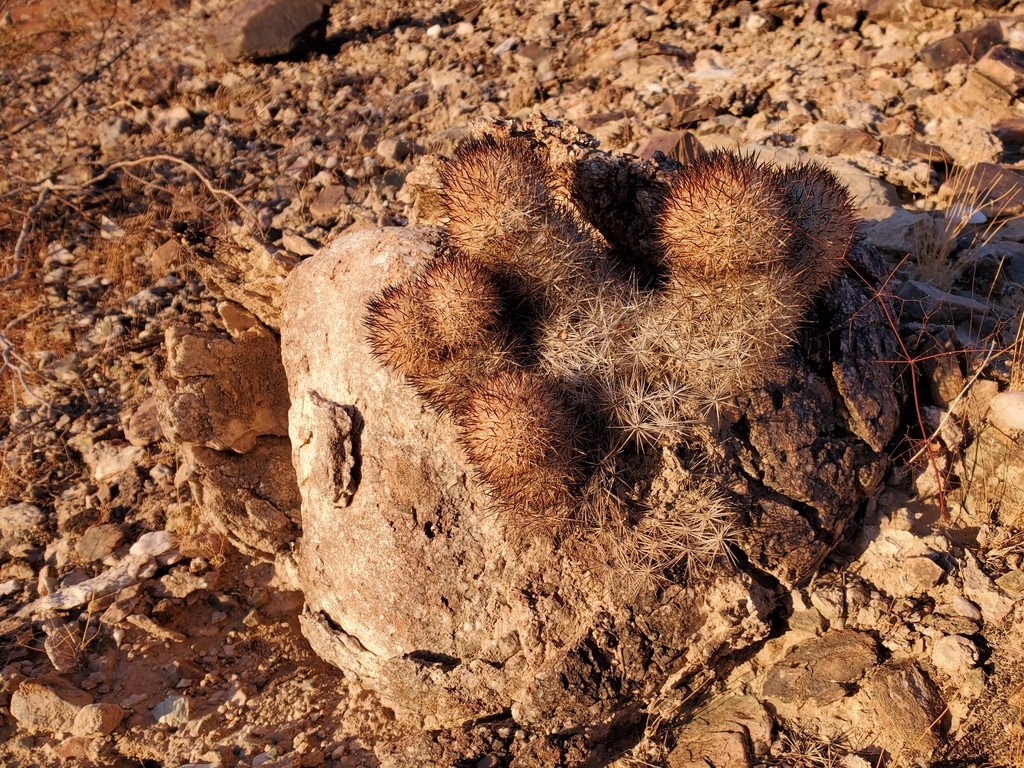
(c) Trevor Harding, some rights reserved (CC BY) · licence
Family: Cactaceae · Type: Shrub · Native
Conservation status: CNPS 4.3
Escobaria alversonii (Foxtail cactus) is a native California shrub in the Cactaceae family, recognized by elevation and flower color/midstripe patterns.
Foxtail cactus is a California native perennial ranked 4.3 by CNPS, found in southern desert regions of the Mojave and Sonoran Desert in sandy or rocky creosote-bush scrub at elevations of 75 to 600 meters. Flowering from May to June, this cactus produces pale to deep rose-pink or rose-violet flowers approximately 3 centimeters in diameter with conspicuously darker midstripes. Growing with generally solitary stems 10 to 27 centimeters tall and 6 to 9 centimeters in diameter, this cylindric cactus occasionally appears slightly decumbent. Its areoles feature 8 to 10 central spines and 12 to 18 radial spines, creating a dense, protective covering. The white stigma lobes spread widely, adding distinctive texture to its delicate rose-colored blooms.
Identification and appearance
Key characters: 2 sympatric species; elevation and flower color/midstripe patterns are diagnostic
Habitat and range
Habitat: Sandy or rocky alluvium, creosote-bush scrub
Elevation: 75-600 m
California counties: Riverside, San Bernardino, San Diego
Bloom period
Escobaria alversonii blooms May-Jun.
Conservation status
CNPS 4.3
How to tell it apart
vs Mammillaria: Escobaria has a groove running along the upper face of each tubercle, with flowers arising near the stem tip; Mammillaria tubercles lack this groove and its flowers emerge in a ring between older tubercles, followed by red club-shaped fruit.; vs Sclerocactus: Escobaria has nipple-like tubercles rather than continuous ribs and no hooked central spine; Sclerocactus has distinct ribs and often a hooked central spine.; vs Echinocereus: Escobaria has tubercled stems and flowers opening cream to greenish at the apex; Echinocereus has ribbed stems, spines in clusters, flowers bursting through the stem skin, green stigmas and spiny fruit.; vs Ferocactus: Escobaria is a small plant (< 15 cm) with tubercles; Ferocactus is a large barrel cactus with prominent ribs and stout, often curved spines.; vs Coryphantha: Escobaria has a groove the full length of each tubercle and many fine radial spines; Coryphantha tends to be larger with a shorter tubercle groove.
Frequently asked questions
Is Escobaria alversonii native to California?
Yes. Escobaria alversonii is native to California (recorded as native).
When does Escobaria alversonii bloom?
Escobaria alversonii blooms May-Jun.
Where in California does Escobaria alversonii grow?
Escobaria alversonii occurs in Riverside, San Bernardino, San Diego, at elevations of 75-600 m.
What plant family does Escobaria alversonii belong to?
Escobaria alversonii is in the Cactaceae family, genus Escobaria.
Is Escobaria alversonii rare or endangered?
Escobaria alversonii carries California Rare Plant Rank 4.3, state rank S3.
Related species
Other California species in the same genus, family, or bioregion.
Sources: Jepson eFlora · CNPS Rare Plant Inventory · Index of California Plant Names · CalPhotos · CDFW CNDDB
Last updated 2026-10-07
Data from The California Species Project — 14,000+ California species with verified data from CNPS, CDFW, USFWS, Cal-IPC, and more.