Escobaria chlorantha
Desert pincushion
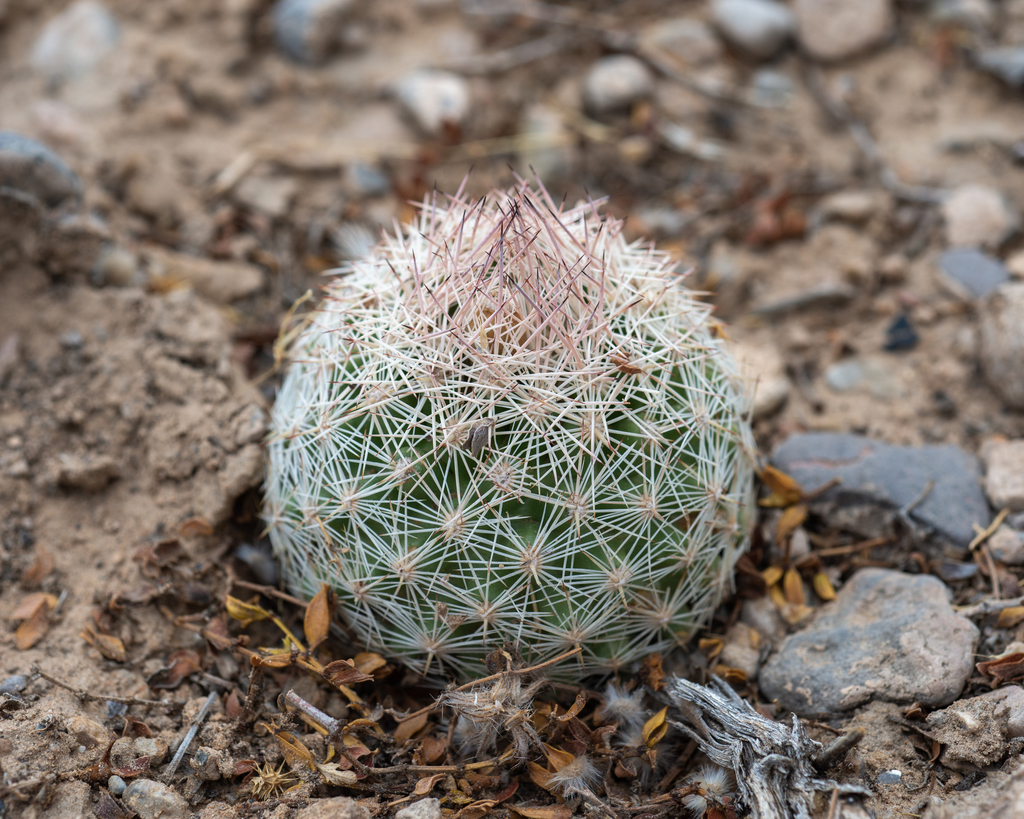
(c) Dominic Gentilcore, some rights reserved (CC BY), uploaded by Dominic Gentilcore · licence
Family: Cactaceae · Type: Perennial · Native
Conservation status: CNPS 2B.1
Escobaria chlorantha (Desert pincushion) is a native California perennial in the Cactaceae family, recognized by unique flower color and limestone habitat.
Desert pincushion is a rare (CNPS 2B.1) California native perennial found in eastern San Bernardino County in limestone soils at elevations of 1,000 to 2,400 meters. Flowering from April to May, this plant produces pale cream-yellow to pale orange flowers with a darker midstripe, reaching 2 to 3 centimeters in diameter. Growing with short, cylindric to ovoid stems 7 to 15 centimeters tall and 7 to 9 centimeters in diameter, it features dense clusters of spines with 4 to 11 central spines and 12 to 33 radial spines per areole. Its flower has distinctive white or greenish stigma lobes that are erect to ascending, creating a distinctive pincushion-like appearance. The plant's compact growth and intricate spination make it a unique resident of its limestone habitat.
Identification and appearance
Key characters: 2 sympatric species; unique flower color and limestone habitat are diagnostic
Habitat and range
Habitat: Limestone soils
Elevation: 1000-2400 m
California counties: San Bernardino
Outside California: to southwestern Utah, northwestern Arizona
Bloom period
Escobaria chlorantha blooms Apr-May.
Conservation status
CNPS 2B.1
How to tell it apart
vs Mammillaria: Escobaria has a groove running along the upper face of each tubercle, with flowers arising near the stem tip; Mammillaria tubercles lack this groove and its flowers emerge in a ring between older tubercles, followed by red club-shaped fruit.; vs Sclerocactus: Escobaria has nipple-like tubercles rather than continuous ribs and no hooked central spine; Sclerocactus has distinct ribs and often a hooked central spine.; vs Echinocereus: Escobaria has tubercled stems and flowers opening cream to greenish at the apex; Echinocereus has ribbed stems, spines in clusters, flowers bursting through the stem skin, green stigmas and spiny fruit.; vs Ferocactus: Escobaria is a small plant (< 15 cm) with tubercles; Ferocactus is a large barrel cactus with prominent ribs and stout, often curved spines.; vs Coryphantha: Escobaria has a groove the full length of each tubercle and many fine radial spines; Coryphantha tends to be larger with a shorter tubercle groove.
Frequently asked questions
Is Escobaria chlorantha native to California?
Yes. Escobaria chlorantha is native to California (recorded as native).
When does Escobaria chlorantha bloom?
Escobaria chlorantha blooms Apr-May.
Where in California does Escobaria chlorantha grow?
Escobaria chlorantha occurs in San Bernardino, at elevations of 1000-2400 m.
What plant family does Escobaria chlorantha belong to?
Escobaria chlorantha is in the Cactaceae family, genus Escobaria.
Is Escobaria chlorantha rare or endangered?
Escobaria chlorantha carries California Rare Plant Rank 2B.1, state rank S3.
Related species
Other California species in the same genus, family, or bioregion.
Sources: Jepson eFlora · CNPS Rare Plant Inventory · Index of California Plant Names · CalPhotos · CDFW CNDDB
Last updated 2026-10-06
Data from The California Species Project — 14,000+ California species with verified data from CNPS, CDFW, USFWS, Cal-IPC, and more.