Fallopia japonica
Japanese knotweed
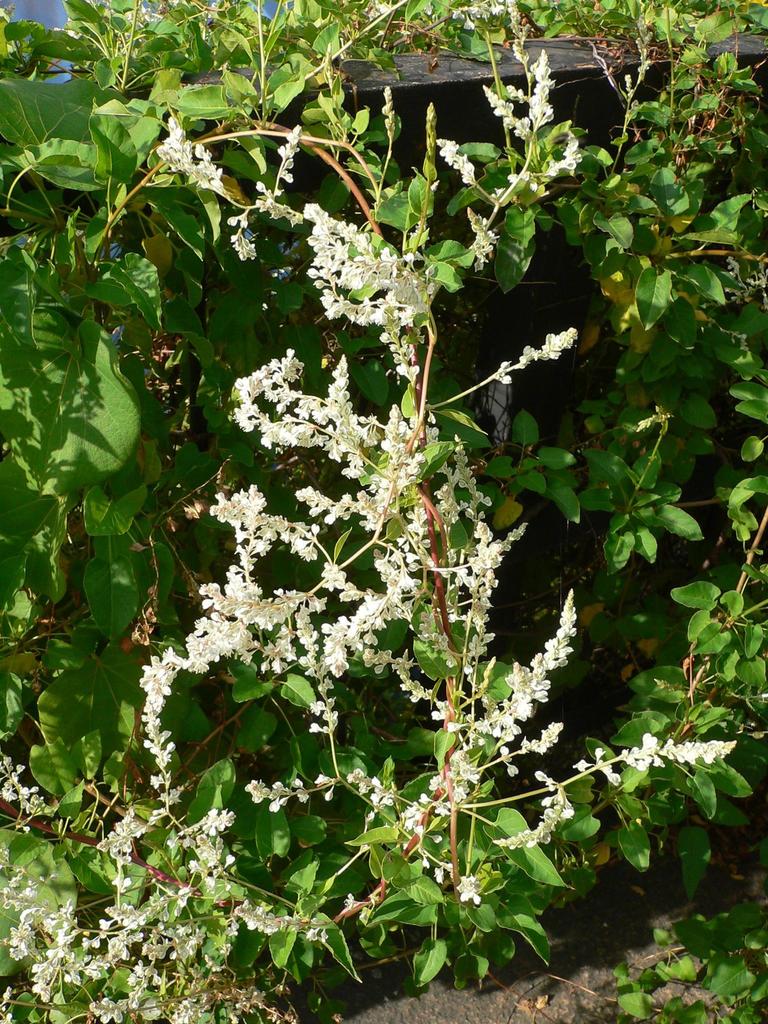
(c) anonymous, some rights reserved (CC BY-SA) · licence
Family: Polygonaceae · Type: Subshrub · Not Native
Conservation status: Cal-IPC Yes
Fallopia japonica (Japanese knotweed) is a non-native California subshrub in the Polygonaceae family, recognized by medium-sized with truncate leaf bases and glaucous stems.
Japanese knotweed is a naturalized perennial herb found in northern California's Central Coast and San Francisco Bay regions in disturbed places at elevations below 1,000 meters. Flowering from August to October, this invasive plant produces small white flowers in erect or spreading panicle-like clusters 3 to 10 centimeters long. Growing in dense clumps with erect stems 1 to 2 meters tall, it features a glaucous, glabrous stem with few branches. Its large widely ovate leaves measure 6 to 13 centimeters long, with truncate bases and acuminate tips, and feature one-celled hairs on the undersides of veins. The fruit is a dark brown, shiny achene 3.8 to 5 millimeters long, enclosed within the plant's white perianth.
Identification and appearance
Key characters: 3 sympatric species; medium-sized with truncate leaf bases and glaucous stems
Habitat and range
Habitat: Disturbed places
Elevation: < 1000 m
California counties: Shasta, Contra Costa, Siskiyou, Butte, Nevada, Humboldt, Santa Cruz
Outside California: to eastern North America, native to Japan
Bloom period
Fallopia japonica blooms Aug-Oct.
Conservation status
Cal-IPC Yes
How to tell it apart
vs Sonchus: Fallopia has smooth-edged leaves; Sonchus has deeply lobed leaves with prickly edges and milky sap.; vs Oxyria: Fallopia is a climbing vine; Oxyria is an upright herb with kidney-shaped basal leaves.; vs Bistorta: Fallopia climbs with heart-shaped leaves; Bistorta grows upright with dense flower spikes.; vs Persicaria: Fallopia is a climbing vine; Persicaria is upright or sprawling, not climbing.; vs Aconogonon: Fallopia climbs; Aconogonon forms upright clumps in high mountains.
Frequently asked questions
Is Fallopia japonica native to California?
No. Fallopia japonica is not native to California (recorded as not native).
When does Fallopia japonica bloom?
Fallopia japonica blooms Aug-Oct.
Where in California does Fallopia japonica grow?
Fallopia japonica occurs in Shasta, Contra Costa, Siskiyou, Butte, Nevada, Humboldt, Santa Cruz, at elevations of < 1000 m.
What plant family does Fallopia japonica belong to?
Fallopia japonica is in the Polygonaceae family, genus Fallopia.
Is Fallopia japonica invasive in California?
Fallopia japonica is listed by Cal-IPC with an invasiveness rating of Yes.
Related species
Other California species in the same genus, family, or bioregion.
Sources: Jepson eFlora · Index of California Plant Names · CalPhotos
Last updated 2026-10-07
Data from The California Species Project — 14,000+ California species with verified data from CNPS, CDFW, USFWS, Cal-IPC, and more.