Festuca perennis
Rye grass, Rye Grass
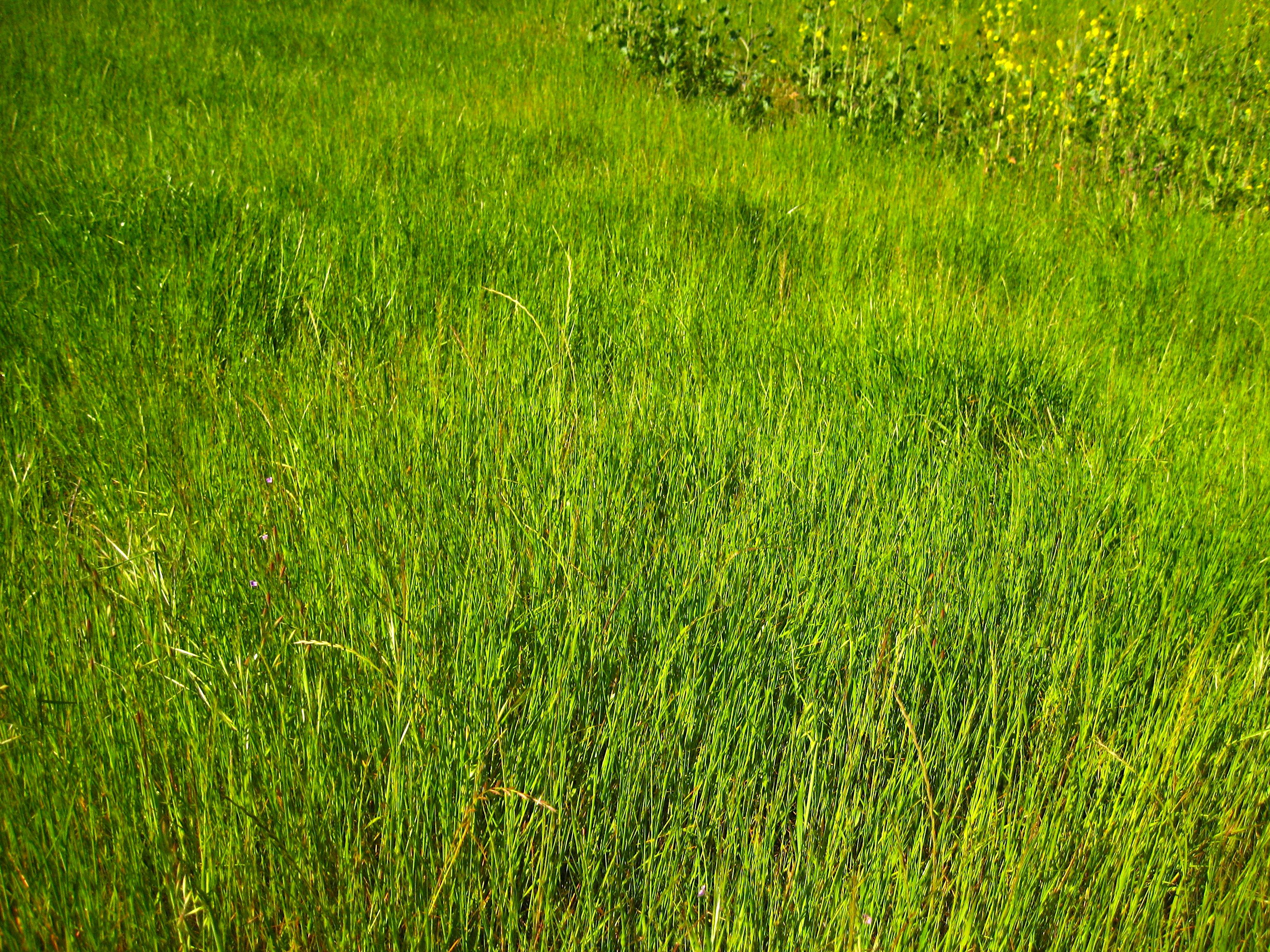
Photo by Chez Brungraber
Family: Poaceae · Type: Perennial · Not Native
Conservation status: Cal-IPC Yes
Festuca perennis (Rye grass) is a non-native California perennial in the Poaceae family, recognized by . Distinguished by spike-like inflorescence and large glumes.
Rye grass is a naturalized perennial herb found in California Floristic Province and the Panamint Range in the Death Valley Mountains, occurring in dry to moist disturbed sites and abandoned fields at elevations below 1,000 meters. Flowering from May to September, this grass produces pale green to greenish-white spikelets 5 to 22 millimeters long with delicate lance-linear structures. Growing with ascending to erect stems 30 to 100 centimeters tall that are generally glabrous, it forms dense clusters in open landscapes. Its leaf blades are narrow, measuring 4 to 30 centimeters long and 2 to 5 millimeters wide, with short ligules 1 to 3 millimeters in length. The plant's spike-like inflorescences spread 3 to 30 centimeters wide, creating a distinctive grassy appearance in disturbed habitats.
Identification and appearance
Key characters: 19 sympatric species. Distinguished by spike-like inflorescence and large glumes
Habitat and range
Habitat: dry to moist disturbed sites, abandoned fields
Elevation: < 1000 m
California counties: Humboldt, Orange, Los Angeles, Ventura, Kern, Imperial, Tulare, San Diego, Sutter, Nevada, Placer, Calaveras, San Joaquin, Amador, Sacramento, Yolo, Yuba, Santa Barbara, Riverside, Alameda, Butte, Tehama, Fresno, Napa, San Mateo, San Bernardino, San Luis Obispo, Sonoma, Santa Cruz, Santa Clara, Monterey, Stanislaus, San Francisco, El Dorado, Contra Costa, Madera
Outside California: to Alaska, eastern North America, native to Europe
Bloom period
Festuca perennis blooms May-Sep.
Conservation status
Cal-IPC Yes
How to tell it apart
vs Bromus: Festuca sheaths split open; Bromus sheaths stay closed around the stem.; vs Lolium: Festuca spikelets branch from multiple points; Lolium spikelets sit flat against one side of stem.; vs Aciphylla: Festuca is a grass with thin blade leaves; Aciphylla has rigid spine-tipped tufts.; vs Poa: Festuca lemmas have 5+ veins; Poa lemmas show only 3-5 veins with cobwebby hairs at base.; vs Muhlenbergia: Festuca has multi-flowered chunky spikelets; Muhlenbergia has delicate single-flowered tiny spikelets.
Frequently asked questions
Is Festuca perennis native to California?
No. Festuca perennis is not native to California (recorded as not native).
When does Festuca perennis bloom?
Festuca perennis blooms May-Sep.
Where in California does Festuca perennis grow?
Festuca perennis occurs in Humboldt, Orange, Los Angeles, Ventura, Kern, Imperial, Tulare, San Diego and other counties, at elevations of < 1000 m.
What plant family does Festuca perennis belong to?
Festuca perennis is in the Poaceae family, genus Festuca.
Is Festuca perennis invasive in California?
Festuca perennis is listed by Cal-IPC with an invasiveness rating of Yes.
Related species
Other California species in the same genus, family, or bioregion.
Sources: Jepson eFlora · Index of California Plant Names · CalPhotos
Last updated 2026-10-06
Data from The California Species Project — 14,000+ California species with verified data from CNPS, CDFW, USFWS, Cal-IPC, and more.