Ficus carica
Edible fig, Edible Fig
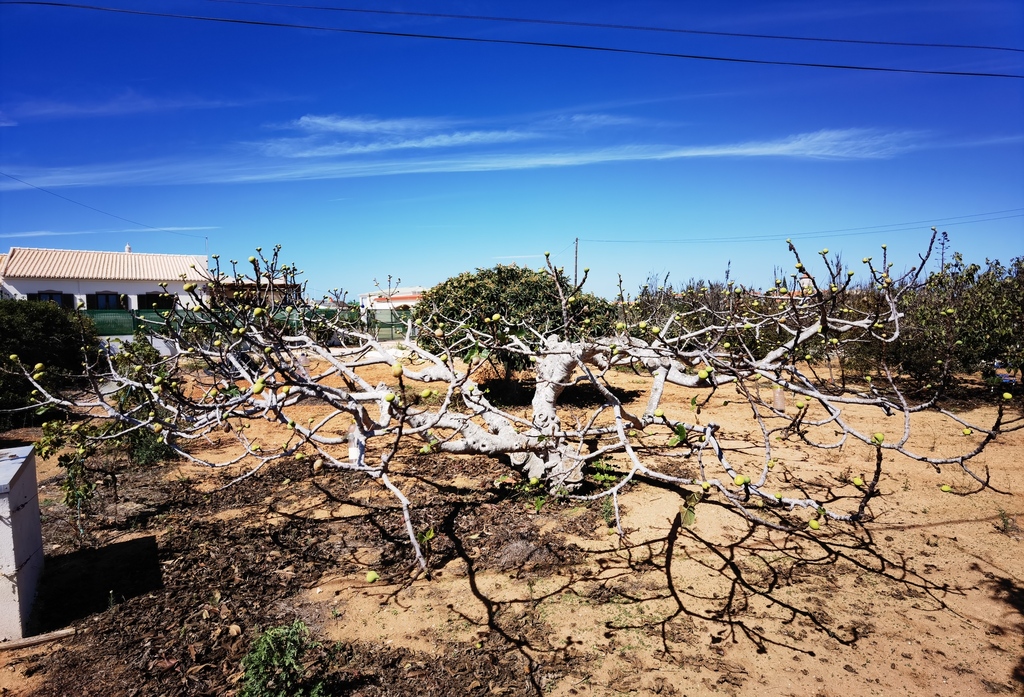
(c) Claude Kolwelter, some rights reserved (CC BY) · licence
Family: Moraceae · Type: Shrub / Tree · Not Native
Conservation status: Cal-IPC Yes
Ficus carica (Edible fig) is a non-native California shrub / tree in the Moraceae family, recognized by Naturalized introduction from Mediterranean region, representing a large tropical/subtropical genus with this being the only species….
Edible fig is a naturalized shrub found in the Klamath Ranges, California Foothills, Sierra Nevada Foothills, Central Valley, San Francisco Bay Area, Southern California, Transverse Ranges, and Peninsular Ranges in creeks, riverbanks, floodplains, seeps, and disturbed areas at elevations below 800 meters. Flowering from March to April, this plant produces green to purple fruits 5 to 8 centimeters long. Growing to 10 meters tall with widely spreading branches, it develops a distinctive multi-lobed form. Its large leaves are palmately lobed with 3 to 7 major lobes, reaching up to 32 centimeters wide and feeling rough on the upper surface while hairy underneath. The fruits transition from green to yellow, red, or deep purple as they mature.
Identification and appearance
Key characters: Naturalized introduction from Mediterranean region, representing a large tropical/subtropical genus with this being the only species established in California
Habitat and range
Habitat: Creeks, riverbanks, floodplains, seeps, disturbed areas
Elevation: < 800 m
California counties: San Bernardino, Los Angeles, Kern, San Mateo, Ventura, Orange, Riverside, San Diego, Inyo, Tulare, El Dorado, Amador, Santa Barbara, Sutter, Alameda, Butte, Nevada, Colusa, Fresno, Marin, Lake, Shasta, Solano, Glenn, Stanislaus, Tehama, Contra Costa, Sacramento, Napa, Yuba, Yolo, Trinity, San Luis Obispo, Placer, Sonoma, San Joaquin, Santa Cruz
Outside California: native to southwestern Asia, naturalized in central America, Australia
Bloom period
Ficus carica blooms Mar-Apr.
Conservation status
Cal-IPC Yes
How to tell it apart
vs Magnolia: Magnolia lacks milky sap and has large cone-like fruits, not hollow figs; vs Ligustrum: Ligustrum has opposite leaves and dark berries, not alternate leaves and hollow figs; vs Quercus: Oak leaves feel leathery with pointed lobes; figs exude milky sap and have rounded lobes; vs Acer: Maple leaves are opposite with palmate veins; fig leaves alternate with pinnate veins; vs Morus: Mulberry fruits have obvious bumpy segments; fig fruits are smooth teardrops
Frequently asked questions
Is Ficus carica native to California?
No. Ficus carica is not native to California (recorded as not native).
When does Ficus carica bloom?
Ficus carica blooms Mar-Apr.
Where in California does Ficus carica grow?
Ficus carica occurs in San Bernardino, Los Angeles, Kern, San Mateo, Ventura, Orange, Riverside, San Diego and other counties, at elevations of < 800 m.
What plant family does Ficus carica belong to?
Ficus carica is in the Moraceae family, genus Ficus.
Is Ficus carica invasive in California?
Ficus carica is listed by Cal-IPC with an invasiveness rating of Yes.
Related species
Other California species in the same genus, family, or bioregion.
Sources: Jepson eFlora · Index of California Plant Names · CalPhotos
Last updated 2026-10-07
Data from The California Species Project — 14,000+ California species with verified data from CNPS, CDFW, USFWS, Cal-IPC, and more.