Fimbristylis thermalis
Hot springs fimbristylis
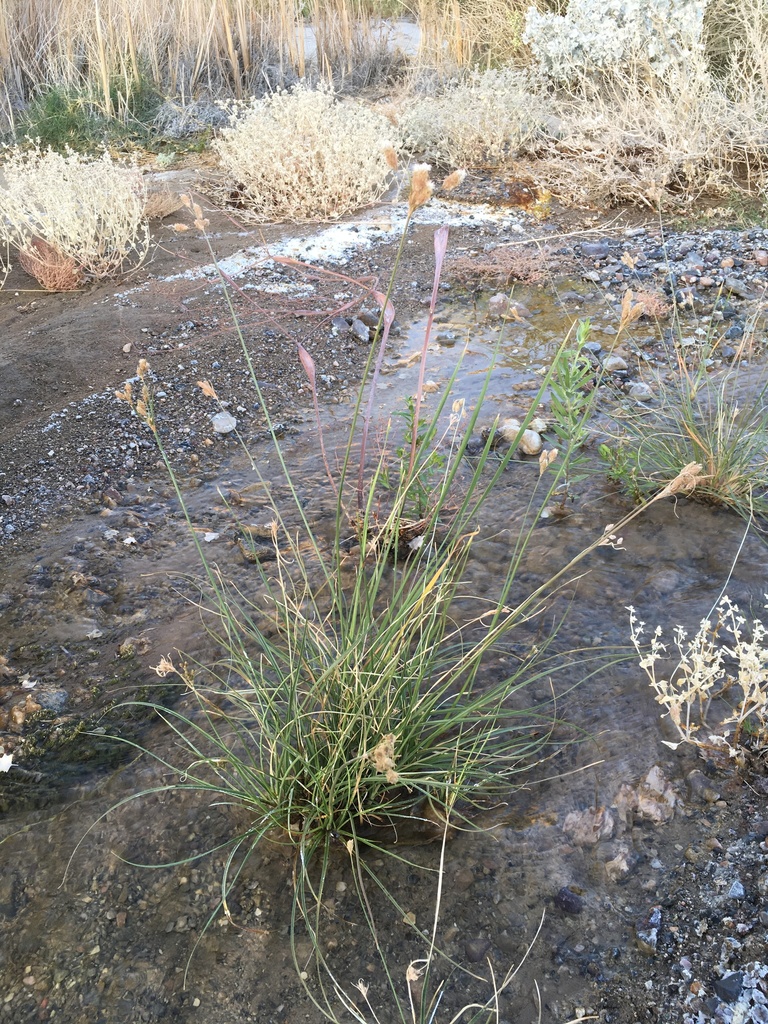
(c) Matt Berger, some rights reserved (CC BY), uploaded by Matt Berger · licence
Family: Cyperaceae · Type: Grass · Native
Conservation status: CNPS 2B.2
Fimbristylis thermalis (Hot springs fimbristylis) is a native California grass in the Cyperaceae family.
Hot springs fimbristylis is a rare (CNPS 2B.2) California native perennial found in the Tehachapi Mountains, San Gabriel Mountains, San Bernardino Mountains, White and Inyo Mountains, and eastern Mojave Desert in wet mineralized soils near hot springs and seepage meadows at elevations of 110 to 1,340 meters. Flowering from July to September, this plant produces light brown or tan spikelets 10 to 12 millimeters long with delicate flower bracts. Growing with a robust rhizomatous habit, it develops erect stems 50 to 150 centimeters tall and approximately 1 millimeter in diameter. Its leaves are narrow, puberulent, and less than 4 millimeters wide, with sheaths often covered in fine hairs. The fruit is small, approximately 1.5 millimeters long, brown with prominent angles and fine surface pitting.
Identification and appearance
Key characters: 0 sympatric species; geographically isolated in SCoRO, SnGb, SnBr, DMoj regions
Habitat and range
Habitat: Wet mineralized soils near hot springs and in seepage meadows
Elevation: 110-1340 m
California counties: Inyo, San Bernardino, Los Angeles, Mono
Outside California: southern Nevada, Utah, Arizona, Mexico
Bloom period
Fimbristylis thermalis blooms Jul-Sep.
Conservation status
CNPS 2B.2
How to tell it apart
vs Juncus: Fimbristylis has triangular stems and scabrous sheath edges; Juncus has round stems and smooth sheaths.; vs Bulbostylis: Fimbristylis has short sandpaper-like hairs on sheaths; Bulbostylis has long, soft, conspicuous fringe.; vs Bolboschoenus: Fimbristylis has scabrous sheath edges; Bolboschoenus has smooth sheaths and often has tubers.; vs Scirpus: Fimbristylis has distinctly rough, hairy sheath tips; Scirpus has smooth sheaths.; vs Calliscirpus: Fimbristylis has scabrous sheath tips; Calliscirpus has smooth sheaths and tufted growth.
Frequently asked questions
Is Fimbristylis thermalis native to California?
Yes. Fimbristylis thermalis is native to California (recorded as native).
When does Fimbristylis thermalis bloom?
Fimbristylis thermalis blooms Jul-Sep.
Where in California does Fimbristylis thermalis grow?
Fimbristylis thermalis occurs in Inyo, San Bernardino, Los Angeles, Mono, at elevations of 110-1340 m.
What plant family does Fimbristylis thermalis belong to?
Fimbristylis thermalis is in the Cyperaceae family, genus Fimbristylis.
Is Fimbristylis thermalis rare or endangered?
Fimbristylis thermalis carries California Rare Plant Rank 2B.2, state rank S1S2.
Related species
Other California species in the same genus, family, or bioregion.
Sources: Jepson eFlora · CNPS Rare Plant Inventory · Index of California Plant Names · CalPhotos · CDFW CNDDB
Last updated 2026-10-07
Data from The California Species Project — 14,000+ California species with verified data from CNPS, CDFW, USFWS, Cal-IPC, and more.