Frangula californica subsp. californica
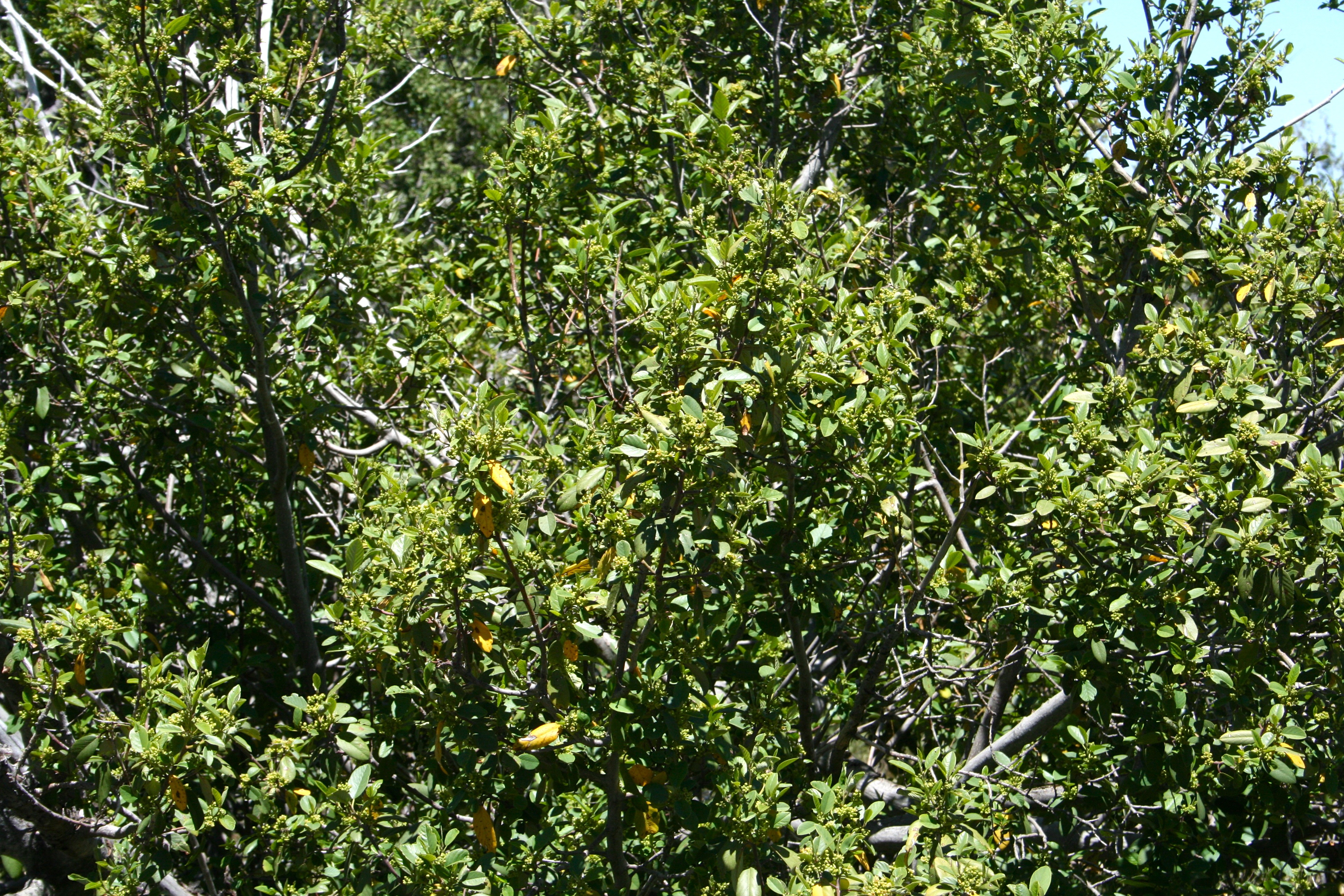
Photo: parent species Frangula californica · Photo by Chez Brungraber
Family: Rhamnaceae · Type: Shrub / Tree · Native
Frangula californica subsp. californica is a native California shrub / tree in the Rhamnaceae family, recognized by red glabrous twigs and leaf color pattern.
California coffeeberry is a California native shrub found in northwestern, central, and southwestern California, including the Providence Mountains, in coastal sage scrub, desert scrub, chaparral, forest, and woodland at elevations up to 2,800 meters. Flowering from May to July, this plant produces small flowers with subtle greenish-white coloration. Growing with spreading branches 1 to 3 meters tall, it has distinctive red twigs that are smooth and glabrous. Its leaves are glossy, with dark green upper surfaces and bright green to yellow lower surfaces, measuring 2 to 8 centimeters long and having acute bases and tips. The shrub forms dense, multi-stemmed thickets in diverse California landscapes, creating important habitat and food sources for local wildlife.
Identification and appearance
Key characters: 12 sympatric species; key features are red glabrous twigs and leaf color pattern
Habitat and range
Habitat: Coastal-sage scrub, desert scrub, chaparral, forest, woodland
Elevation: < 2800 m
California counties: Humboldt, Orange, Los Angeles, Riverside, San Diego, San Bernardino, San Mateo, San Francisco, Mendocino, Santa Barbara, San Luis Obispo, Ventura, Marin, Monterey, Trinity, Sonoma, Lake, Contra Costa, Santa Cruz, Fresno, Shasta, Santa Clara, Alameda, Siskiyou, Lassen, Inyo, Mariposa, San Joaquin, Tulare, Butte, Del Norte, Colusa, El Dorado, Amador, Placer, Napa
Bloom period
Frangula californica subsp. californica blooms May-Jul.
How to tell it apart
vs Heteromeles: Frangula has simple leaves and naked buds; Heteromeles has toothed leaves and scaly buds.; vs Prunus: Frangula berries turn from red to black; Prunus fruits are uniform colored when ripe.; vs Rhamnus: Frangula buds are naked (no scales); Rhamnus buds have protective scales.; vs Quercus: Frangula has opposite or alternate smooth leaves; Quercus has spiral lobed or toothed leaves.; vs Umbellularia: Frangula leaves lack strong aroma; Umbellularia leaves smell strongly spicy when crushed.
Frequently asked questions
Is Frangula californica subsp. californica native to California?
Yes. Frangula californica subsp. californica is native to California (recorded as native).
When does Frangula californica subsp. californica bloom?
Frangula californica subsp. californica blooms May-Jul.
Where in California does Frangula californica subsp. californica grow?
Frangula californica subsp. californica occurs in Humboldt, Orange, Los Angeles, Riverside, San Diego, San Bernardino, San Mateo, San Francisco and other counties, at elevations of < 2800 m.
What plant family does Frangula californica subsp. californica belong to?
Frangula californica subsp. californica is in the Rhamnaceae family, genus Frangula.
What habitat does Frangula californica subsp. californica grow in?
Frangula californica subsp. californica grows in Coastal-sage scrub, desert scrub, chaparral, forest, woodland.
Related species
Other California species in the same genus, family, or bioregion.
Sources: Jepson eFlora · Index of California Plant Names · CalPhotos
Last updated 2026-10-07
Data from The California Species Project — 14,000+ California species with verified data from CNPS, CDFW, USFWS, Cal-IPC, and more.