Frangula californica subsp. tomentella
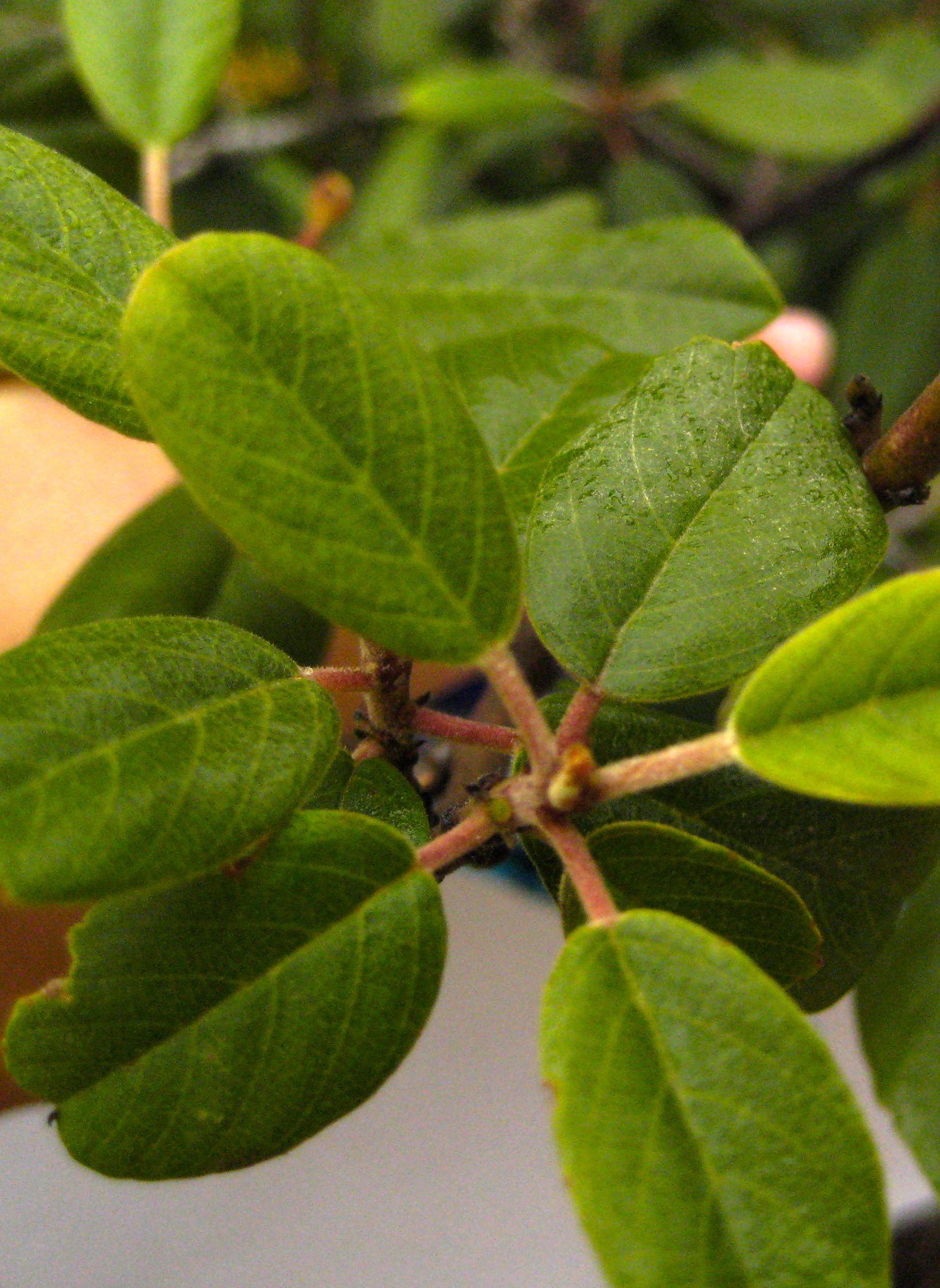
Photo by Chez Brungraber
Family: Rhamnaceae · Type: Shrub / Tree · Native
Frangula californica subsp. tomentella is a native California shrub / tree in the Rhamnaceae family, recognized by gray tomentose twigs and velvety leaf undersides without long hairs.
California coffeeberry is a California native shrub found in southern Klamath Ranges, northern Coast Ranges, California Regional Forests, Sierra Nevada Foothills, northern Sierra Nevada, Sacramento Valley, San Francisco Bay Area, southern Coast Ranges, and southwestern California in chaparral and woodland habitats at elevations below 2,200 meters. Flowering from January to April, this plant produces small greenish-white flowers in clusters along its branches. Growing with gray, woolly twigs and reaching heights of 1 to 3 meters, it forms a dense, rounded shrub with a distinctive branching structure. Its leaves are narrowly elliptic, 3 to 7 centimeters long, with a dull green upper surface and a velvety or silvery underside, featuring an acute tip and occasionally blunt-toothed margins. The shrub's soft, dense foliage and compact growth form make it a distinctive component of California's Mediterranean woodland landscapes.
Identification and appearance
Key characters: 15 sympatric species; key features are gray tomentose twigs and velvety leaf undersides without long hairs
Habitat and range
Habitat: Chaparral, woodland
Elevation: < 2200 m
California counties: Monterey, Kern, Los Angeles, San Diego, Stanislaus, Calaveras, Mariposa, Santa Cruz, San Luis Obispo, San Benito, Nevada, Butte, Ventura, Placer, Merced, Santa Barbara, Santa Clara, Tuolumne, Tehama, Yuba, Colusa, Shasta, Tulare, Amador, San Joaquin, El Dorado, Alameda, Sutter, Lake, Mendocino, Inyo, Napa, Trinity, Riverside, San Mateo, Contra Costa, San Bernardino, Yolo, Fresno, Glenn, Sonoma, Sacramento, Plumas, Orange, Madera
Outside California: Baja California
Bloom period
Frangula californica subsp. tomentella blooms Jan-Apr.
How to tell it apart
vs Heteromeles: Frangula has simple leaves and naked buds; Heteromeles has toothed leaves and scaly buds.; vs Prunus: Frangula berries turn from red to black; Prunus fruits are uniform colored when ripe.; vs Rhamnus: Frangula buds are naked (no scales); Rhamnus buds have protective scales.; vs Quercus: Frangula has opposite or alternate smooth leaves; Quercus has spiral lobed or toothed leaves.; vs Umbellularia: Frangula leaves lack strong aroma; Umbellularia leaves smell strongly spicy when crushed.
Frequently asked questions
Is Frangula californica subsp. tomentella native to California?
Yes. Frangula californica subsp. tomentella is native to California (recorded as native).
When does Frangula californica subsp. tomentella bloom?
Frangula californica subsp. tomentella blooms Jan-Apr.
Where in California does Frangula californica subsp. tomentella grow?
Frangula californica subsp. tomentella occurs in Monterey, Kern, Los Angeles, San Diego, Stanislaus, Calaveras, Mariposa, Santa Cruz and other counties, at elevations of < 2200 m.
What plant family does Frangula californica subsp. tomentella belong to?
Frangula californica subsp. tomentella is in the Rhamnaceae family, genus Frangula.
What habitat does Frangula californica subsp. tomentella grow in?
Frangula californica subsp. tomentella grows in Chaparral, woodland.
Related species
Other California species in the same genus, family, or bioregion.
Sources: Jepson eFlora · Index of California Plant Names · CalPhotos
Last updated 2026-10-07
Data from The California Species Project — 14,000+ California species with verified data from CNPS, CDFW, USFWS, Cal-IPC, and more.