Fritillaria biflora var. biflora
Chocolate lily
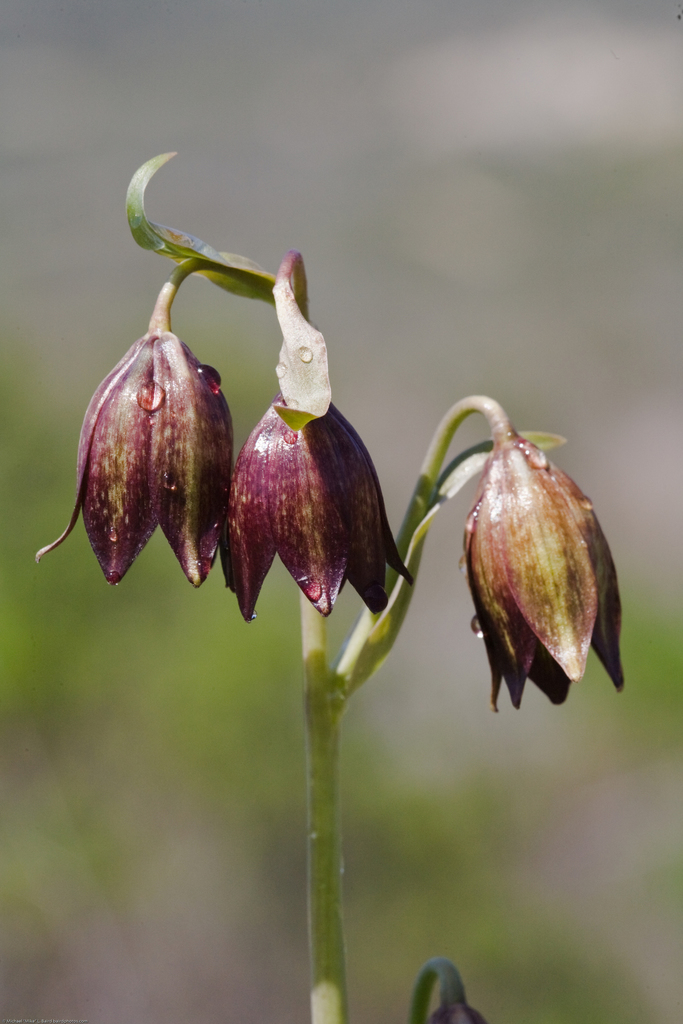
(c) Mike Baird, some rights reserved (CC BY) · licence
Family: Liliaceae · Type: Perennial · Native
Conservation status: CNPS 1B.1
Fritillaria biflora var. biflora (Chocolate lily) is a native California perennial in the Liliaceae family, recognized by broader leaves and lack of ill scent vs var. ineziana.
Chocolate lily is a rare (CNPS 1B.1) California native perennial found in northern coastal California, including Mendocino and Napa counties, coastal western, and southwestern regions in grassy slopes, mesas, and serpentine barrens at elevations below 1,300 meters. Flowering from March to May, this plant produces rich brown to purplish-brown flowers 1.8 to 4 centimeters long with a distinctive bell-like shape. Growing with slender stems 30 to 50 centimeters tall, it emerges from a deep underground bulb with a delicate, arching habit. Its leaves are broad and oblong, ranging from 8 to 40 millimeters wide, arranged alternately along the stem in a loose, sparse pattern. The flower clusters typically bear two blooms, giving this variety its distinctive "biflora" designation.
Identification and appearance
Key characters: 12 sympatric species; broader leaves and lack of ill scent vs var. ineziana
Habitat and range
Habitat: Grassy slopes, mesas, serpentine barrens
Elevation: < 1300 m
California counties: San Diego, Orange, San Luis Obispo, Mendocino, Los Angeles, Santa Barbara, Kern, Ventura, Monterey
Bloom period
Fritillaria biflora var. biflora blooms Mar-May.
Conservation status
CNPS 1B.1
How to tell it apart
vs Lilium: Fritillaria has dark glandular spots in the lower half of each petal; Lilium petals lack these nectary patches.; vs Calochortus: Fritillaria flowers droop downward with glands inside; Calochortus flowers face upward or outward.; vs Platanthera: Fritillaria has 6 similar bell-shaped petals; orchid flowers have distinctly different upper and lower petals.; vs Clintonia: Fritillaria flowers hang downward with internal glands; Clintonia flowers stand upright and produce berries.; vs Maianthemum: Fritillaria has large drooping bells with 6 petals; Maianthemum has tiny 4-parted flowers in clusters.
Frequently asked questions
Is Fritillaria biflora var. biflora native to California?
Yes. Fritillaria biflora var. biflora is native to California (recorded as native).
When does Fritillaria biflora var. biflora bloom?
Fritillaria biflora var. biflora blooms Mar-May.
Where in California does Fritillaria biflora var. biflora grow?
Fritillaria biflora var. biflora occurs in San Diego, Orange, San Luis Obispo, Mendocino, Los Angeles, Santa Barbara, Kern, Ventura and other counties, at elevations of < 1300 m.
What plant family does Fritillaria biflora var. biflora belong to?
Fritillaria biflora var. biflora is in the Liliaceae family, genus Fritillaria.
Is Fritillaria biflora var. biflora rare or endangered?
Fritillaria biflora var. biflora carries California Rare Plant Rank 1B.1, state rank S1.
Related species
Other California species in the same genus, family, or bioregion.
Sources: Jepson eFlora · Index of California Plant Names · CalPhotos
Last updated 2026-09-30
Data from The California Species Project — 14,000+ California species with verified data from CNPS, CDFW, USFWS, Cal-IPC, and more.