Galium aparine
Goose grass, Goose Grass
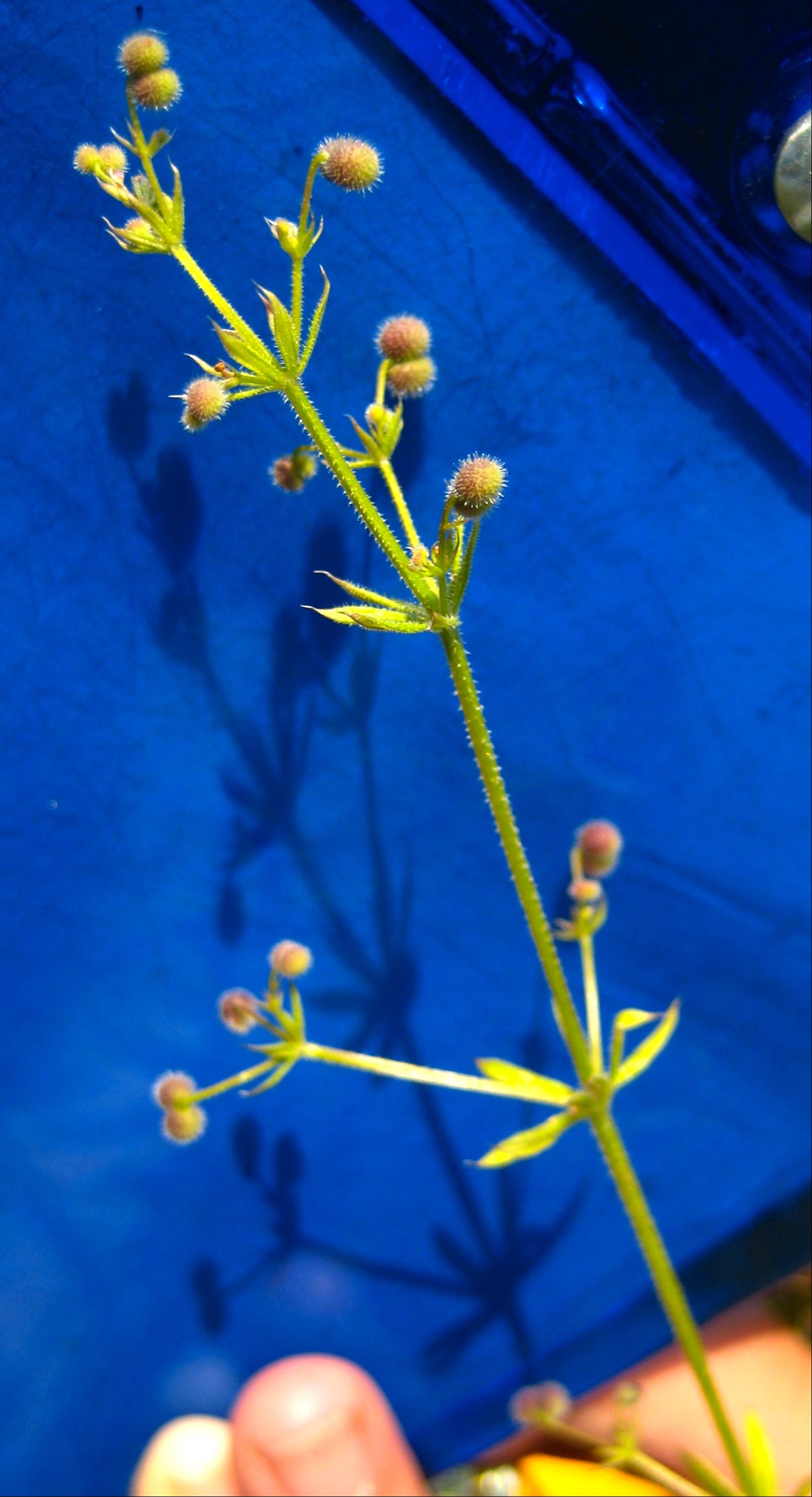
Photo by Chez Brungraber
Family: Rubiaceae · Type: Vine · Native
Galium aparine (Goose grass) is a native California vine in the Rubiaceae family, recognized by distinctive climbing habit with hooked prickles and sticky fruits makes identification clear.
Goose grass is a California native annual herb found in grassy and partially shaded habitats throughout the state at elevations of 30 to 1,500 meters. Flowering from March to July, this plant produces small, rotating white flowers on delicate branching stems. Growing with weak, climbing or prostrate stems up to 9 decimeters long, it spreads by clinging to surrounding vegetation with tiny hooked prickles. Its leaves grow in whorls of 6 to 8, with lower leaves nearly round and petioled while upper leaves are narrowly oblanceolate and sessile. The plant produces small nutlets covered in short, hooked hairs that aid in its dispersal.
Identification and appearance
Key characters: 86 sympatric species; distinctive climbing habit with hooked prickles and sticky fruits makes identification clear
Habitat and range
Habitat: Grassy, +- shady places
Elevation: 30-1500 m
California counties: Humboldt, Placer, Santa Barbara, Fresno, San Luis Obispo, San Diego, Tulare, Ventura, Los Angeles, Napa, San Bernardino, Kern, Orange, Solano, Lake, Riverside, Madera, Butte, Modoc, Santa Cruz, Mendocino, Mariposa, Sonoma, Santa Clara, Monterey, Lassen, San Benito, Shasta, Tuolumne, San Mateo, Plumas, Stanislaus, Marin, Siskiyou, Del Norte, San Francisco, Contra Costa, Alameda, Yolo, El Dorado, Sutter, Amador, Calaveras, Sierra, Colusa, Inyo, Nevada, San Joaquin, Mono, Sacramento, Tehama, Glenn, Merced, Trinity, Alpine, Yuba
Outside California: to Alaska, eastern North America, Europe
Bloom period
Galium aparine blooms Mar-Jul.
How to tell it apart
vs Eriogonum: Galium has whorled leaves and tiny flowers; Eriogonum has alternate/basal leaves and dense flower clusters with papery bracts.; vs Sherardia: Galium flowers have stalks and no sepals; Sherardia flowers lack stalks and have six prominent sepals.; vs Baccharis: Galium has whorled leaves and tiny four-petaled flowers; Baccharis has alternate leaves and composite flower heads.; vs Lupinus: Galium has whorled narrow leaves and tiny rotate flowers; Lupinus has palmate compound leaves and pea-like flowers.; vs Euphorbia: Galium has whorled leaves and four-petaled flowers; Euphorbia has alternate leaves and milky sap with specialized flower cups.
Frequently asked questions
Is Galium aparine native to California?
Yes. Galium aparine is native to California (recorded as native).
When does Galium aparine bloom?
Galium aparine blooms Mar-Jul.
Where in California does Galium aparine grow?
Galium aparine occurs in Humboldt, Placer, Santa Barbara, Fresno, San Luis Obispo, San Diego, Tulare, Ventura and other counties, at elevations of 30-1500 m.
What plant family does Galium aparine belong to?
Galium aparine is in the Rubiaceae family, genus Galium.
What habitat does Galium aparine grow in?
Galium aparine grows in Grassy, +- shady places.
Related species
Other California species in the same genus, family, or bioregion.
Sources: Jepson eFlora · Index of California Plant Names · CalPhotos
Last updated 2026-10-07
Data from The California Species Project — 14,000+ California species with verified data from CNPS, CDFW, USFWS, Cal-IPC, and more.